 blog
How to Find Local Professional Dog Trainer Help That Works
Last Updated: October 30, 2026
Quick Summary
To find local professional dog trainer help that works, vet credentials, reviews, and methods in that order before you book. A local professional dog trainer evaluates your dog in person, builds a behavior plan around what they observe, and coaches you through the handling skills that make results stick.
- Ask which professional certification a trainer holds and who issued it.
- Match the trainer's specialty to your dog's behavior, not the resume length.
- Puppies often show solid foundation behaviors within a few weeks of weekly sessions.
- Reactivity and anxiety cases take the longest, often months of structured work.
- Expect an assessment first and a written plan second before hiring.
Table of Contents
- Why a Local Professional Dog Trainer Beats Guesswork and YouTube
- How to Vet Trainer Credentials, Reviews, and Methods Before You Book
- Questions to Ask a Dog Trainer in the First Conversation
- What Dog Training Cost Per Session Really Covers
- How Long Does Dog Training Take for Puppies, Adults, and Reactivity Cases
- Matching a Trainer to Your Dog's Specific Behavior Problems
- What to Expect Before and After You Hire a Trainer
- Book an Assessment With Voca Springs Dog Training
- Frequently Asked Questions
Why a Local Professional Dog Trainer Beats Guesswork and YouTube
Searching for "find local professional dog trainer" usually starts the same way: a chewed baseboard, a leash-reactive lunge, or a puppy that ignores its name. At Voca Springs Dog Training, we hear that story daily from owners across Caddo, Caney, and the surrounding area. A local professional dog trainer is a certified instructor who evaluates your dog in person, builds a behavior plan around what they observe, and coaches you through the handling skills that make results stick.
Here's the uncomfortable truth most guides skip: video tutorials teach commands, not your dog. A screen can't see that your timing is late by half a second or that your dog is over threshold before the lesson even begins.
What a Trainer Actually Changes for Your Dog
A trainer changes three things no video can: timing, environment, and accountability. Good timing marks the exact instant your dog does the right thing, and that precision is what builds reliable behavior. A trainer also controls the environment, starting in low-distraction settings and adding difficulty only when your dog is ready. Accountability matters too.
The American Veterinary Society of Animal Behavior position statement on humane training makes a related point: how you train matters as much as what you train. Methods built on fear and pain carry real welfare risks (The American Veterinary Society of Animal Behavior). Reward-based training is the standard we hold ourselves to, and it's the standard you should demand from anyone you hire.
How to Vet Trainer Credentials, Reviews, and Methods Before You Book
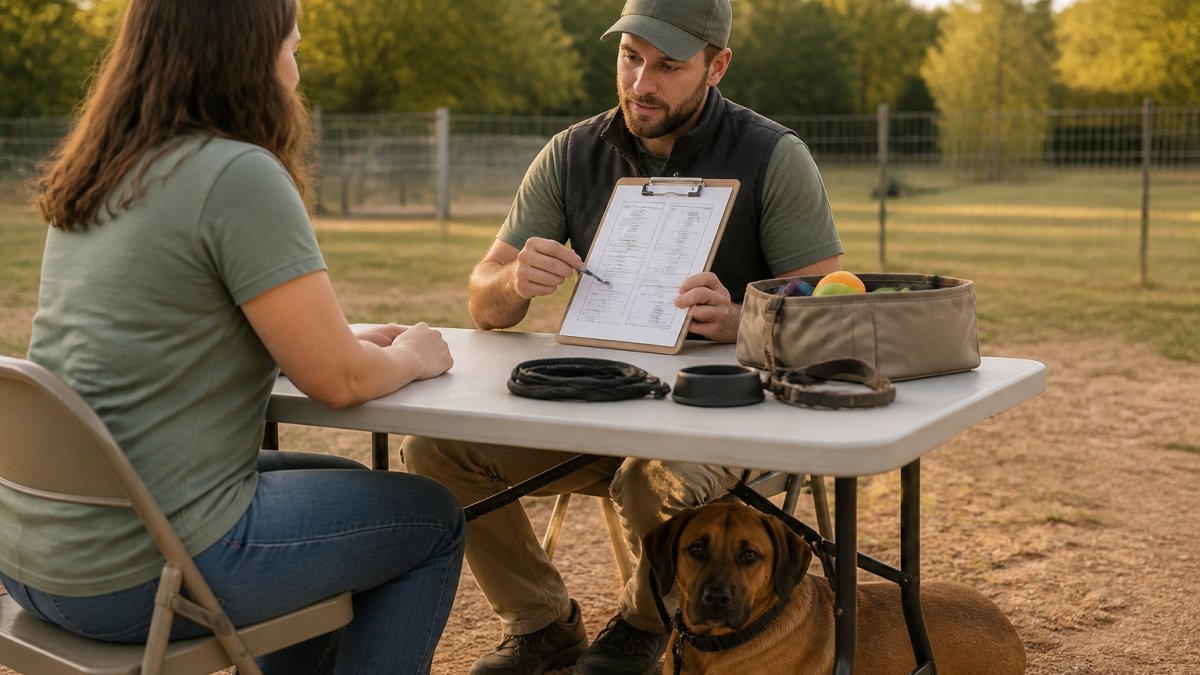
Start with credentials, then reviews, then methods, in that order. Credentials tell you what a trainer studied. Reviews tell you how they work with people. Methods tell you whether their approach fits your dog. Skip any of the three and you're booking on vibes.
A Practical Vetting Checklist
Use this list before you commit to any trainer:
- Ask which professional certification they hold and who issued it
- Confirm their training experience with your dog's specific issue
- Read trainer reviews and note whether customer ratings mention follow-through
- Ask what training methods they use and whether aversive tools appear in the answer
- Confirm their service area covers your neighborhood or town
- Request a written plan with session count and goals
- Ask what happens if progress stalls after four sessions
One thing most owners miss: a trainer with a wall of titles but no experience with reactivity is the wrong hire for a reactive dog. Match the specialty, not the resume length.
Questions to Ask a Dog Trainer in the First Conversation
Ask about methods, measurement, and owner involvement in the first call. Those three answers separate working trainers from talkers. A trainer who can't describe how they'll measure progress is guessing, and you'll pay for the guess.
Here's what we'd ask:
- What does the first session look like, and what will you assess?
- Which training methods do you use, and which do you refuse to use?
- How do you measure progress, and how often do we review it?
- How much of each session is me handling the dog versus you?
- What happens between sessions, and what do you expect me to practice?
- How do you handle a dog that shuts down or gets overexcited?
Question four matters most. If the answer is "mostly me," you're renting results instead of learning them. You can browse common answers to these and similar questions on our FAQ page before you ever pick up the phone.
What Dog Training Cost Per Session Really Covers
Pricing depends on format, dog needs, and the scope of support. For current prices or a quote, contact Voca Springs Dog Training through our website.
Most providers price in one of these formats:
| Format | What You Pay For | Best For |
|---|---|---|
| Group class | Shared instructor time across several dogs | Puppies needing socialization |
| Private session | One-on-one instruction and a custom plan | Specific behavior problems |
| In-home training | Travel plus real-environment coaching | Reactivity at home or on walks |
| Package | Multiple sessions at a set rate | Owners committed to a full program |
What Actually Moves the Price
Two trainers can quote the same hourly rate and deliver very different value. Ask what sits behind the number:
How to Compare Quotes Without Getting Fooled
Line up two or three quotes side by side and normalize them before you decide:
- **Ask each provider for a full written quote so you can compare complete offers, not just hourly rates.
Ask each provider how they will define progress and when you will review it together.
For current pricing and a quote, contact Voca Springs Dog Training through our website.
How Long Does Dog Training Take for Puppies, Adults, and Reactivity Cases
How long dog training takes depends on the dog's age, the behavior, and how consistently you practice between sessions. Puppies often show solid foundation behaviors within a few weeks of weekly sessions. Adult dogs with established habits usually need longer because you're replacing a pattern, not starting fresh. Reactivity and anxiety cases take the longest, often months, because the work involves changing an emotional response, not just a command.
A realistic frame:
- Puppy basics: weeks of weekly sessions, with daily five-minute practice at home
- Adult obedience: several weeks to a few months depending on prior training
- Reactivity or anxiety: months of structured work with gradual exposure
Anyone promising a fixed timeline before meeting your dog is selling certainty they don't have. Progress depends on the dog, the environment, and the owner's consistency.
Matching a Trainer to Your Dog's Specific Behavior Problems
Match the trainer's specialty to the behavior, not the other way around. A trainer who excels with puppies may have little experience with leash reactivity, and a reactivity specialist may not be the right fit for basic manners. Ask directly what percentage of their caseload involves your dog's issue.
A Simple Triage: Which Kind of Help Does Your Dog Need?
Before you shop for a trainer, sort your dog's issue into one of three buckets. The bucket tells you what kind of professional to look for.
- Bucket 1, Foundation and manners. Jumping, pulling, not coming when called, puppy socialization, crate and potty routines. A general obedience trainer or a well-run group class is usually the right fit. These cases respond well to reward-based instruction and consistent homework.
- Bucket 2, Behavior modification. Leash reactivity, resource guarding, separation-related distress, fear of specific triggers. These need a trainer with documented experience in behavior modification, not just obedience. Ask how they build a gradual exposure plan and how they keep sessions safe.
- Bucket 3, Possible medical or psychiatric involvement. Sudden behavior change, biting with injury, severe fear that prevents normal daily life, or any behavior that appears alongside a health change. Start with your veterinarian. A veterinary behaviorist, a veterinarian with advanced training in behavior, is the appropriate professional when medical causes or medication may be part of the picture. A good trainer will tell you when the case belongs in this bucket.
Common Matches and What to Ask
- Puppy training and socialization: group classes plus private sessions. Ask about class size, vaccination requirements, and how puppies are paired during play.
- Leash reactivity: private sessions in real environments, not just a facility. Ask how they set up distance from triggers and what safety equipment they recommend.
- Separation anxiety: a plan that includes departure practice and owner coaching. Ask whether they use camera monitoring and how they structure absences.
- Resource guarding: careful, reward-based protocols with safety planning. Ask how they keep family members safe during the process.
- General obedience: private or group sessions with clear homework. Ask how they measure reliability in distracting environments.
Questions That Reveal Real Specialty
A trainer's marketing page will list every service. A few questions separate genuine specialty from a broad menu:
- What share of your current clients are working on this specific issue?
- Walk me through how you would start with a dog like mine.
- What would make you refer this case to a veterinary behaviorist?
- What does progress look like in the first month, and how will we measure it?
If your dog's issue involves fear, aggression, or possible medical triggers, ask whether a veterinary behaviorist should be involved. A good trainer will tell you when the case needs more than training. For owners weighing professional help against do-it-yourself attempts, our page on why training matters lays out the case.
What to Expect Before and After You Hire a Trainer
Expect an assessment first and a plan second. A good assessment tells the trainer what your dog knows and what triggers problem behavior.
After hiring, expect the first few sessions to look slow. Your trainer is building a foundation and teaching you handling mechanics. Most owners notice small shifts first: a dog that checks in more, a looser leash, a faster recovery after a trigger. Big behavior changes come later, and they come from repetition.
Watch out: owners who skip homework between sessions often see progress stall and blame the trainer. The sessions teach; the practice between them is where behavior changes.
Book an Assessment With Voca Springs Dog Training
The fastest way to stop guessing is to talk with a professional about your dog's behavior. We work with you to understand your dog's needs and discuss next steps. Our team specializes in obedience and behavior modification, with a focus on building a stronger owner-dog bond.
Before you book, confirm we serve your town by contacting us through our website. Then reach out to schedule your first visit.
Frequently Asked Questions
What should I look for when hiring a professional dog trainer?
Look for a trainer whose methods you can observe and whose credentials you can verify. Ask about certifications, how many years they have worked with your dog's specific issue, and whether they use reward-based training. Check reviews for detail, not just star counts, and confirm they serve your area. A good local professional dog trainer will explain their approach in plain language and invite you to watch a session before you commit.
How much does dog training cost per session, and what changes the price?
Dog training cost per session depends on format, the trainer, and how complex your dog's behavior is. Ask for a written quote that lists what each session includes. For current pricing and a quote, contact Voca Springs Dog Training through our website.
How long does dog training take before I see results?
Progress depends on the dog, the behavior, and consistency of practice. Reactivity, anxiety, and aggression cases usually take several months because the dog is learning a new emotional response, not just a command. How long does dog training take also depends on how much you practice between sessions.
What is the difference between a dog trainer and a behaviorist?
A dog trainer teaches cues and manners, such as sit, leash walking, and recall. A behaviorist handles clinical cases like separation anxiety, fear-based aggression, or compulsive behaviors, and in the US that title is often held by a veterinarian with board certification. Contact Voca Springs Dog Training to discuss whether your dog's behavior is a training matter or one that may need a veterinary behaviorist.
Finding the right trainer comes down to three moves: verify credentials, ask the hard questions about methods and owner involvement, and match the specialty to your dog's actual behavior. That's the difference between a program that holds up at home and one that evaporates the week after it ends. Get started with Voca Springs Dog Training and build obedience that lasts well beyond the last session.