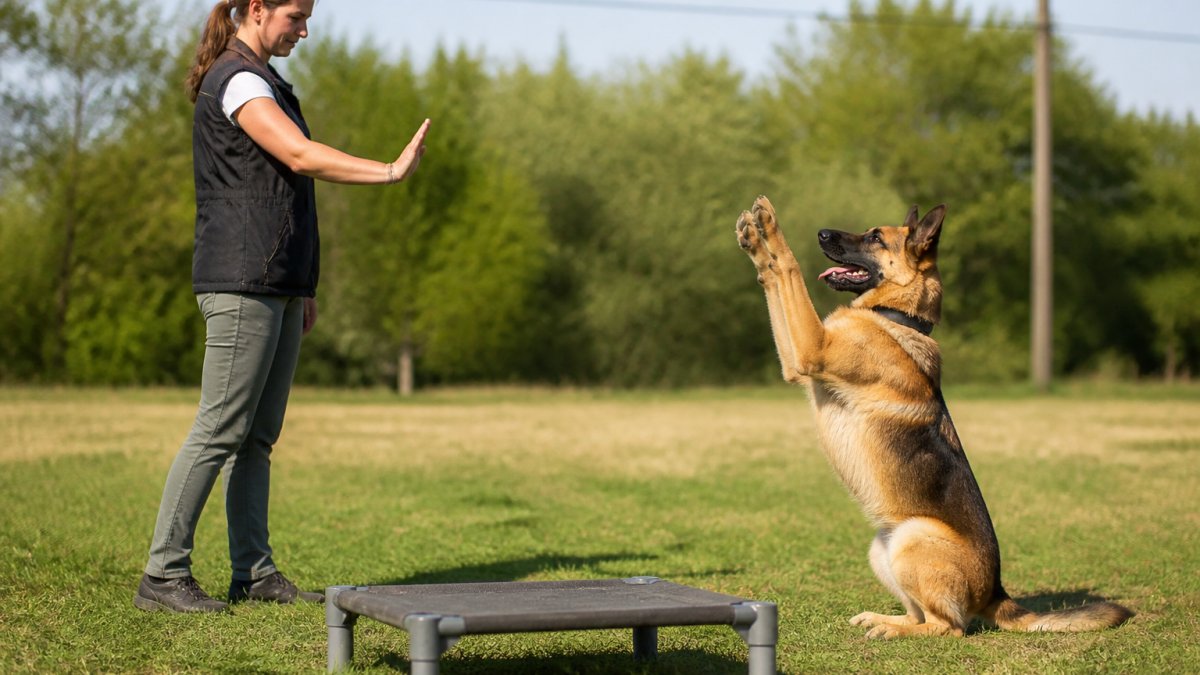
 how-to
How to Fix Dog Barking Issues at Home
Last Updated: October 29, 2026
Quick Summary
To fix dog barking issues, first diagnose the trigger by logging the cause, body language, and recovery time over three days. Then manage the environment to cut exposure, reward quiet behavior in short sessions, and never reward demand barking with attention.
- Most barking falls into five functional categories, and the category determines which training plan you use.
- Close blinds and block fence gaps, since visual stimuli are the number one fuel for window barking.
- Keep training sessions to five to ten minutes, two sessions a day, five days a week.
- Move to the next step only when your dog succeeds in eight out of ten tries across two sessions.
- Skip shock, spray, and ultrasonic collars, which can add fear and worsen anxiety in some dogs.
Table of Contents
- Step 1: Diagnose What Is Triggering Your Dog's Barking
- Step 2: Manage the Environment to Reduce Barking Triggers
- How to Stop Demand Barking and Attention-Seeking Behavior
- How to Stop Dog Leash Reactivity on Walks
- Reward Quiet Behavior: A Step-by-Step Training Plan
- How Long Does It Take to Train a Dog to Stop Barking?
- Best Tools for Excessive Barking (and What to Avoid)
- When Barking Signals Pain, Distress, or a Health Concern
- Frequently Asked Questions
Step 1: Diagnose What Is Triggering Your Dog's Barking
Barking is communication, not defiance. Before you can fix dog barking issues, you need to know what your dog is saying. Start every behavior case with one question: what happens right before the bark?
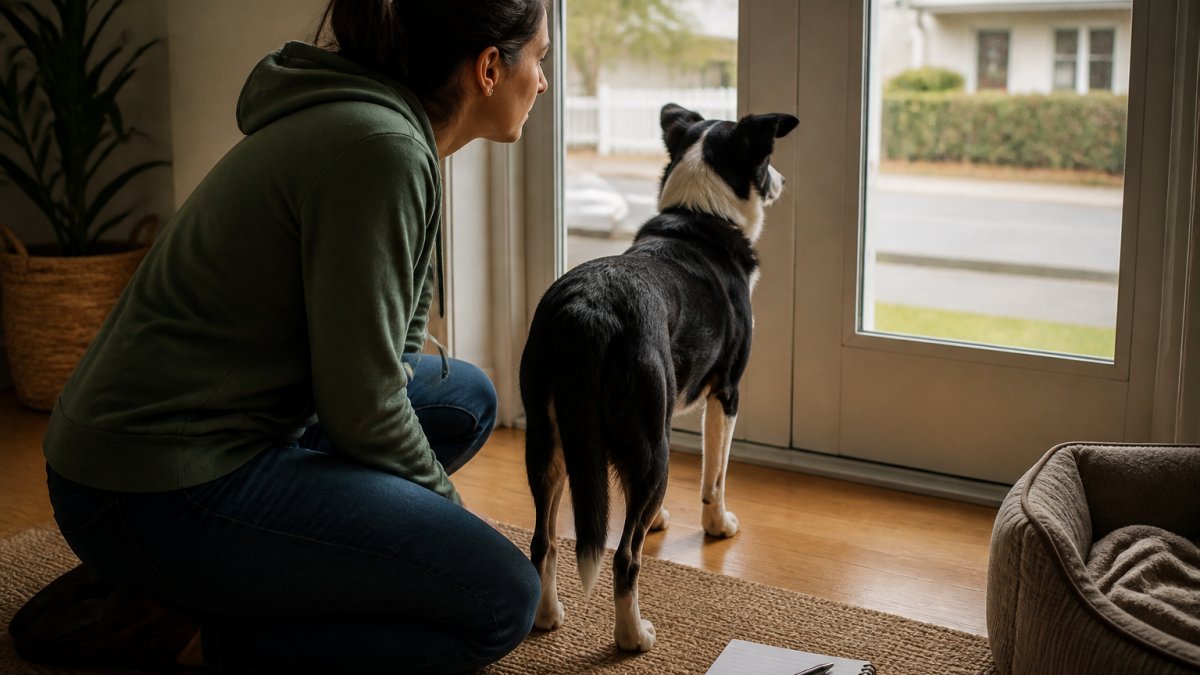
Watch for three things: the trigger, the body language, and the outcome. A dog barking at the mail carrier looks different from a dog barking for a treat. One is alert and forward-leaning. The other is loose and looking back at you.
A Five-Cause Diagnostic Framework
Most barking falls into one of five functional categories. The category determines the training plan, so get this right before you change anything else. Use the table below as a decision guide, then confirm with a three-day log.
| Cause | Typical trigger | Body language | What the bark sounds like | What usually stops it |
|---|---|---|---|---|
| Alert or territorial | People, dogs, or vehicles passing a window, fence, or door | Forward lean, stiff tail, ears up, hackles raised | Sharp, rapid, repetitive bursts | The trigger leaves the area |
| Fear or noise sensitivity | Thunder, vacuum, fireworks, unfamiliar sounds | Cowering, tucked tail, ears back, lip licking, pacing | High-pitched, mixed with whining or yelping | The sound stops or the dog finds a hiding spot |
| Demand or attention-seeking | You holding food, a leash, a toy, or standing near the door | Loose body, eye contact with you, looking back and forth between you and the thing they want | Short, sharp, insistent single barks | You look, speak, or hand over the item |
| Boredom or under-stimulation | Long stretches alone, no exercise, no enrichment | Restless, destructive, pacing, barking at nothing obvious | Monotonous, rhythmic, sometimes self-soothing | Exercise, a food puzzle, or interaction |
| Separation-related distress | Your departure or absence | Pacing, drooling, destruction at exits, attempts to escape | Continuous, distressed, often with whining or howling | Your return |
How to Tell the Causes Apart in Practice
Run three short tests over three days. First, remove the trigger. If closing the blinds stops the barking within a minute, you likely have alert or territorial barking. If the dog keeps barking at the wall or sound source, suspect noise sensitivity or fear.
Second, change your own behavior. Step out of sight for 30 seconds while the dog is barking. Demand barking usually pauses, then escalates when you reappear.
Third, check recovery time. After the trigger ends, an alert barker settles within minutes. A fearful dog may stay tense, pant, or hide for 20 minutes or more. A separation-distress dog often cannot settle until you return.
Keep a Three-Day Baseline Log
Note the time, trigger, body language, how long the barking lasts, and what stops it. Record recovery time separately, since it is the clearest signal of fear or distress. That log is your baseline for measuring progress.
When the pattern runs deeper than a single trigger, professional guidance can help. Learn more about the value of professional training for your dog.
Step 2: Manage the Environment to Reduce Barking Triggers
Most barking problems shrink before training starts, simply by cutting down what the dog can see and hear.
Start with the windows. Close the curtains or blinds on the side of the house where your dog patrols, and block any fence gaps.
Next, mask outside noises with a white noise machine, calming music, or a television on low volume.
- Move the dog's bed away from the front window
- Put a baby gate across the "lookout" spot
- Feed meals during quiet moments, not during barking
None of this is permanent. You are lowering exposure so training has a chance to work.
How to Stop Demand Barking and Attention-Seeking Behavior
Demand barking works because we pay for it. The dog barks, we look, talk, or hand over the toy.
To stop demand barking, remove the paycheck. The moment barking starts, turn away and go quiet.
Teach an alternative behavior. Ask for a sit before you open the door, pick up the leash, or set down the bowl.
- Ignore the bark, not the dog
- Reward quiet behavior within two seconds
- Keep greetings calm and low-key
Consistency is everything. If one family member caves and rewards the bark, the behavior returns stronger.
How to Stop Dog Leash Reactivity on Walks
Leash reactivity is barking, lunging, or growling at other dogs or people while on a leash.
First, find your dog's threshold: the distance where they notice another dog but can still eat a treat and respond to a cue.
When another dog appears, mark and reward the moment your dog looks at it without barking.
- Keep walks short and calm at first
- Use a front-clip harness for better control
- Turn and create distance before the bark happens
If your dog reacts at every distance, in-person coaching can help.
Reward Quiet Behavior: A Step-by-Step Training Plan
Quiet is a behavior you build, not a switch you flip. This plan works for alert barking, window barking, and noise barking. It uses reward-based training only, and it is designed to be measured, not guessed at.
Before You Start
Pick one trigger, one location, and one time of day. Do not train doorbell barking and window barking in the same week. Set up a helper for doorbell and knock work, and keep sessions to five to ten minutes, two sessions a day, five days a week. Stop while your dog is still succeeding.
The Core Plan
Step 1. Set the stage. Choose a low-intensity version of the trigger.
Step 2. Interrupt before the bark. The instant the trigger appears, toss a treat on the floor before your dog barks.
Step 3. Mark and reward silence. Wait for two seconds of silence, mark it with a word like "yes," and reward.
**Step 4.
Step 5. Add duration. Reward three seconds of quiet, then five, then ten. Add one second at a time, not five.
Progression Criteria: When to Move to the Next Step
Move to the next step only when your dog succeeds at the current one in eight out of ten tries across two consecutive sessions. Then raise difficulty by one notch: a louder noise, a closer trigger, a longer quiet period, or a new location.
If your dog fails more than twice in a row, you moved too fast. Drop back a step and repeat the previous level for one full session. Slower is faster with barking training.
Generalize the Behavior
A dog that is quiet at the front door is not automatically quiet at the back door or at a friend's house. Once your dog meets the eight-out-of-ten bar in the original location, repeat the plan in a second room, then on the porch, then at a quiet park. Change one variable at a time: location, then distance, then intensity.
Troubleshooting Common Stalls
- The dog barks before you can toss the treat. Lower the trigger intensity. Use a quieter knock, a farther window view, or a recorded sound at low volume.
- The dog stops barking but stares at the trigger. Reward the look away, not just the silence. Mark the moment your dog turns back to you.
- The dog only behaves for high-value treats. Use a treat pouch and vary rewards. Reserve the best treats for the hardest steps.
Measure Progress With Your Log
Return to the three-day log from Step 1 and record three numbers each session: how many barks per trigger, how long each barking episode lasts, and how long your dog takes to settle after the trigger ends. Improvement usually shows up in recovery time before it shows up in bark count. If recovery time is shrinking, the plan is working even when the barking has not stopped yet.
How Long Does It Take to Train a Dog to Stop Barking?
Timelines vary with the trigger, the dog's age, and household consistency. Progress is usually gradual and tracked over weeks.
Demand barking often fades fastest because the reward is easy to remove. Noise and window barking take longer because triggers keep appearing.
Progress is not a straight line. Expect good days and setbacks.
For a structured path with coaching, contact Voca Springs Dog Training for current program details.
Best Tools for Excessive Barking (and What to Avoid)
The best tools for excessive barking are the simple ones: treats, a front-clip harness, a white noise machine, and a treat pouch.
Skip the aversive gear. Ultrasonic devices, shock collars, and spray collars may stop a bark in the moment, but they can add fear and worsen anxiety in some dogs.
- Use: high-value treats, food puzzles, baby gates, white noise
- Avoid: shock collars, citronella sprays, ultrasonic devices
- Use with care: head halters, only with a trainer's guidance
The tool matters less than the plan. A cheap pouch and a clear reward schedule beat any gadget.
When Barking Signals Pain, Distress, or a Health Concern
Some barking is not a training problem.
Watch out: if barking comes with appetite loss, limping, confusion, or a sudden change in sleep, see your veterinarian first.
An anxious rescue dog that seems disconnected may need a gentler, slower approach. Before reaching out, you can read the frequently asked questions about our services.
Barking that keeps returning after weeks of home practice usually points to a trigger you have not identified yet, and that is where professional eyes help.
Frequently Asked Questions
What should I do if my neighbor complains about my dog barking?
Take the complaint seriously and act quickly. Start by documenting when barking happens and what triggers it, then begin the environmental changes and training steps in this guide. Talk to your neighbor calmly, explain your plan, and ask for patience while you work on it. Many areas have nuisance noise rules, so check your local ordinances. If barking continues despite your efforts, a professional behavior consultation can help identify the root cause and build a faster plan.
What is the 3 bark rule for dogs?
The 3 bark rule is a training guideline: allow your dog to bark up to three times to alert you to something, then interrupt and redirect to a quiet behavior like going to their bed. It gives the dog a clear, consistent limit instead of expecting total silence. Practice it every time the doorbell rings or someone walks by, and reward the quiet response. Consistency matters more than the exact number, so pick a limit and stick to it.
How can I tell if my dog is barking out of fear or boredom?
Fear barking usually comes with a tucked tail, flattened ears, backing away, or barking while retreating from a trigger. Boredom barking tends to be repetitive, happens when the dog is alone or under-exercised, and often stops when you offer activity. Watch the body language and the context: a dog barking at a stranger while shrinking back is fearful, while a dog barking at the fence for an hour with nothing there is likely bored. The distinction changes your training plan.
Are there humane ways to stop a dog from barking?
Yes. Reward-based training is the most effective humane approach: reward quiet behavior, teach an alternative response like a sit or go-to-mat cue, manage the environment with curtains and white noise, and increase exercise and mental enrichment. Avoid punishment, shock collars, and ultrasonic devices, which can increase fear and anxiety and make barking worse over time. A certified trainer can build a plan tailored to your dog's specific triggers and progression pace.