 ultimate-guide
Puppy Obedience Training Tips: A 2026 Guide
Table of Contents
- Getting Started with Puppy Obedience Training
- When to Begin Training and Age-Based Milestones
- Positive Reinforcement Puppy Training Essentials
- Teaching Basic Obedience Commands
- Puppy Training Schedule and Daily Routine
- Puppy Recall Training for Off-Leash Reliability
- Puppy Leash Training and Walking Skills
- Socialization, Crate Training, and Real-World Exposure
- Frequently Asked Questions
Last Updated: October 10, 2026
Getting Started with Puppy Obedience Training
Puppy obedience training is one of the most important investments you can make in your dog's future. Starting early sets the foundation for a well-behaved, confident adult dog and strengthens the bond between you and your puppy.
Puppies learn from every interaction. Timing matters because you're shaping how your puppy interprets the world and responds to you.
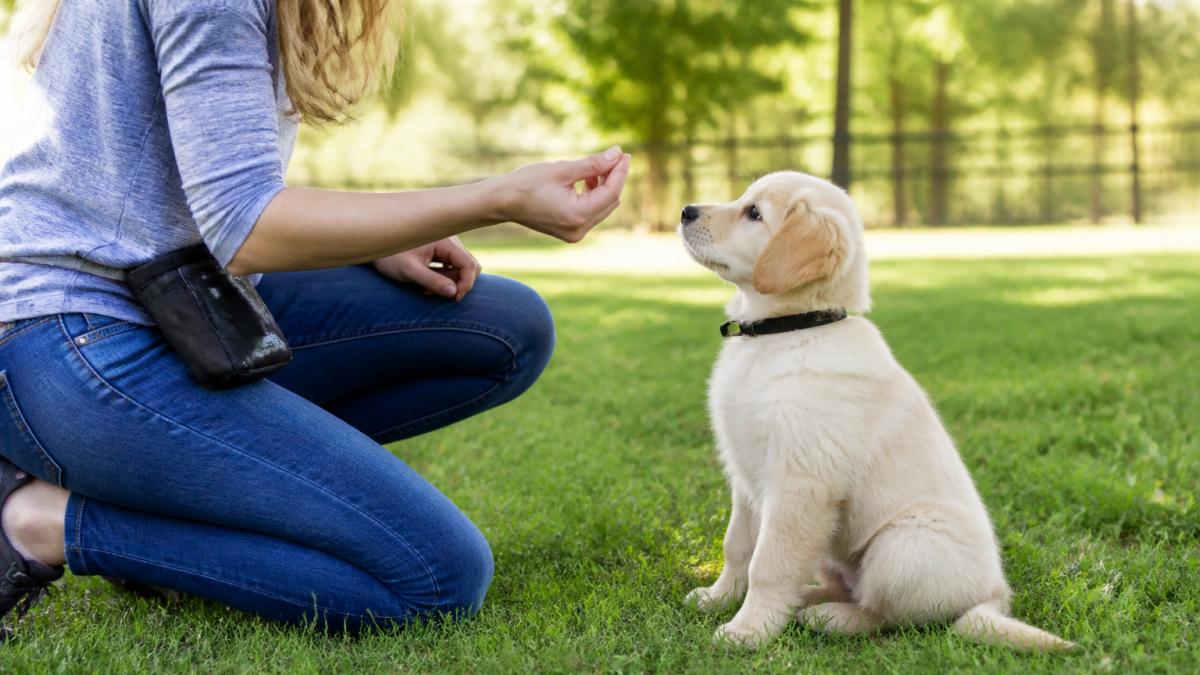
Most owners wait until behavior problems emerge. Puppies that learn boundaries early rarely develop reactivity, anxiety, or aggression issues. Prevention is easier than correction.
Puppy obedience training rests on consistency, positive reinforcement, and patience. When sit always means the same thing and rewards follow the right behavior, your puppy learns fast.
When to Begin Training and Age-Based Milestones
Start training your puppy the moment they come home by establishing routines, teaching boundaries, and introducing their name and simple commands.
Puppies as young as 8 weeks can learn sit and house training with 5-10 minute sessions. The younger you start, the more natural obedience becomes.
By 12 weeks, puppies can learn come and leave it. Match expectations to developmental stage: a 10-week-old cannot reliably hold a stay, but a 16-week-old can.
By 4-6 months, puppies can handle complex training and real leash skills. Behavioral issues like jumping and mouthing often appear; early intervention prevents entrenched habits.
By 6-12 months, puppies can learn advanced obedience, reliable recall, and off-leash work.
Training that works at one stage may fail at another. Voca Springs Dog Training tailors progression to your puppy's developmental stage.
Positive Reinforcement Puppy Training Essentials
Positive reinforcement is most effective because when your puppy sits and gets a treat, they learn "Sit = good thing happens." Repeated enough, sit becomes automatic.
Punishment creates fear and confusion. Your puppy learns to avoid behavior because of consequences, not understanding, producing dogs that obey only when watched. It damages trust.
Positive reinforcement builds a relationship where your puppy learns you're the source of good things and wants to work with you, creating reliable lifelong obedience.
Choosing High-Value Rewards
High-value rewards are small, soft treats your puppy wants immediately: chicken, cheese, hot dog pieces, or commercial training treats. Deliver in one bite so you can reward within 1-2 seconds of the behavior.
Non-food rewards like praise, play, or walks matter too. Know your puppy's actual preferences, some value food, others prefer tug or toys.
Timing and Fading Treats
Early training requires rewards every time. Eventually shift to intermittent rewards (variable reward schedule), which is more powerful than constant rewards and keeps puppies engaged.
Fade gradually: reward 8 out of 10 times, then 5 out of 10, then praise alone with occasional treats in new environments.
Skipping this step creates dogs that only obey when treats are visible. Proper fading teaches your puppy the behavior itself is the point.
Teaching Basic Obedience Commands
Foundation commands, sit, stay, come, leave it, drop it, keep your puppy safe, make them manageable in public, and establish your leadership.
Sit, Stay, and Come
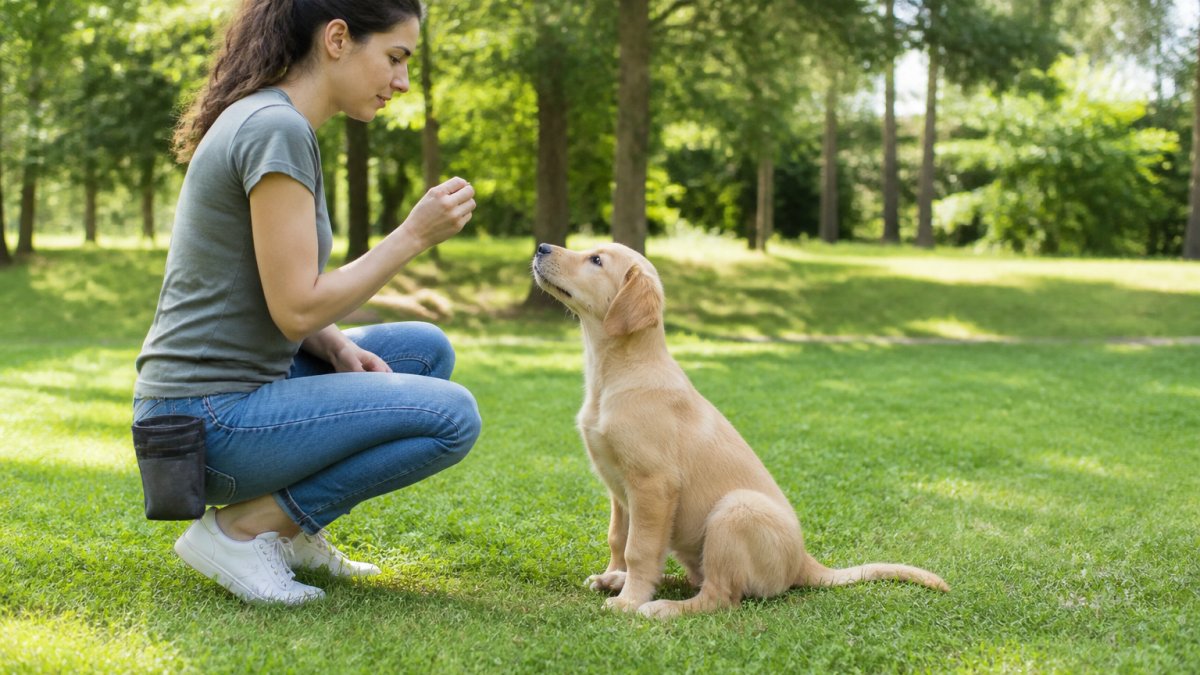
Sit is easiest to teach first. Hold a treat above your puppy's nose and move it back over their head. When their rear touches the ground, say "sit," deliver the treat, and praise. Repeat dozens of times over several days.
Stay requires resisting impulses. Start with 2-3 seconds: say "stay," step back one step, return, reward, and release with "okay." Gradually increase duration and distance.
Come can save your puppy's life. Start in a confined space with high-value rewards. Get excited and reward enthusiastically. Never use come as punishment, always make it mean good things.
Leave It and Drop It
Leave it prevents eating dangerous items. Hold a treat in your closed fist. When your puppy pulls away, say "leave it" and reward with a different treat.
Drop it is the emergency version. Teach by trading: offer a high-value treat for whatever they have. Say "drop it" as they release, reward, and praise.
Puppy Training Schedule and Daily Routine
Structure is everything. Puppies thrive on routine because it's predictable and teaches them what to expect.
Session Length and Frequency
Multiple short sessions beat one long session. A 10-minute engaged session teaches more than a 30-minute bored one.
Aim for 3-5 sessions daily, 5-10 minutes each. Stop the moment your puppy loses focus or gets frustrated.
Consistency matters more than intensity. Daily 5-minute sessions build neural pathways and prevent burnout.
House Training and Potty Schedules
Take your puppy outside first thing in the morning, after meals (15-30 minutes later), after naps, after play, and before bed. An 8-week-old holds it 1-2 hours; a 4-month-old holds it 4-5 hours.
When your puppy eliminates outside, celebrate enthusiastically with treats and praise to teach that outside is where bathroom breaks happen.
Clean accidents thoroughly with enzymatic cleaner. Never punish, punishment teaches puppies to hide when they need to go.
Puppy Recall Training for Off-Leash Reliability
Recall, coming reliably when called, gives you freedom. A puppy with solid recall can play off-leash and explore safely.
Start recall training with your puppy's name in positive contexts. Say their name, immediately reward. Your puppy learns their name means good things.
Teach "come" in a confined space with high-value rewards. Your puppy should associate come with the best thing, not the end of fun or a bath.
Build reliability gradually in increasingly distracting environments: living room, yard, quiet park, busier areas.
Build distance gradually: start at 5 feet, increase to 10, then 20 feet. A puppy reliable from 50 feet has true off-leash foundation.
Practice recall during normal life: call your puppy for dinner, walks, and play to make come rewarding in all contexts.
Puppy Leash Training and Walking Skills
Start leash training indoors. Put a lightweight collar or harness on your puppy with a leash attached and let them explore. This reduces novelty and fear.
Teach loose-leash walking: your puppy walks beside you with slack leash. When they pull, stop moving. Your puppy learns pulling doesn't work.
Reward frequently during early leash training. Every few steps where the leash is loose, treat and praise. Your puppy learns that walking beside you is rewarding.
Many puppies pull because they're excited and haven't learned to manage that energy. Exercise before walks helps. A tired puppy is a calmer puppy. A 15-minute play session before a walk often results in a much better leash experience.
Leash skills are foundational for real-world obedience. A puppy that walks calmly on leash is a puppy that can go places, socialize safely, and practice obedience in the real world where it matters.
Socialization, Crate Training, and Real-World Exposure
Socialization is critical during the first 16 weeks of your puppy's life. This is when your puppy is most open to new experiences and least likely to develop fear-based behaviors later.
Safe Socialization Practices
Socialization doesn't mean throwing your puppy into every situation. It means controlled exposure to different environments, people, sounds, and experiences in a way that builds confidence, not fear.
Start with calm introductions. Invite friends over for your puppy to meet. Take your puppy to quiet parks. Play different sounds, vacuum, doorbell, traffic, at low volumes.
Vaccination status matters. Until your puppy is fully vaccinated, avoid high-traffic dog parks and areas where unvaccinated dogs frequent. Consult your veterinarian about safe socialization timelines.
The goal is a puppy that's comfortable with novelty, not one that's been forced through traumatic experiences.
Watch your puppy's body language. If they're showing fear, tucking tail, backing away, trembling, slow down. Let them approach at their own pace. Forcing them past fear creates anxiety, not confidence.
Crate Training and Boundaries
A crate is one of the most useful tools for puppy obedience training. It provides a safe space, aids house training, and prevents destructive behavior when you can't supervise.
Introduce the crate slowly. Leave the door open and let your puppy explore. Toss treats inside. Make it a positive place, never a punishment.
Build duration gradually. Start with 5 minutes, then 10, then 15. Your puppy learns that the crate is safe and that you return.
A properly crate-trained puppy has a safe space, and you have peace of mind.
Boundaries extend beyond the crate. Teach your puppy where they can and can't go. Some puppies get the couch; others don't. Some get access to the whole house; others are restricted to certain rooms. Consistency is key.
Establishing clear boundaries early prevents most behavioral issues. A puppy that knows the rules is a puppy that respects them.
Puppy obedience training requires patience, consistency, and the right approach. If you're struggling with any aspect of puppy obedience training or facing behavioral challenges that feel overwhelming, professional guidance can accelerate progress and prevent problems from becoming entrenched. Voca Springs Dog Training specializes in tailored puppy training programs that match your puppy's developmental stage and your family's specific needs.
| Training Element | Age | Duration | Frequency |
|---|---|---|---|
| Basic commands (sit, stay) | 8-12 weeks | 5-10 minutes | 3-5 times daily |
| Recall training | 12-16 weeks | 5-10 minutes | 3-4 times daily |
| Leash skills | 10-16 weeks | 10-15 minutes | Daily |
| House training | 8 weeks onward | Ongoing | Multiple times daily |
| Socialization | 8-16 weeks | 10-20 minutes | 3-4 times weekly |
| Crate training | 8 weeks onward | Gradual increase | Daily |
According to American Kennel Club guidance on puppy training, early socialization and consistent positive reinforcement are the foundation for well-adjusted adult dogs. The International Association of Canine Professionals resources on puppy development emphasize that training should match your puppy's developmental stage, not just their age. Research from veterinary behaviorists on puppy socialization windows shows that the critical period for socialization is between 3 and 14 weeks of age, making early exposure to diverse experiences essential for preventing fear-based behaviors later.
Frequently Asked Questions
How long should puppy training sessions be?
Puppy training sessions should last 5-10 minutes for puppies 8-12 weeks old, and 10-15 minutes for puppies 12+ weeks. Short, focused sessions prevent fatigue and maintain attention. Puppies have limited concentration spans, so multiple brief sessions throughout the day work better than one long session. Always end on a positive note with praise and a reward.
What obedience commands should a puppy learn first?
Start with sit, come, and leave it. These three commands form the foundation for puppy obedience training and safety. Sit teaches impulse control, come ensures recall reliability, and leave it prevents dangerous behavior. Once your puppy masters these, progress to stay, down, and heel. Use positive reinforcement and high-value rewards to motivate learning.
How do you teach a puppy to come when called with positive reinforcement?
Use puppy recall training by starting indoors in a quiet environment. Show your puppy a high-value reward, say 'come' in an excited tone, and reward immediately when they respond. Practice short distances first, then gradually increase distance. Never chase your puppy or use 'come' for negative events like nail trimming. Consistency and rewards build reliable recall that works in real-world situations.
Can puppy obedience training be done at home, or do I need a professional trainer?
You can teach basic obedience at home using positive reinforcement and consistency, but professional trainers help accelerate progress and address specific behavioral challenges. Many owners benefit from working with a trainer who teaches them how to maintain training long-term. A good trainer becomes a resource for troubleshooting setbacks and ensuring your puppy's training transfers to real-world environments beyond your home.
What is the best age to start puppy obedience training?
Puppies can begin basic obedience training at 7-8 weeks of age. Early training establishes good habits and builds your bond. Younger puppies learn quickly but have shorter attention spans, so keep sessions brief. Formal group classes often start around 12-16 weeks after initial vaccinations. The key is starting early and maintaining consistency throughout your puppy's first year.
How do I stop my puppy from jumping on people?
Redirect jumping by teaching an alternative behavior like sit. When your puppy jumps, ignore the behavior and reward sitting instead. Teach visitors to ignore jumping and only give attention when your puppy has all four paws on the ground. Consistency is critical, everyone in your household must respond the same way. This teaches your puppy that calm behavior earns rewards, not jumping.