 how-to
Basic Manners Training for Adult Dogs: A Step-by-Step Guide
Table of Contents
- Why Adult Dog Training Works (Even If You've Tried Before)
- What You'll Need Before You Start
- Step 1: Set Up a Dog Training Schedule That Fits Real Life
- Step 2: How to Stop a Dog From Jumping on People
- Step 3: Loose Leash Walking Training Without the Pulling
- Step 4: Teach a Dog to Stay in Three Stages
- Common Mistakes to Avoid With Adult Dog Training
- Frequently Asked Questions
Last Updated: October 18, 2026
Why Adult Dog Training Works (Even If You've Tried Before)
Basic manners training for adult dogs succeeds because adult dogs learn differently than puppies, and that's actually good news. Adult dogs can focus longer, hold a calm state, and already know how to learn from consequences. This guide walks you through effective steps for training adult dogs, from the first session to a reliable stay.
Here's what most guides get wrong: they train adult dogs like puppies. That fails. An adult dog has years of practice at jumping, pulling, and ignoring cues. You're not teaching a blank slate. You're replacing old habits with new ones.
That's why adult dogs often improve fast once the training fits their age and energy level. Below, we'll show you exactly how to run a schedule, fix jumping, stop pulling on the leash, and build a stay that holds up in real life.
What You'll Need Before You Start
You need very little to begin basic manners training for adult dogs. Skip the fancy gear and start with these basics:
- A 6-foot flat leash (not a retractable one)
- A plain collar or harness that fits snugly
- Small, soft treats cut to pea size
- A treat pouch you can reach in one second
- A quiet space for the first few sessions
One more thing: a marker word. Pick a word like "yes" and say it the instant your dog does the right thing, then treat. This marks the exact moment your dog earned the reward.
A common mistake is using a full meal's worth of treats. Use tiny pieces. You'll hand out dozens per session.
Step 1: Set Up a Dog Training Schedule That Fits Real Life
A workable dog training schedule beats a perfect one you skip. Plan three short sessions a day, five to ten minutes each. That's it.
Here's a simple weekly plan:
| Day | Focus | Time |
|---|---|---|
| Monday | Jumping | 3 x 5 min |
| Tuesday | Leash walking | 3 x 5 min |
| Wednesday | Stay | 3 x 5 min |
| Thursday | Jumping + stay | 2 x 10 min |
| Friday | Leash walking | 3 x 5 min |
| Saturday | Real-world practice | 1 x 15 min |
| Sunday | Rest or light review | 5 min |
Keep sessions short and end while your dog still wants more. Train before meals, when food matters most. And train in short bursts, not one long grind.
Step 2: How to Stop a Dog From Jumping on People
To stop a dog from jumping on people, remove the reward for jumping. Attention is the reward. So the moment your dog's paws leave the floor, turn away and cross your arms. No talking, no pushing, no eye contact.
Here's the sequence:
- Ask a helper to walk in the door.
- The instant your dog jumps, the helper turns and freezes.
- When all four paws hit the floor, the helper turns back and greets calmly.
- Repeat until your dog offers four paws on the floor without being asked.
Pushing a jumping dog away feels like play to most dogs. That's why it never works. The turn-away is boring, and boring fixes jumping.
Practice with guests, delivery drivers, and anyone who'll play along. Consistency across every person is what makes it stick.
Step 3: Loose Leash Walking Training Without the Pulling
Loose leash walking training works when the walk stops the moment the leash goes tight. A tight leash means no forward motion. A loose leash means the walk continues. Your dog learns fast which one pays.
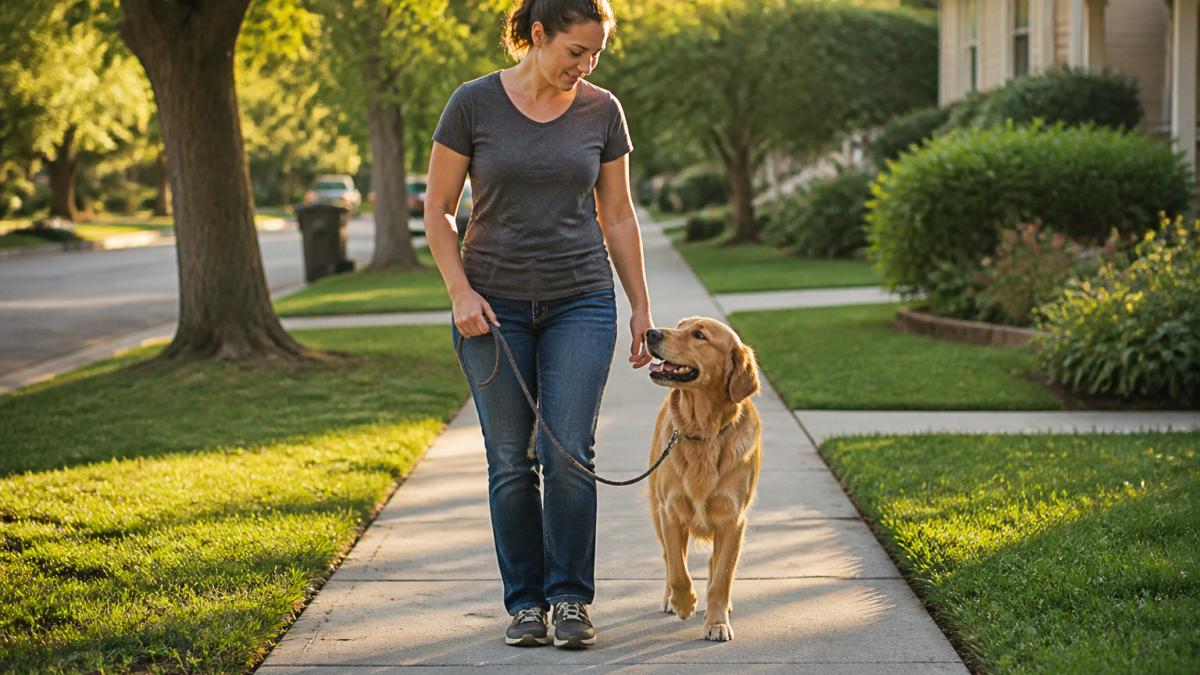
Start indoors or in a driveway. Hold the leash with slack. Step forward. If your dog pulls, stop and stand still. Wait for the leash to loosen, then move again.
Add these habits:
- Reward the check-in. Treat your dog for looking back at you.
- Change direction often. Keep your dog guessing and tuned in.
- Pick one side. Keep your dog on the same side every walk.
- Practice before the walk. Two minutes of loose leash in the yard first.
A front-clip harness can help with heavy pullers while you build the habit. It's a tool, not a fix. The stopping and rewarding does the real work.
Step 4: Teach a Dog to Stay in Three Stages
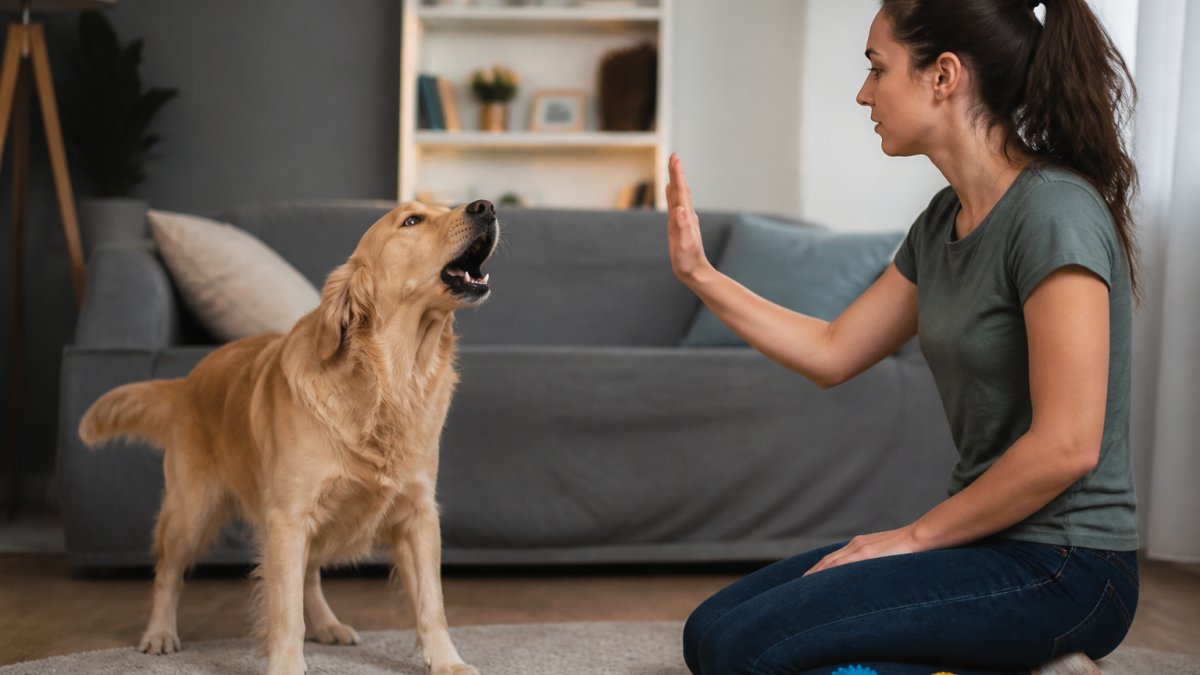
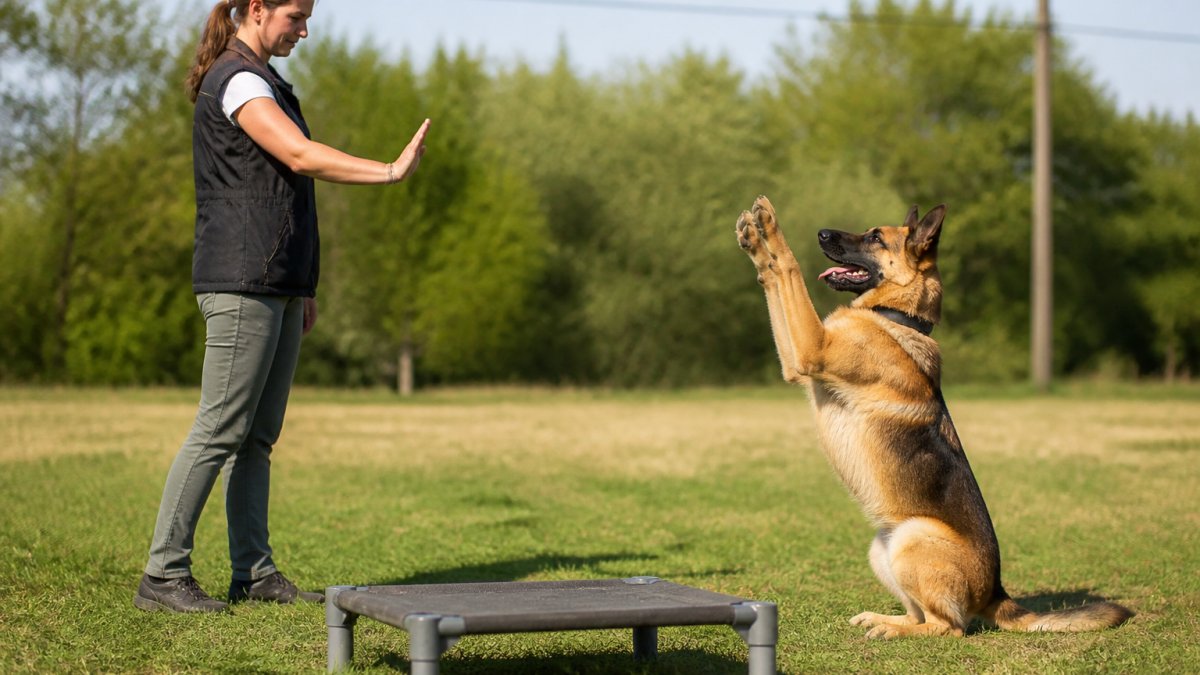
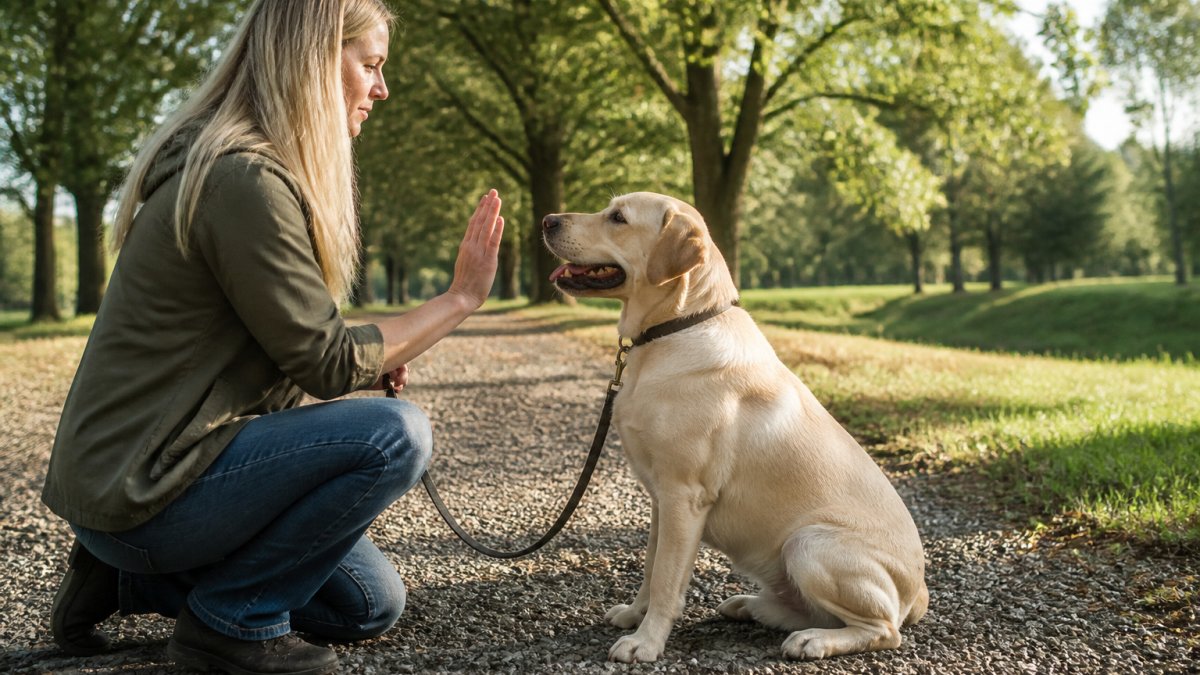
To teach a dog to stay, build it in three stages: duration, distance, then distraction. Never add two at once. Most failed stays come from pushing distance before duration is solid.
Stage 1: Duration. Ask for a sit. Say "stay." Count one second, then treat and release. Add one second at a time until your dog holds for 30 seconds.
Stage 2: Distance. With your dog holding a stay, take one step back. Return, treat, release. Add one step per session.
Stage 3: Distraction. Practice with a bouncing ball, a doorbell sound, or a person walking past. Start easy and build up.
Release your dog with a clear word like "free" every time. A stay without a release cue teaches your dog to guess when it ends.
Common Mistakes to Avoid With Adult Dog Training
The biggest mistake in basic manners training for adult dogs is training only in the living room. Adult dogs need practice where the behavior actually happens: the front door, the sidewalk, the vet parking lot.
Other mistakes we see often:
- Repeating cues. Saying "sit, sit, sit" teaches your dog that the first word means nothing.
- Treating at the wrong moment. The treat must land within a second of the behavior.
- Skipping the release cue. Without it, your dog decides when the stay ends.
- Training when frustrated. Your dog reads your mood and mirrors it.
- Changing the rules. Jumping is cute on Monday and wrong on Friday. Pick one rule and keep it.
If you've tried training before and it didn't stick, the problem is usually consistency, not your dog. Short daily sessions with the same rules from every person in the house change the outcome.
For dogs with reactivity, anxiety, or aggression, a tailored plan from a professional trainer can save months of guesswork. Voca Springs Dog Training specializes in addressing specific challenges, from basic manners to complex behavioral issues, delivering effective and reliable training solutions that improve dog obedience and foster a harmonious relationship between you and your canine companion.
Frequently Asked Questions
Can you teach an adult dog basic manners?
Yes. Adult dogs learn basic manners training just as well as puppies, and often faster because they can focus for longer stretches. The main difference is that adult dogs have rehearsed bad habits, so you're replacing an old behavior rather than starting from scratch. Keep sessions short, reward the behavior you want, and stay consistent for at least four to six weeks before expecting it to hold under distraction. Older dogs with a long history of jumping or pulling need more repetition, not a different method.
How often should you train an adult dog?
Short daily sessions beat long weekend marathons. Aim for two to three sessions of five to ten minutes each day, plus using the behaviors during normal routines like mealtime, doorways, and walks. A dog training schedule that spreads practice across the week gives better retention than one long session. Once a behavior is solid at home, practice it in one new location per week so it generalizes to the real world.
What should you do if an adult dog ignores commands?
First, check the difficulty level. A dog that ignores a cue at the park may perform it perfectly in the kitchen, which means the behavior isn't generalized yet, not that the dog is stubborn. Move back to a quieter setting, use higher-value rewards, and shorten the session. Also rule out simple causes: the cue may be unclear, the reward may be too weak, or the dog may be tired or overstimulated. If a dog consistently ignores cues at home with no distractions, a professional assessment can identify whether anxiety or pain is involved.
When should you hire a professional dog trainer?
Hire a trainer when progress stalls after several weeks of consistent home practice, when your dog shows reactivity, anxiety, or aggression around people or other dogs, or when you want reliable off-leash behavior in real environments. A trainer also helps if you're unsure whether a behavior is a training gap or something deeper. Pricing depends on the program and your goals, so check Voca Springs Dog Training's website for current rates and a quote.
Adult dog training takes patience, but the payoff is a dog you can take anywhere. If you're tired of the jumping, the pulling, and the guessing, Voca Springs Dog Training can help. Our programs focus on obedience and behavior modification, with a plan built around your dog and your daily life. We also work on the owner-dog bond, so the training holds up long after the sessions end. Get started with Voca Springs Dog Training and build a dog you're proud to walk down the street.