 how-to
How Do You Fix Destructive Chewing in Dogs?
Last Updated: October 25, 2026
Quick Summary
Destructive chewing dogs signal an underlying problem such as boredom, anxiety, teething, insufficient exercise, attention-seeking, or stress. Fix it by identifying when and where chewing happens, removing access to tempting items, providing appropriate chew toys, and redirecting the behavior with positive reinforcement.
- Puppies teethe between 3-7 months old, with chewing peaking during this phase and improving by 12 months with proper outlets.
- Increase daily exercise to at least 30-60 minutes of vigorous activity to address boredom-driven chewing.
- Safe chew toys must be large enough to prevent swallowing, durable enough to resist tearing, and free of small detachable parts.
- Start a one-week log tracking when chewing occurs, what is targeted, and what else was happening to identify the cause.
- Seek professional help from a trainer or veterinary behaviorist if no improvement occurs after 2-3 weeks of consistent intervention.
Table of Contents
- Why Dogs Engage in Destructive Chewing
- Identifying When and Where Chewing Happens
- Understanding Puppy Chewing and Teething
- How to Stop a Dog From Chewing Furniture
- Selecting the Best Chew Toys for Dogs
- How Long Does Destructive Chewing Last
- Building a Training Plan and Getting Professional Help
- Frequently Asked Questions
Why Dogs Engage in Destructive Chewing
Destructive chewing dogs aren't random in their behavior.
Dogs chew for many reasons: boredom, anxiety, teething (in puppies), insufficient exercise, attention-seeking, and stress or fear.
The key is figuring out which reason applies to your dog.
Understanding the cause is the first step to fixing it. When does the chewing happen? Where?
Dogs chew for several distinct reasons, each requiring a different solution.
| Reason | Signal | Solution Focus |
|---|---|---|
| Boredom | Chews all day, whether you are home or not | Increase exercise and mental stimulation |
| Separation anxiety | Destroys items only when alone | Address separation-related distress |
| Teething | Increased chewing during 3-7 months of age | Provide frozen toys and appropriate outlets |
| Insufficient exercise | Chews during afternoon or evening | Add 30-60 minutes vigorous daily activity |
| Attention-seeking | Dog chews when you react strongly | Remove reward; stay calm and redirect |
| Stress or fear | Chewing linked to specific triggers | Identify and manage environmental stressors |
Identifying When and Where Chewing Happens
The timing and location of destructive chewing dogs reveals the cause. Pay attention to these patterns:
Chewing that happens when you leave:
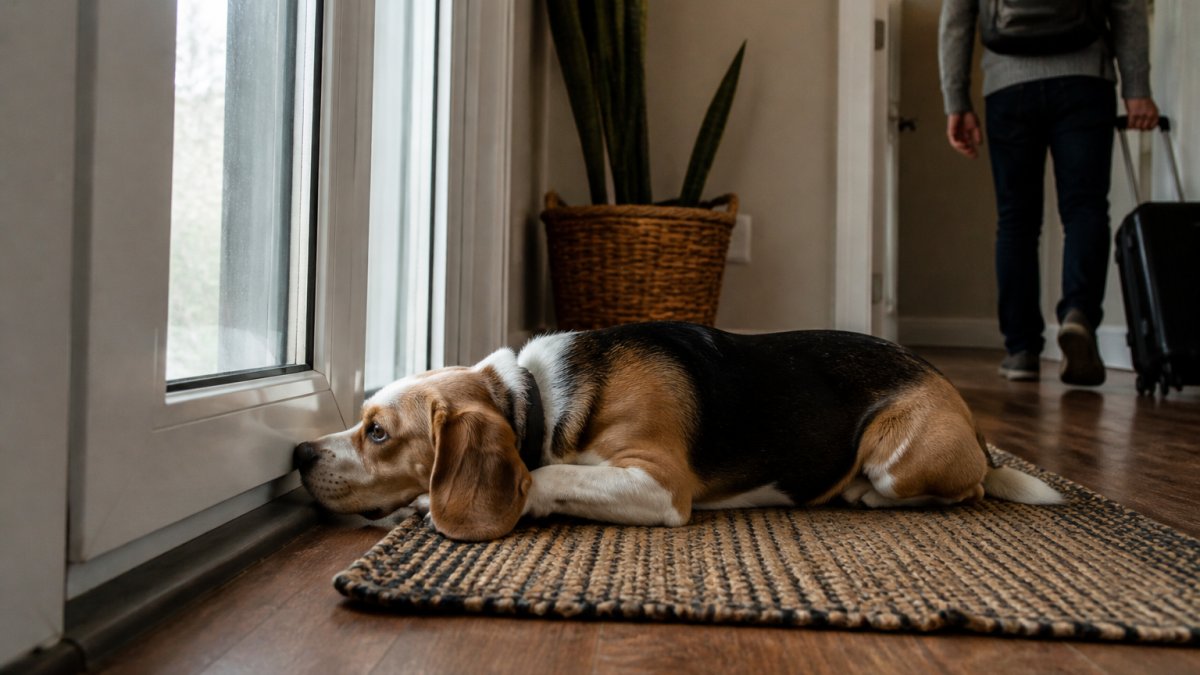
- Your dog destroys furniture, shoes, or door frames only when alone
- This signals separation anxiety or separation-related distress
Chewing that happens all day:
- Your dog chews constantly, whether you're home or not
- This usually means boredom or insufficient mental stimulation
Chewing that targets specific items:
- Your dog ignores toys but destroys the couch cushions or carpets
- This often means the dog prefers certain textures, or is seeking attention because you react strongly
Chewing during certain times:
- Your dog chews more in the afternoon or evening
- This may point to boredom, pent-up energy, or a lack of structure
Start a simple log: note when chewing happens, what the dog targets, and what else was happening (were you home? had the dog exercised?). After a week, patterns emerge to guide your next steps.
Understanding Puppy Chewing and Teething
Puppy chewing is normal. Puppies explore the world with their mouths, and teething makes chewing relieve discomfort.
When does teething happen?
Puppies start losing baby teeth around 3-4 months old, and by 6-7 months most have their adult teeth. During this phase, chewing increases dramatically because the puppy's aching gums are soothed by it.
This is the chewing instinct at work, a normal developmental stage, not destructive behavior.
What to expect during the teething phase:
- Increased drooling and chewing
- Swollen, tender gums
- A strong drive to chew on anything within reach
The teething phase is temporary, ending once adult teeth come in.
Without proper outlets, teething puppies will target furniture, shoes, and household objects, not out of mischief, but physical discomfort.
How to Stop a Dog From Chewing Furniture
Step 1: Puppy-proof and dog-proof your home
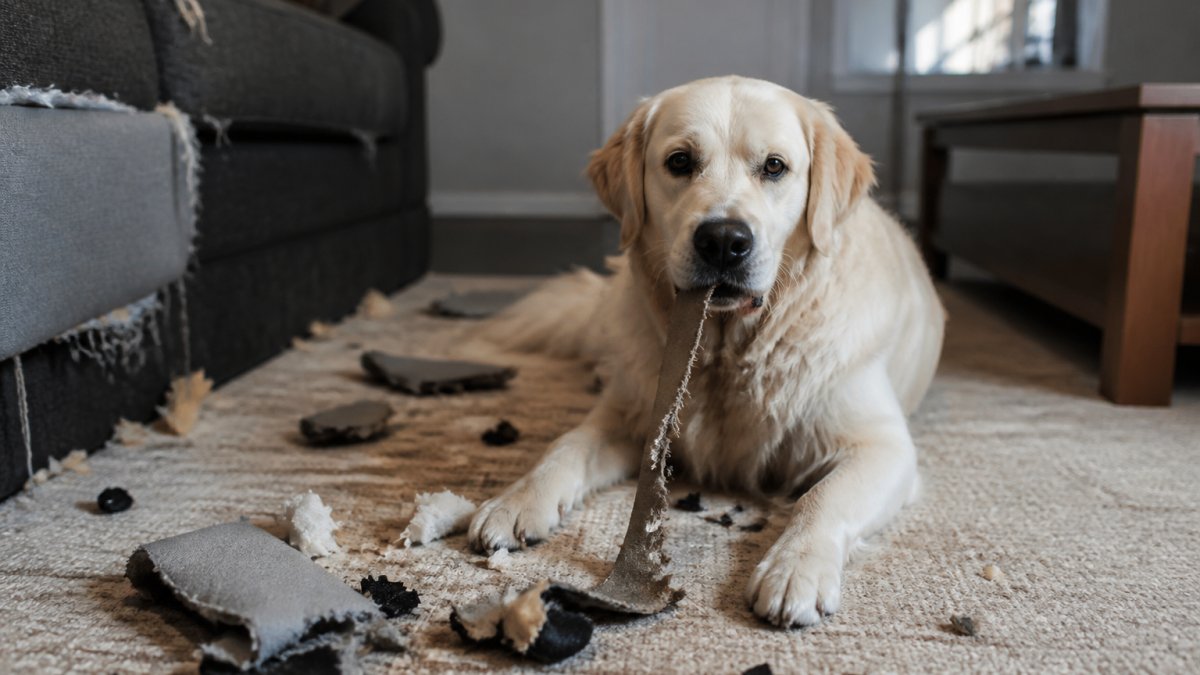
Remove temptation. If your dog can't reach the couch cushions, the dog can't destroy them.
- Keep shoes in a closed closet, not on the floor
- Use baby gates to block access to rooms with furniture the dog targets
- Cover couch cushions or move them out of reach
Confinement works. Use a crate, safe room, or pen when you can't supervise.
Step 2: Provide appropriate chewing outlets
Give your dog something better to chew: safe chew toys, frozen toys, or ice cubes.
- Rotate toys to keep them interesting
- Offer frozen toys when the dog is most likely to chew
- Use puzzle toys that require effort to chew
Step 3: Redirect and reward
When you catch your dog chewing something inappropriate, redirect immediately.
- Calmly remove the forbidden item
- Offer an appropriate chew toy instead
- Praise and reward when the dog chews the toy
Positive reinforcement works: chewing toys earns attention and rewards; chewing furniture earns nothing.
Selecting the Best Chew Toys for Dogs
Not all chew toys are safe, and the wrong toy can turn a chewing habit into an emergency.
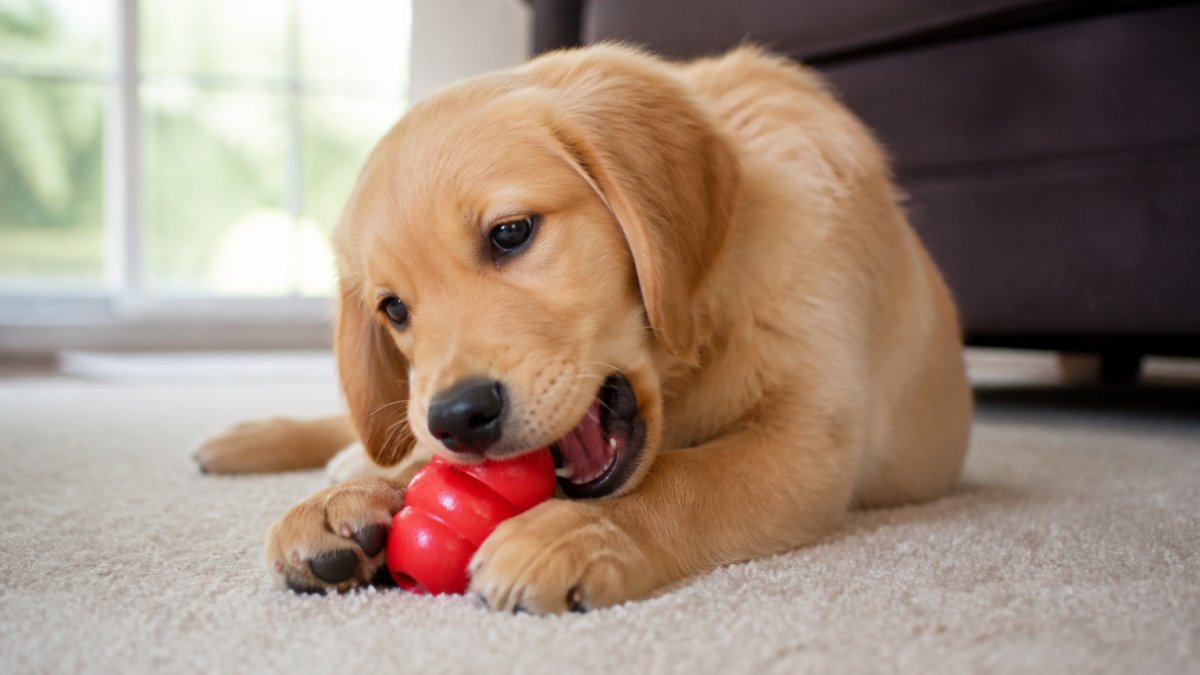
Safety first: the non-negotiables
A safe chew toy must pass four checks:
- Size: The toy should be large enough that your dog cannot swallow it whole. A common guideline is to choose a toy longer than your dog's muzzle and wider than the dog's throat. If you can fit the toy through your dog's open mouth with room to spare, it is too small.
- Durability: The toy must resist being torn apart. Watch for pieces breaking off. If your dog is removing chunks, the toy is not durable enough for that dog, switch to a tougher material or a different style.
- No small parts: Avoid toys with strings, bells, squeakers that can be pulled out, or attached pieces that can be chewed off and swallowed. These are choking and obstruction hazards.
Match the toy to the dog, not the label
Toy packaging often says "for heavy chewers," but dogs vary. Use this method:
- Assess chewing style. Watch your dog with a toy for five minutes. Does the dog gnaw steadily, or try to rip and shred? Steady gnawers can use firmer rubber or nylon. Rip-and-shred dogs need very tough rubber or dense nylon, and close supervision.
- Consider size and jaw strength. A large dog with strong jaws can destroy a toy marketed for medium dogs. Size up rather than down when in doubt.
- Test one toy at a time. Introduce a new toy during a supervised session. Inspect it after each session for cracks, missing pieces, or sharp edges. Retire it at the first sign of damage.
- Rotate textures. Offer a mix of rubber, rope, nylon, and natural chews, but introduce them one at a time so you can identify which ones your dog destroys quickly.
Toy types and their trade-offs
- Rubber toys (e.g., classic Kong-style): Good for stuffing and freezing. Durable for moderate chewers. Not for dogs that shred rubber into pieces.
- Nylon chews: Very tough, long-lasting. Can be too hard for puppies or senior dogs. Inspect for sharp edges as the dog wears them down.
- Rope toys: Good for interactive tug and light chewing. Not for heavy chewers, strings can be swallowed and cause blockage.
- Natural chews (bully sticks, antlers): Long-lasting, but watch for splintering and calorie content. Antlers can be too hard and cause tooth fractures in some dogs.
Supervision and replacement schedule
Inspect all chew toys weekly and replace any with cracks, missing pieces, or exposed inner material.
When to skip chew toys entirely
Some dogs cannot safely use chew toys because they swallow pieces. For these dogs, use food-dispensing puzzle toys, frozen lick mats, or supervised training sessions instead.
How Long Does Destructive Chewing Last
The timeline depends on the cause and your response.
Puppy chewing typically peaks during teething (3-7 months) and improves by 12 months with appropriate outlets and supervision as puppies mature.
Boredom-driven chewing persists indefinitely until the lack of exercise or mental stimulation is addressed.
Separation-related chewing takes longer.
Attention-seeking chewing changes quickly once you stop reacting.
The bottom line: destructive chewing is fixable. The timeline depends on why your dog chews and how consistently you address it.
Building a Training Plan and Getting Professional Help
A structured, measurable plan beats random corrections.
Step 1: Establish a baseline (Week 0)
Before changing anything, measure the problem. For seven days, log each chewing incident with:
- Time of day
- Whether you were home or away
- What was chewed (furniture, shoes, door frame, etc.)
- What else was happening (exercise that day, feeding schedule, visitors)
Count total incidents and note the most common pattern.
Step 2: Match the intervention to the pattern
Use your log to choose a targeted approach:
- Chewing only when alone: Treat as separation-related distress. Don't use a crate as the sole fix, it can worsen anxiety. Practice short absences (starting with seconds) and provide a safe, enriched space. See Step 5.
- Chewing all day, whether you are home or not: Increase exercise and mental stimulation, at least 30-60 minutes of vigorous activity daily (adjust for age and breed) plus food-dispensing toys. Recheck the log after two weeks.
- Chewing specific textures or items: Remove access and provide a preferred alternative. If the dog targets couch cushions, offer a similar-textured toy (e.g., a soft but durable plush) under supervision.
- Chewing during teething (puppies 3-7 months): Provide frozen toys and frequent potty breaks. This is developmental and will fade with maturity and management.
Step 3: Set up the environment and routine
- Management: Use baby gates, closed doors, and confinement (crate or pen) when you cannot supervise, preventing rehearsal of the unwanted behavior.
- Routine: Feed, exercise, and train at consistent times; predictability reduces anxiety and boredom.
- Enrichment: Provide at least one food-dispensing toy or frozen chew daily, and rotate toys every few days.
Step 4: Track progress weekly
Each week, compare the incident count to your baseline:
- Improvement: Incidents drop 50% or more within two weeks; dog chooses toys more often and settles faster when alone.
- No change: Revisit the cause, is exercise sufficient? Is the dog still rehearsing the behavior? Adjust one variable at a time.
- Relapse: A return to baseline often means a trigger changed (schedule change, new stressor). Return to management and increase enrichment temporarily.
Step 5: Know when to get professional help
Seek help from a qualified trainer or veterinary behaviorist if:
- No improvement after 2-3 weeks of consistent plan adherence.
- Chewing comes with other separation-distress signs: pacing, drooling, destruction focused on exits (doors, window frames), or vocalization when alone.
- The dog has injured itself (broken teeth, bleeding gums) or swallowed foreign material.
- You feel overwhelmed or household safety is affected.
A professional can assess whether the issue is training, anxiety, or medical.
Many dog owners also find it helpful to review common questions about professional training to understand what to expect.
Destructive chewing is frustrating but solvable. Understand why your dog chews, remove temptation, provide better alternatives, and stay consistent.
Frequently Asked Questions
Why does my dog chew things when left alone?
Dogs left alone often chew destructively due to separation anxiety, boredom, or insufficient mental stimulation. If your dog only chews when you're gone, this signals distress rather than a training issue. Gradual desensitization to alone time, combined with appropriate chew toys and mental enrichment, helps. In severe cases, consult a professional trainer to assess whether separation-related anxiety requires specialized behavior modification.
At what age do dogs stop destructive chewing?
Most puppies reduce destructive chewing around 6 to 12 months as their adult teeth fully emerge and the teething phase ends. However, adult dogs may continue chewing if boredom, anxiety, or insufficient exercise persists. With proper training, redirection, and environmental management, you can establish appropriate chewing habits at any age. The timeline depends on consistency and addressing the underlying cause.
What should I give my dog to chew instead of furniture?
Offer safe chew toys matched to your dog's size and chewing intensity, such as rubber toys, rope toys, or puzzle feeders. Frozen toys and ice cubes provide relief during teething. Rotate toys to maintain novelty and engagement. Avoid small objects that pose choking hazards and supervise new toys initially. Pair appropriate chew toys with positive reinforcement when your dog chooses them over household objects.
When should I seek professional help for destructive chewing?
Seek professional help if destructive chewing persists despite management efforts, if your dog shows signs of separation anxiety, or if the behavior escalates. A professional trainer can assess whether the chewing stems from anxiety, boredom, or a medical issue. Early intervention prevents the behavior from becoming deeply ingrained.