 how-to
How to Stop Dog Leash Reactivity: A Step-by-Step Plan
Table of Contents
- Why Your Dog Loses It on Leash (and Why It Is Not Aggression)
- Reading Body Language and Stress Signals Before the Reaction
- Understanding Dog Reactivity Threshold Distance
- What to Do When a Dog Reacts on Leash: The U-Turn and Distance Drill
- Counterconditioning and Desensitization for Dogs: Changing the Association
- Best Equipment for Walking a Reactive Dog: Fit, Safety, and Handling
- A Measurable Training Progression: Tracking Progress and Knowing When to Get Help
- Conclusion: Consistency Beats Perfection on Every Walk
- Frequently Asked Questions
Last Updated: October 9, 2026
Why Your Dog Loses It on Leash (and Why It Is Not Aggression)
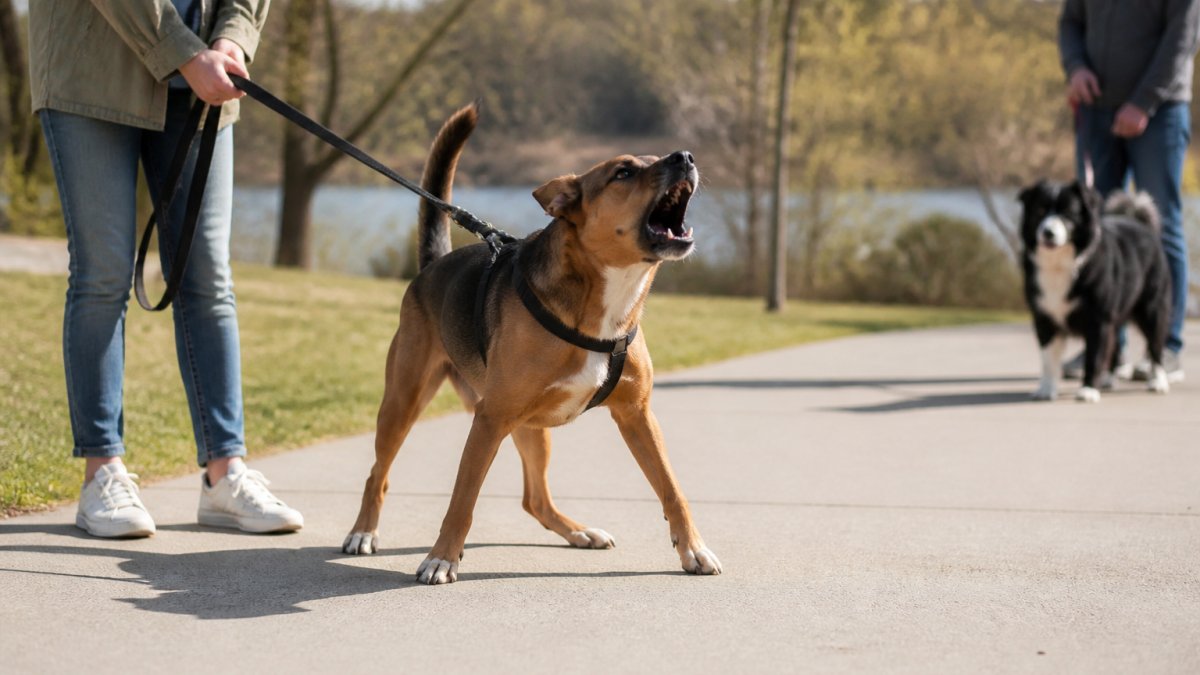
That barking, lunging dog at the end of the leash is not a bad dog. Dog leash reactivity is an overreaction to something in the environment, most often other dogs, and it usually comes from fear or frustration rather than true aggression.
The good news: how to stop dog leash reactivity follows a predictable path. Below are the causes, the body language to watch, and a step-by-step plan you can start this week.
Fear, Frustration, and Arousal: The Three Drivers of Reactivity
Most reactive behavior traces back to one of three drivers:
- Fear: The dog feels trapped by the leash and barks to create distance.
- Frustration: The dog wants to greet but cannot, so the leash tension builds.
- Arousal: The dog gets overexcited and loses the ability to think.
A common mistake is assuming every reactive dog is aggressive. A frightened dog and a frustrated dog can look almost identical at the end of a leash.
Common Triggers: Other Dogs, Leashes, and Surprises
Other dogs are the most common trigger, but skateboards, delivery trucks, joggers, and even the sight of the leash can set a dog off. Tracking your dog's specific triggers is the first real step in any training plan.
Reading Body Language and Stress Signals Before the Reaction
A reaction is almost never sudden. Dogs give clear stress signals first, and reading them is how you get ahead of the explosion.
Watch for these early signs:
- Stiff body and a hard stare
- Lip licking or yawning when nothing is happening
- Whale eye, where the whites of the eyes show
That last one matters most. If your dog stops taking food, they are over threshold and no longer learning. The moment treats stop working, you are too close.
Understanding Dog Reactivity Threshold Distance
Dog reactivity threshold distance is the space your dog needs to stay calm around a trigger. Below threshold, your dog can see the trigger and still think, eat, and respond to you.
Every dog has a different number. A calm, well-socialized dog might be fine at ten feet. A highly reactive dog might need fifty yards or more.
How to Find Your Dog's Comfortable Distance and Keep Them Below Threshold
Try this exercise on your next walk:
- Spot a trigger in the distance.
- Watch your dog's body language closely.
- Note the distance where they first notice but stay relaxed.
- Note the distance where they stiffen or stop eating.
- Your working distance sits between those two points.
What to Do When a Dog Reacts on Leash: The U-Turn and Distance Drill
When a reaction happens, your job is not to correct the dog but to create distance and exit calmly.
Here is the drill we teach first:
- Mark the moment. Say "let's go" the instant you see the trigger.
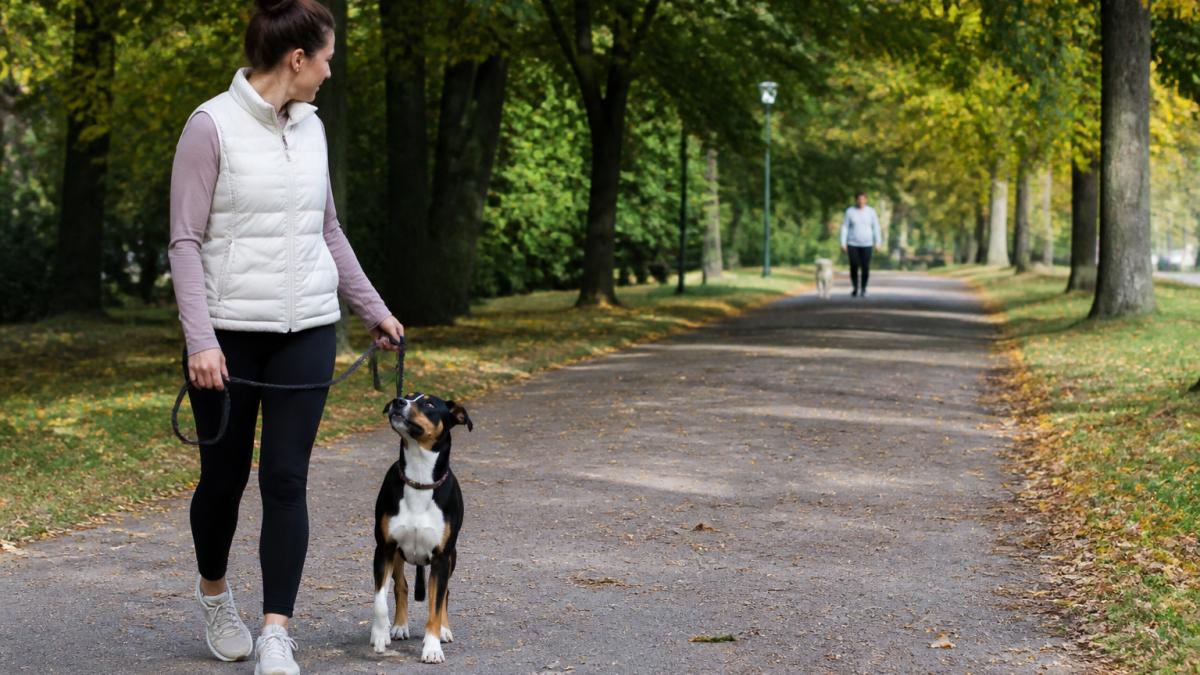
- Turn away. Do a clean U-turn and walk in the opposite direction.
- Create distance. Move until your dog can think and take treats again.
- Reward the calm. Feed treats as you walk away, not after the reaction.
- Reset. Once your dog is calm, continue the walk.
The goal is to make "trigger appears" mean "we turn and get paid." With practice, the U-turn becomes automatic, the redirect that replaces the reaction.
Counterconditioning and Desensitization for Dogs: Changing the Association
Counterconditioning and desensitization for dogs is the long-term fix. Desensitization is gradual exposure at a distance where your dog stays calm; counterconditioning pairs that trigger with something good, usually food.
The goal is simple: change the association. Right now other dogs mean stress; with repetition, they can mean "treats are coming."
The Look-at-That Game and Attention Cue
This game does most of the heavy lifting:
- Trigger appears at a safe distance.
- Say your cue, such as "look."
- The instant your dog looks at the trigger, mark and reward.
- Repeat until your dog looks at the trigger and then back at you.
- Fade the cue. The check-in becomes the habit.
That check-in is the behavior you want on every walk. A dog who looks at you instead of lunging can be managed.
Best Equipment for Walking a Reactive Dog: Fit, Safety, and Handling
Most articles mention a harness and move on, leaving owners guessing about fit, handling, and which tools sabotage training. This section covers what to use, how it should fit, how to handle it, and what to avoid.
The Baseline Setup
- Harness: A front-clip or dual-clip no-pull harness. A front attachment gives you leverage to redirect a lunging dog without cranking on the neck.
- Leash: A standard six-foot leash in a material that will not slice your hands. A second, shorter traffic handle is useful in tight spaces.
- Collar: A flat collar with ID tags only. It is identification, not a handling tool.
Fit Checks That Actually Matter
A harness that rubs or restricts movement adds stress to an already stressed dog. Check these before every walk:
- Two-finger rule. You should fit two fingers under every strap, snug, not tight.
- Shoulder clearance. The dog should be able to reach forward and back without the harness binding the shoulder. If the front strap crosses the point of the shoulder, the gait changes and irritation builds.
- Chest strap position. It should sit behind the shoulder blades, not across the throat.
- Escape test. With the dog standing, gently pull backward on the leash attachment. If the harness slides off the shoulders, it is too loose.
- Chafe watch. Check armpits and the chest plate after every walk for redness or hair loss.
Handling Mechanics
Gear only works if your hands do. A few habits separate smooth walks from wrestling matches:
- Hold the leash in your dominant hand with a loop, and gather slack in the other. Never wrap the leash around your wrist.
- Keep a loose leash as the default. Tension travels down the leash and tells the dog something is wrong before they see the trigger.
- Use your body, not your arm. Turn your whole torso and step away rather than yanking sideways.
Tools to Avoid and Why
- Retractable leashes. They teach constant tension, offer no reliable control, and can cause serious injuries if they snap or wrap.
- Choke chains and prong collars. These cause pain or airway pressure, adding a negative association to the exact trigger you are trying to neutralize.
- Shock collars. Same problem, higher intensity. Punishment suppresses the visible reaction without changing the emotion, and suppressed reactivity often returns stronger.
Matching Gear to the Dog
- Strong puller: Front-clip harness plus a six-foot leash. Add a head halter only with guidance from a trainer, since improper use can injure the neck.
- Small or senior dog: Lightweight harness with padded straps. Watch for pressure points over thin skin.
- Dog who slips collars: A martingale-style collar or a harness with a belly strap, fitted to the two-finger rule.
A Measurable Training Progression: Tracking Progress and Knowing When to Get Help
Most articles say stay under threshold and reward calm, but few explain how to structure sessions, when to increase difficulty, or what to do when progress stalls. This section is that plan.
Track Three Numbers Every Session
Progress in reactivity training is measured in feet and seconds, not in perfect walks. Log these after each session:
| Metric | What to Record | What Progress Looks Like |
|---|---|---|
| Threshold distance | Feet at which your dog notices a trigger and stays calm | Distance shrinks over weeks |
| Recovery time | Seconds from reaction to taking treats again | Time gets shorter |
| Reaction intensity | 1-5 scale (1 = look and dismiss, 5 = lunging and barking) | Average score drops |
A notebook or phone note works. The point is a trend line, not a single good day.
Session Structure
Keep sessions short and end on success:
- Warm-up (2-3 minutes). Loose-leash walking in a quiet area with easy treats.
- Work block (5-10 minutes). One or two trigger exposures at your current working distance.
- Cool-down (2-3 minutes). Sniffing, easy walking, no triggers.
- Stop while it is still going well. Ending early beats pushing through one more rep.
Readiness Criteria for Increasing Difficulty
Do not move to a harder setup until the current one is boring. Use these gates:
- Distance: Your dog can see a trigger at the current distance and look back at you within two seconds, three sessions in a row.
- Duration: Your dog stays calm for 30 seconds of trigger exposure without needing constant feeding.
- Recovery: After a mild reaction, your dog is taking treats again within 10 seconds.
When all four are met, shrink distance by about 10 percent, add a slightly more intense trigger, or add a second trigger. Change one variable at a time.
Handling Setbacks
Bad sessions happen. A loose dog charges, a trigger appears around a blind corner, or your dog is having an off day. When it happens:
- Create distance immediately. Do not try to train through a reaction.
- Reset to an easier setup next session. Drop back one level for two or three sessions.
- Check the basics. Sleep, pain, hunger, and heat all lower threshold. A dog who is suddenly reactive again may just be tired or sore.
When to Involve a Veterinarian
Reactivity has a health side training cannot fix. Schedule a vet visit before or alongside training if:
- The behavior appeared suddenly in an adult dog with no clear trigger.
- Your dog is reactive in multiple contexts, not just on leash.
- You see other changes: appetite, sleep, mobility, or house-soiling.
Pain, thyroid issues, and vision or hearing changes can all make a dog more reactive. A vet can rule out medical causes and discuss whether medication might help a dog too aroused to learn.
When to Bring in a Professional
If your dog's numbers are not moving after several weeks of consistent practice, or if reactions are escalating, that is your signal. Look for a trainer who uses reward-based methods and has experience with reactivity. In serious cases, ask your vet for a referral to a board-certified veterinary behaviorist.
Owners in rural areas who need real-world help. Voca Springs Dog Training works with dogs in home and neighborhood settings, not just a facility, so the training holds up where it matters.
Conclusion: Consistency Beats Perfection on Every Walk
Reactivity does not fade with one good week. It fades with hundreds of small, boring repetitions done the same way every time. You will have bad walks, every handler does. What matters is showing up tomorrow with the treats, the harness, and the plan.
If you want help building that plan, Voca Springs Dog Training offers obedience and behavior modification programs tailored to your dog.
Frequently Asked Questions
What causes a dog to be leash reactive?
Leash reactivity usually comes from fear, frustration, or over-arousal. A dog who feels trapped by the leash may bark and lunge to create distance from a trigger, often other dogs. Frustration grows when a dog wants to greet but cannot. Past scary experiences can also build a negative association. Most leash-reactive dogs are not aggressive; they are overwhelmed and lack a calmer way to cope.
How far away should my dog be from a trigger during training?
Start at a distance where your dog notices the trigger but still takes treats and responds to you. That is their threshold distance, and it varies by dog, often 20 to 50 feet at first. If your dog stares, stiffens, or stops eating, you are too close. Move farther away, then work closer in small steps as your dog stays calm.
Should I use treats to train a leash-reactive dog?
Yes. High-value food rewards are central to counterconditioning and desensitization. Every time your dog sees a trigger at a safe distance, mark and reward calm behavior so the trigger predicts something good. Over many repetitions, the sight of another dog starts to trigger a check-in with you rather than a reaction. Keep sessions short and use treats your dog genuinely loves.
When should I get professional help for leash reactivity?
Seek a qualified trainer or veterinary behaviorist if your dog has bitten or snapped, if reactions are worsening, if you cannot find a distance where your dog stays calm, or if your dog shows constant anxiety between walks. A veterinarian can also rule out pain or health issues that affect behavior. Professional guidance can build a safe, structured plan for your dog.