 how-to
7 In-Home Dog Obedience Training Benefits That Stick
Table of Contents
- 1. Better Behavior at Home and in Public
- 2. Clearer Communication Between You and Your Dog
- 3. A Stronger Bond Built on Trust
- 4. Safety Through Reliable Basic Commands
- 5. Positive Reinforcement Dog Training That Builds Confidence
- 6. In-Home Dog Training vs. Group Classes
- 7. Basic Dog Obedience Training at Home: A Step-by-Step Plan
- 8. How Long Dog Obedience Training Duration Really Is
- Frequently Asked Questions
Last Updated: October 17, 2026
1. Better Behavior at Home and in Public
In-home dog obedience training benefits start with a simple fact: dogs learn where they live. A dog that practices sit, stay, and settle on your own living room rug generalizes those skills faster than one drilled in a strange building. That is the core advantage, and it shows up in daily life.
The behaviors are not new tricks. They are the same basic commands, practiced in the exact spots where they need to work.
Here is what changes first:
- Fewer jumped-up greetings at the front door
- Calmer behavior when guests arrive
- Less barking at passersby through the window
- Steadier leash manners on the same route you walk daily
- Faster settling on a mat or bed when you need quiet
Public behavior improves as a spillover. A dog that holds a stay in your kitchen usually holds it at the vet's office or a patio table. The home is the low-distraction starting line. The street is the test.
2. Clearer Communication Between You and Your Dog
Most behavior problems trace back to mixed signals, not bad dogs. In-home training fixes that because the trainer watches you and your dog interact in real time. You learn to read stress signals, timing, and body language you may have missed entirely.
A common mistake is repeating a command three or four times. That teaches a dog that "sit" means "sit eventually." We coach owners on one clear cue, one calm tone, and immediate reward. The dog stops guessing. You stop repeating yourself.
Clearer communication cuts both ways:
- You learn what your dog is telling you before a reaction starts
- Your dog learns that one word means one action
- Household rules stay the same for every family member
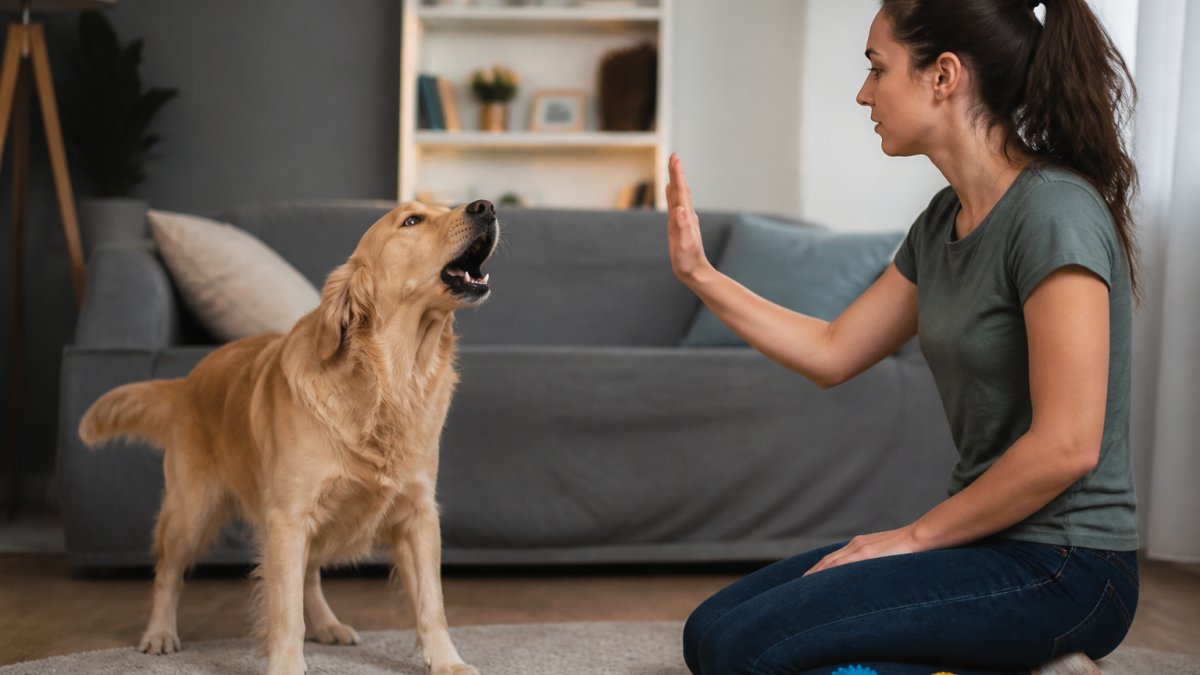
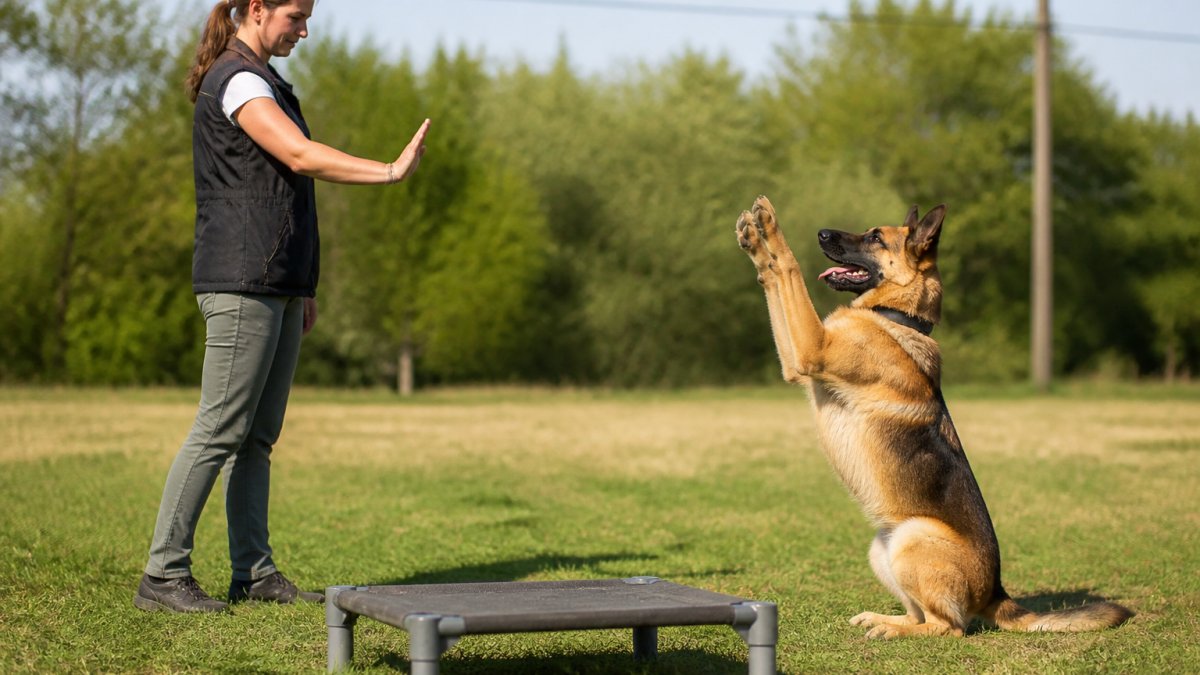
- Hand signals back up verbal cues for noisy or crowded moments
The result is a shared language. That language is the foundation for reliable response, whether you are in the kitchen or at a park.
3. A Stronger Bond Built on Trust
Training is a relationship, not a checklist. Every reward-based session teaches your dog that you are predictable, fair, and worth listening to. That is how trust grows. In-home sessions build it faster because there is no strange environment to distract from the connection.
We ask owners to keep sessions short and upbeat. Five to ten minutes of focused practice beats a long, frustrating drill every time. Dogs remember the last rep, so end on a win.
What builds the bond:
- Rewarding effort, not just perfect execution
- Ending every session while your dog still wants more
- Using play and praise alongside treats
- Keeping corrections calm and minimal
4. Safety Through Reliable Basic Commands
A reliable recall can save a dog's life. So can a solid stay at an open door or a down-stay near a busy street. These are not party tricks. They are safety skills, and they need to work under real pressure.
In-home training builds them in layers. You start in the hallway, then the backyard, then the front yard, then the sidewalk. Each step adds distraction. Each step proves the command holds.
The safety commands worth drilling:
- Recall: your dog comes when called, every time
- Stay: your dog holds position at doors and curbs
- Leave it: your dog ignores dropped food, trash, or hazards
- Down: your dog settles fast in a tense moment
- Wait: your dog pauses before bolting out of a car or gate
A common mistake is practicing recall only when it is easy. Call your dog, reward heavily, then release. Never call your dog to end something fun. That teaches a dog to dodge the cue.
5. Positive Reinforcement Dog Training That Builds Confidence
Positive reinforcement dog training rewards the behavior you want instead of punishing the behavior you do not. The effect on confidence is the part most owners underestimate. A dog that earns rewards for trying new things becomes bolder, calmer, and more curious.
Shy dogs benefit most. A rescue that flinches at the vacuum can learn to settle on a mat while it runs. A nervous pup can learn that the doorbell means "go to your bed," not "panic."
Confidence shows up as:
- Less hiding and freezing in new situations
- Faster recovery after a startle
- More willing engagement during training
- Calmer behavior around household noise
Reward-based methods also protect the bond. Your dog learns to offer behavior because good things follow, not because it fears the consequence.
6. In-Home Dog Training vs. Group Classes
In-home dog training vs. group classes comes down to distraction level and personal attention. Group classes offer socialization and a set schedule. In-home training offers a trainer in your space, watching your actual daily problems.
Here is the honest comparison:
| Factor | In-Home Training | Group Classes |
|---|---|---|
| Setting | Your home, yard, and street | A training facility or park |
| Distractions | Real household ones, added gradually | Other dogs and people from day one |
| Attention | One-on-one coaching | Shared among the class |
| Best for | Reactivity, anxiety, specific home issues | Friendly dogs needing basic socialization |
| Owner coaching | Direct, hands-on correction | General instruction |
| Schedule | Flexible | Fixed class times |
Group classes are the better fit for a social, easygoing puppy that needs neutral exposure. In-home work wins for dogs with behavior problems, anxious rescues, or owners who want skills that hold in their own house.
Many families use both. Start in-home for the foundation, then join a group class for proofing around other dogs. That sequence tends to stick.
7. Basic Dog Obedience Training at Home: A Step-by-Step Plan
Basic dog obedience training at home follows a simple order: easy wins first, then add distance, duration, and distraction. The plan below is what we walk owners through in the first month. Keep sessions short and end on success.
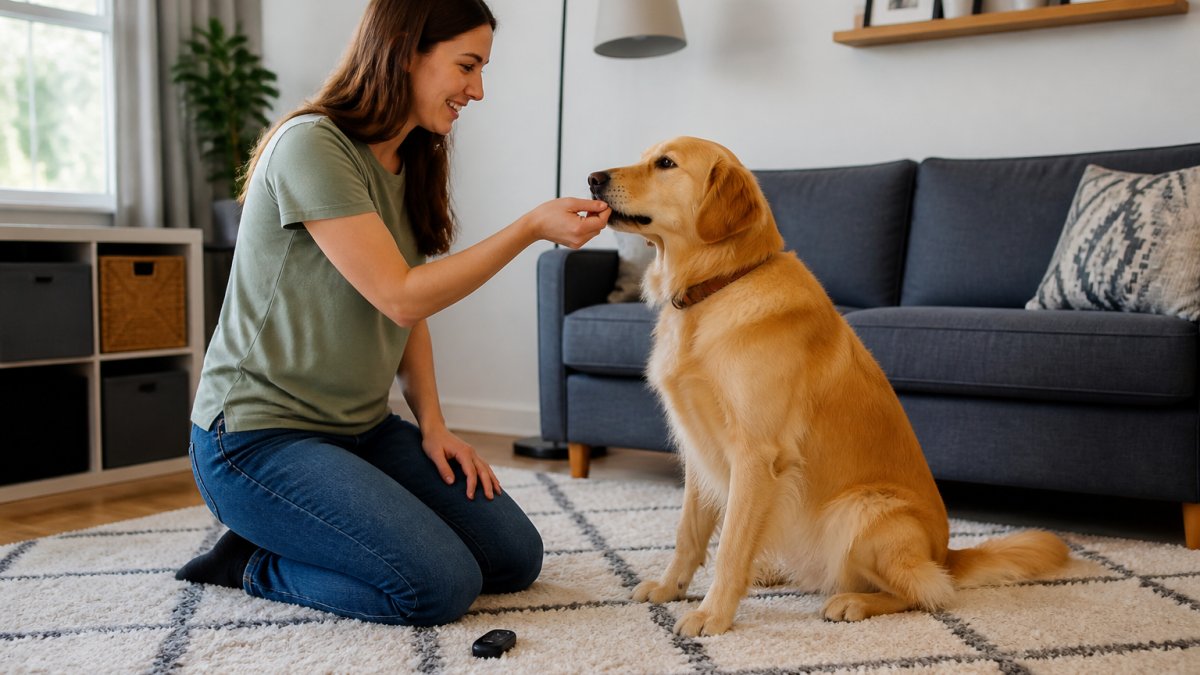
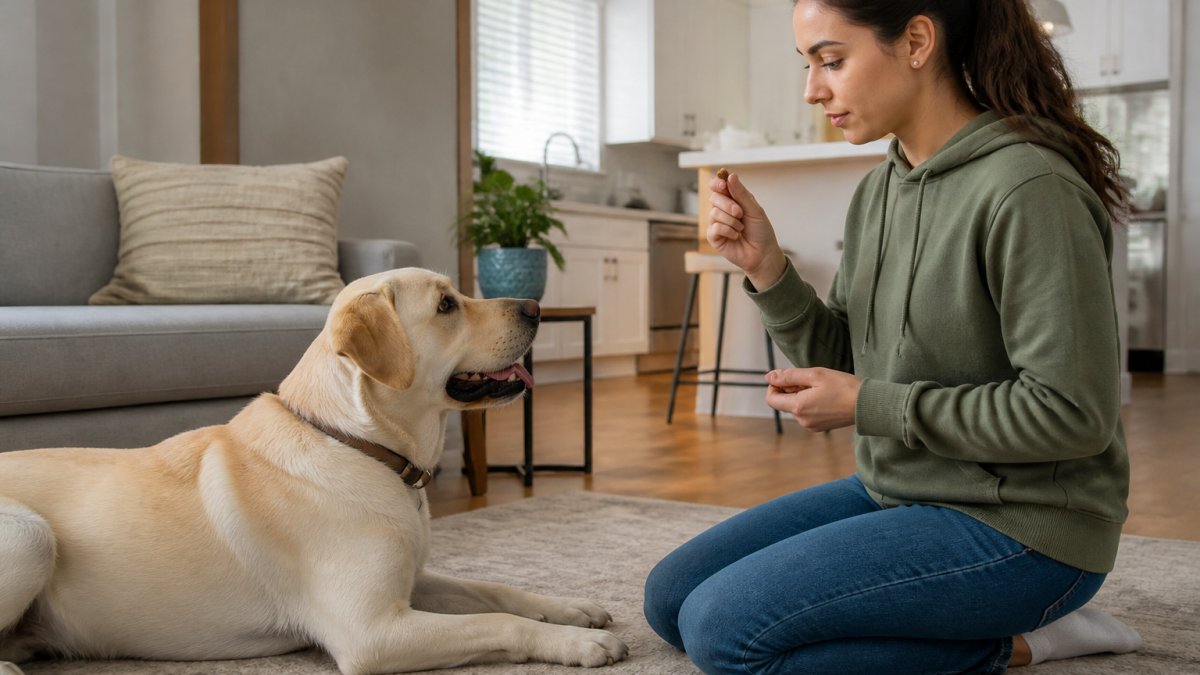
- Pick one cue. Start with sit. One word, one hand signal, one reward.
- Reward every rep. Treat within a second of the correct behavior.
- Add duration. Hold the sit for two seconds, then five, then ten.
- Add distance. Step one pace back, then two, then across the room.
- Add distraction. Practice with a toy on the floor, then the TV on, then a visitor.
- Proof in new spots. Move from the kitchen to the yard to the sidewalk.
- Keep a routine. Two short sessions a day beats one long weekend drill.
Track progress in a simple notebook. Note the cue, the setting, and how many reps your dog got right. Patterns show up fast.
8. How Long Dog Obedience Training Duration Really Is
Dog obedience training duration depends on the dog, the goal, and how often you practice. Basic manners usually take a few weeks of consistent daily reps. Reliable off-leash work takes months. There is no shortcut around repetition.
Plan on short, frequent sessions. Two five-minute practices a day do more than one hour-long session on Saturday. Consistency is the variable that matters most.
What speeds things up:
- Daily short sessions instead of weekend marathons
- Rewarding immediately and consistently
- Practicing in the real spots where behavior matters
- Keeping every family member on the same cues
What slows it down:
- Repeating cues until the dog tunes them out
- Practicing only in easy, low-distraction settings
- Changing rules between people in the house
- Long sessions that end in frustration
If progress stalls, get eyes on the problem. A trainer can spot timing errors or stress signals you cannot see from inside the interaction. For severe anxiety, reactivity, or aggression, a veterinarian or qualified behavior professional should rule out medical causes first.
Frequently Asked Questions
What are the benefits of in-home dog obedience training?
In-home dog obedience training builds reliable behavior where your dog actually lives, so skills hold up around real household distractions like doorbells, kids, and other pets. Owners often see clearer communication, calmer responses to basic commands like sit, stay, and recall, and stronger leash manners. Because sessions happen in familiar surroundings, dogs tend to learn faster and with less stress, and you get hands-on coaching for your specific routine rather than a one-size-fits-all class.
How long is basic obedience training for dogs?
Dog obedience training duration varies with the dog's age, temperament, and your goals. Many owners see solid responses to basic commands like sit, stay, and recall within a few weeks of consistent practice, while reliable behavior around heavy distractions usually takes a few months. Short daily sessions of 5 to 15 minutes, paired with professional guidance, tend to produce faster results than occasional long sessions. Your trainer can map a realistic timeline after an initial assessment.
Is in-home training better than group classes for leash manners and jumping?
In-home training gives you a direct advantage for leash manners and jumping because the trainer can watch your dog react to your actual doorway, sidewalk, and visitors. Group classes offer controlled socialization with other dogs, which helps some dogs, but they cannot replicate your front hall or the neighbor walking past. For jumping on guests or pulling on walks, private in-home coaching lets you rehearse the exact scenario and fix timing errors on the spot.
How do I reinforce obedience training between sessions?
Reinforcement between sessions comes down to short, frequent practice and consistency. Aim for two or three 5 to 10 minute sessions daily, reward the behavior you want with treats, praise, or play, and use the same cues your trainer taught. Practice in different rooms and gradually add distractions like a dropped spoon or a visitor at the door. Keep a simple log of what worked so you and your trainer can adjust the plan at the next visit.
Training that sticks is training that happens where life happens. If you are tired of starting over every few weeks, Voca Springs Dog Training can build a plan around your dog, your home, and your daily routine. We focus on obedience and behavior modification, coach you through every session, and help you build the kind of bond that makes good behavior the easy choice. Get started with Voca Springs Dog Training and turn short daily practice into habits that last.