 how-to
Reactive Dog Training Near Sherman: A Step-by-Step Plan
Table of Contents
- Reactive Dog Training Near Sherman: Where to Start
- How to Calm a Reactive Dog on Walks: A Step-by-Step Plan
- Dog Threshold Training: Working Under the Reaction Line
- Reactive Dog Training Techniques That Hold Up in Real Life
- How Long Does Leash Reactivity Training Take?
- Choosing a Qualified Reactive Dog Trainer in the Sherman Area
- When to Involve a Veterinarian or Behavior Professional
- Frequently Asked Questions
Last Updated: October 20, 2026
Reactive Dog Training Near Sherman: Where to Start
Your dog loses it at the sight of another dog three blocks away. Reactive dog training near Sherman starts with one shift: stop trying to fix the reaction in the moment and start working under the threshold where your dog can still think.
Below, we break down what reactivity actually is, how to build a step-by-step plan you can run on your own street, and when to bring in a professional. The steps we cover are the same ones we build into client programs.
Reactivity vs. Aggression: Know the Difference
**Reactivity is an overreaction to a trigger, usually rooted in fear, frustration, or overstimulation.
A reactive dog barks, lunges, and pulls on the leash. A truly aggressive dog closes distance and makes contact. Most leash-reactive dogs are loud and harmless.
Common reactive triggers include:
- Other dogs, especially on leash
- Strangers, delivery workers, or people in hats
- Bikes, skateboards, and strollers
- Loud trucks or sudden noises
Breed and temperament play a role, but they are not destiny. Training level and early exposure matter more than most owners expect.
What a Professional Assessment Covers
A proper assessment is not a five-minute meet-and-greet. It is a structured evaluation of your dog's behavior, history, and environment. A qualified trainer watches how your dog responds to distance, movement, and novelty, then maps the reaction line.
Here is what a real evaluation should include:
- A full behavior history, including age of onset and past training
- Trigger testing at controlled distances
- Body language reading: stiffening, lip licking, whale eye, tail carriage
- Leash handling review with the owner
If a trainer skips the history and jumps straight to corrections, walk away. You cannot solve a behavior challenge you have not diagnosed.
How to Calm a Reactive Dog on Walks: A Step-by-Step Plan
Most guides tell you to "stay calm" and "use positive reinforcement." That is not a plan. Here is the sequence we use, in order, because skipping steps is why most home training stalls.
Step 1: Map Your Dog's Triggers
Write down every reaction for one week. Note the trigger, the distance, and the intensity on a simple 1-to-5 scale. You are looking for patterns, not perfection.
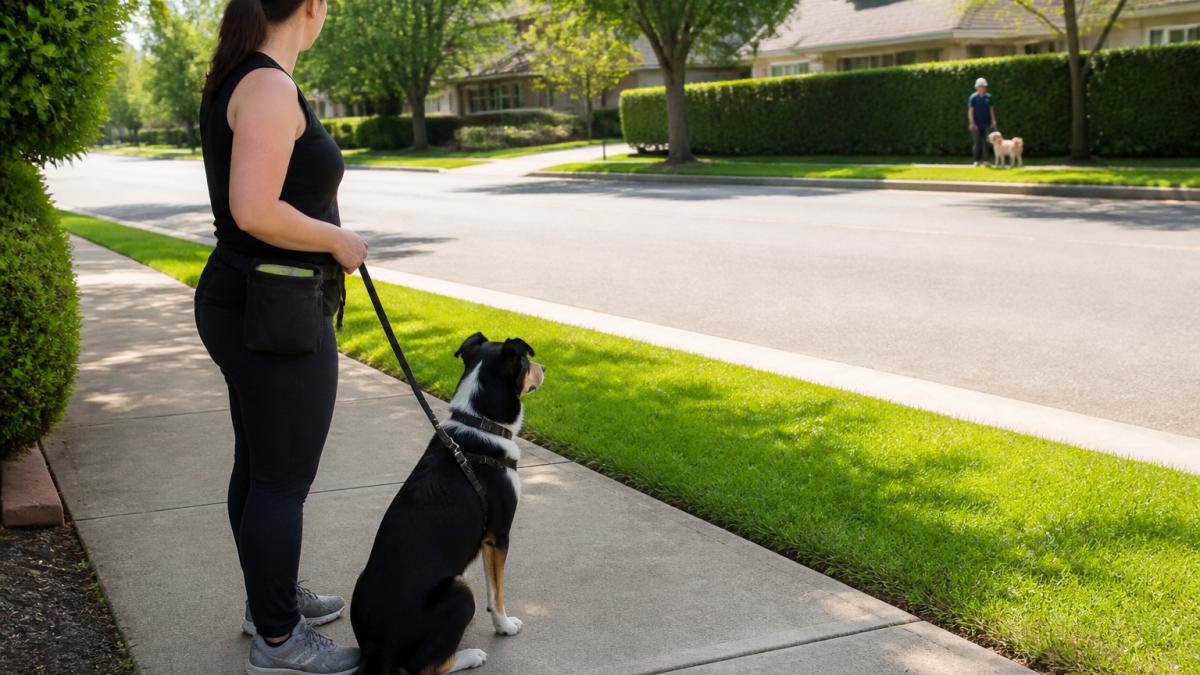
Most owners discover their dog has a clear distance threshold. At 50 feet, the dog notices but stays loose. At 30 feet, the staring starts. At 15 feet, the barking begins. That map is your training plan.
Step 2: Change the Environment Before You Change the Dog
This is the step nobody wants to hear. For the first two weeks, you avoid the situations your dog cannot handle. No dog park. No crowded trail.
You are not avoiding the problem. You are building a window where your dog can practice calm instead of rehearsing panic. Every rehearsal of the reaction makes the next one faster and louder.
Step 3: Reward Calm, Not Just Quiet
A quiet dog is not always a calm dog. A shut-down dog is silent too. Watch the body, not the mouth.
Reward the moment your dog notices a trigger and then looks back at you. That check-in is the behavior you want to grow. Mark it, pay it, and move away. Distance is a reward too.
Dog Threshold Training: Working Under the Reaction Line
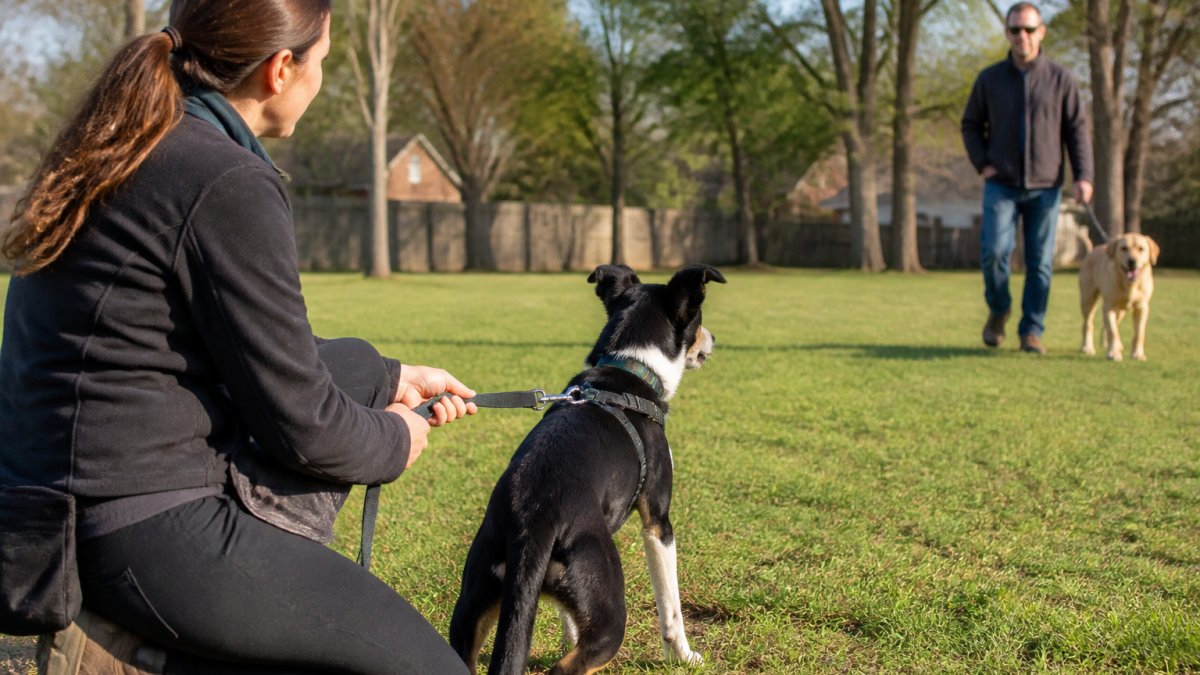
Threshold training means keeping your dog far enough from a trigger that they can still eat, listen, and think. Cross that line and training stops working, because a dog in fight-or-flight mode cannot learn.
Find the distance where your dog will take a treat and respond to their name. That is your working distance. Start there every session.
Then follow this pattern:
- Work at distance until your dog is relaxed and responsive
- Close the gap by a few feet, not a few yards
- If the reaction returns, back up and reset
- End every session on a success, even a small one
Threshold work is slow by design. Push too fast and you teach the dog that triggers always lead to overwhelm. Push at the right pace and the threshold shrinks over weeks.
Reactive Dog Training Techniques That Hold Up in Real Life
Counter-Conditioning and Desensitization
Counter-conditioning changes how your dog feels about a trigger. Desensitization lowers the intensity of the trigger over time. Used together, they are the backbone of modern reactivity work.
The mechanic is simple. Trigger appears, treat appears. Trigger disappears, treats stop. Repeat enough times and the dog starts to associate the trigger with good things. This is not bribery. It is a change in emotional response.
Leash Handling and Body Positioning
Your leash handling matters more than most owners realize. A tight leash signals tension to your dog before they even see the trigger.
- Keep the leash loose with a hand at your hip
- Turn your body away from the trigger, not toward it
- Create distance by moving diagonally, not yanking backward
- Use a front-clip harness to reduce pulling use
Methods to Avoid
Some popular advice makes reactivity worse. Skip these:
- Yanking the leash or using prong and shock collars to suppress barking
- Flooding, which means forcing your dog to face a trigger at close range
- Repeating "it's okay" in a soothing voice while your dog panics
- Letting strangers approach "so the dog gets used to people"
Suppressing a reaction does not remove the fear. It hides it until the day it comes out bigger.
How Long Does Leash Reactivity Training Take?
There is no fixed timeline, and any trainer who promises one is guessing. Progress depends on the dog's history, the severity of the reaction, how often you practice, and how well you manage the environment between sessions.
In practice, owners usually see the first real changes in four to eight weeks of consistent work. Full reliability around triggers often takes several months.
What to track instead of a calendar:
- The distance at which your dog can stay calm
- How fast your dog recovers after a reaction
- How often your dog checks in with you on walks
Those three numbers tell you more than any timeline.
Choosing a Qualified Reactive Dog Trainer in the Sherman Area
Credentials matter, but they are not the whole story. Look for a trainer who explains behavior in plain language, watches your dog instead of a script, and teaches you to handle the leash yourself. The gap most directory listings leave is that they rank trainers without telling you how to judge one. Use the criteria below as a scorecard rather than a vibe check.
Ask these questions before you book:
- What is your assessment process, and what does it cost?
- Which methods do you use for reactivity, and which do you refuse to use?
- Will I be handling my dog in sessions, or will you?
- How do you measure progress, and what happens if we stall?
How to Read the Answers
A strong answer names a specific method (counter-conditioning, desensitization, threshold work) and a specific thing they will not do (flooding, prong or shock collars for reactivity). A weak answer stays vague ("balanced approach," "whatever the dog needs") or promises a timeline before seeing the dog. On handling, the better answer is that you handle your own dog with coaching, because the behavior has to generalize to your walks, not the trainer's leash.
Service Formats and Local Coverage
Reactivity training is usually delivered in one of four formats, and each has trade-offs:
- Private in-home lessons: best for home-specific triggers like the doorbell or delivery workers; highest per-session cost and travel may apply.
- Private outdoor or neighborhood sessions: best for leash reactivity because the triggers are real; weather-dependent and requires a safe, low-traffic route.
- Facility or group classes: lower cost per session, but a group setting can exceed a reactive dog's threshold, so confirm the class is screened and capped.
- Day training or board-and-train: the trainer does the reps, which can accelerate early progress, but you still need transfer sessions or the behavior may not hold with you.
Ask each trainer for their travel radius and whether they serve your address, since coverage varies block by block in outlying areas. Get the assessment fee, per-session or package price, travel charge, and cancellation policy in writing before you commit. For general guidance on humane training standards, the American Veterinary Society of Animal Behavior position statements are a useful reference point.
When to Involve a Veterinarian or Behavior Professional
Some reactivity has a medical root. Pain, thyroid issues, and vision or hearing loss can all drive behavior changes.
Consider professional involvement when:
- Your dog has bitten or drawn blood
- The reaction is escalating despite consistent training
- Your dog shows anxiety that affects daily life, not just walks
- You feel unsafe handling your dog
A veterinarian can rule out medical causes. A board-certified veterinary behaviorist can address cases that need medication alongside training.
Reactivity is not a life sentence, and it is not a character flaw.
At Voca Springs Dog Training, we build that plan around your dog, your neighborhood, and your goals. Our behavior modification programs pair one-on-one instruction with real-world practice, so you learn to handle your dog yourself instead of handing the leash to someone else.
If walks have become something you dread, get started with Voca Springs Dog Training and build a calmer, more confident dog, one step at a time.
Frequently Asked Questions
Can leash reactivity be trained out of a dog?
In most cases, yes, though the goal is usually management rather than a permanent cure. Reactive dog training changes how your dog feels about triggers and gives you handling skills to keep reactions from escalating. Dogs with a genetic or breed-related sensitivity may always need some distance from triggers, but consistent threshold work and counter-conditioning typically turn chaotic walks into manageable ones. Progress depends on the trigger's intensity, how long the behavior has been practiced, and how consistently you train between sessions.
How long does it take to improve leash reactivity?
Most owners see the first measurable changes within four to eight weeks of structured sessions, with calmer passing distances and faster recovery after a reaction. Full reliability around unpredictable triggers often takes several months. How long leash reactivity training takes depends on the dog's age, the severity of the response, and daily practice. Dogs that rehearse reactions on every walk progress more slowly, so controlling exposure between lessons matters as much as the lessons themselves.
What is the difference between dog reactivity and aggression?
Reactivity is an overreaction to a trigger, often driven by fear, frustration, or overstimulation. The dog barks, lunges, or pulls but usually wants distance, not contact. Aggression involves an intent to do harm and often shows up as stiff posture, a hard stare, growling, or a bite history. The two can look alike at the end of a leash, which is why an in-person assessment matters. A professional trainer evaluates body language, recovery time, and bite history before recommending a plan.
Should you use treats to train a reactive dog?
Yes. High-value treats are one of the most reliable tools in reactive dog training techniques because they change the emotional association with the trigger. When your dog notices another dog at a safe distance and gets chicken or cheese, the brain starts linking the trigger to something good. The treat must arrive before the reaction, not after. If your dog is already barking and lunging, you are too close, and food will not fix it. Pair treats with distance, not with correction.