 how-to
How to Build a Bond With a Rescue Dog: 2026 Guide
Table of Contents
- How to Build a Bond With a Rescue Dog: Start With Trust, Not Affection
- Why Rescue Dogs Bond on Their Own Timeline
- How Long Does It Take a Rescue Dog to Settle In?
- How to Build Trust With a Rescue Dog Through Body Language and Consent
- Rescue Dog First Week Routine: A Step-by-Step Plan
- Bonding Activities for Rescue Dogs That Build Connection
- When Bonding Feels Slow: Troubleshooting and Trauma-Informed Support
- Frequently Asked Questions
Last Updated: October 14, 2026
How to Build a Bond With a Rescue Dog: Start With Trust, Not Affection
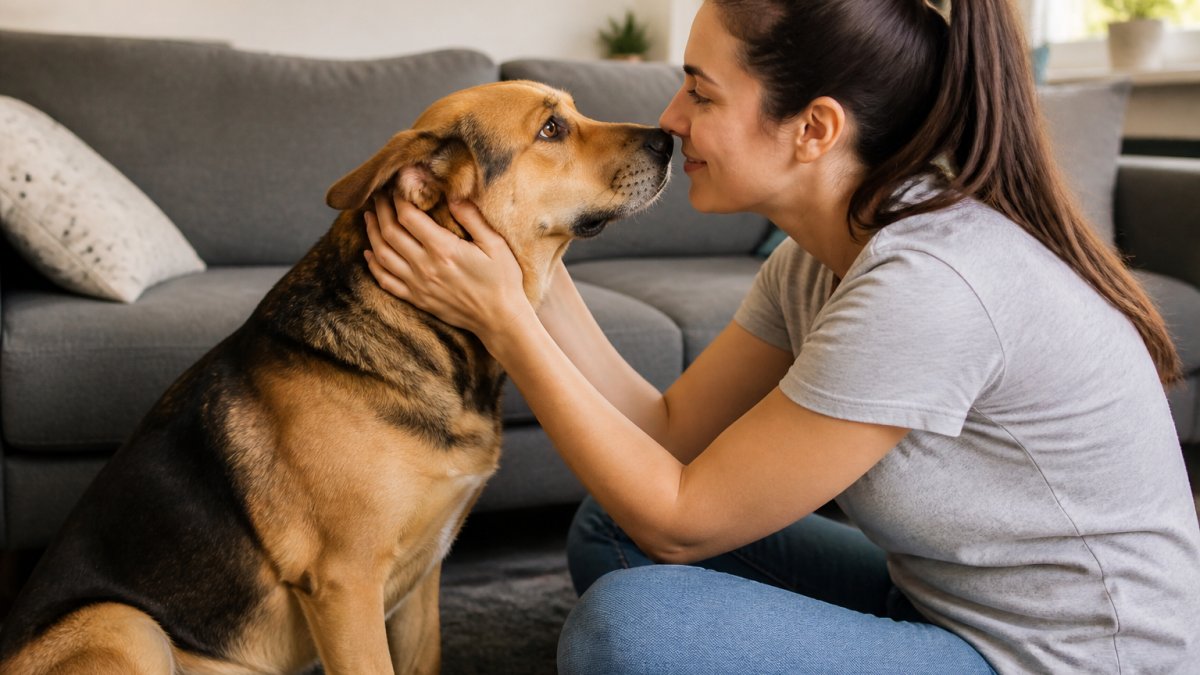
The fastest way to build a bond with a rescue dog is to stop chasing affection and start proving safety. Owners who shower a new dog with love on day one often get a dog hiding under the table by day three.
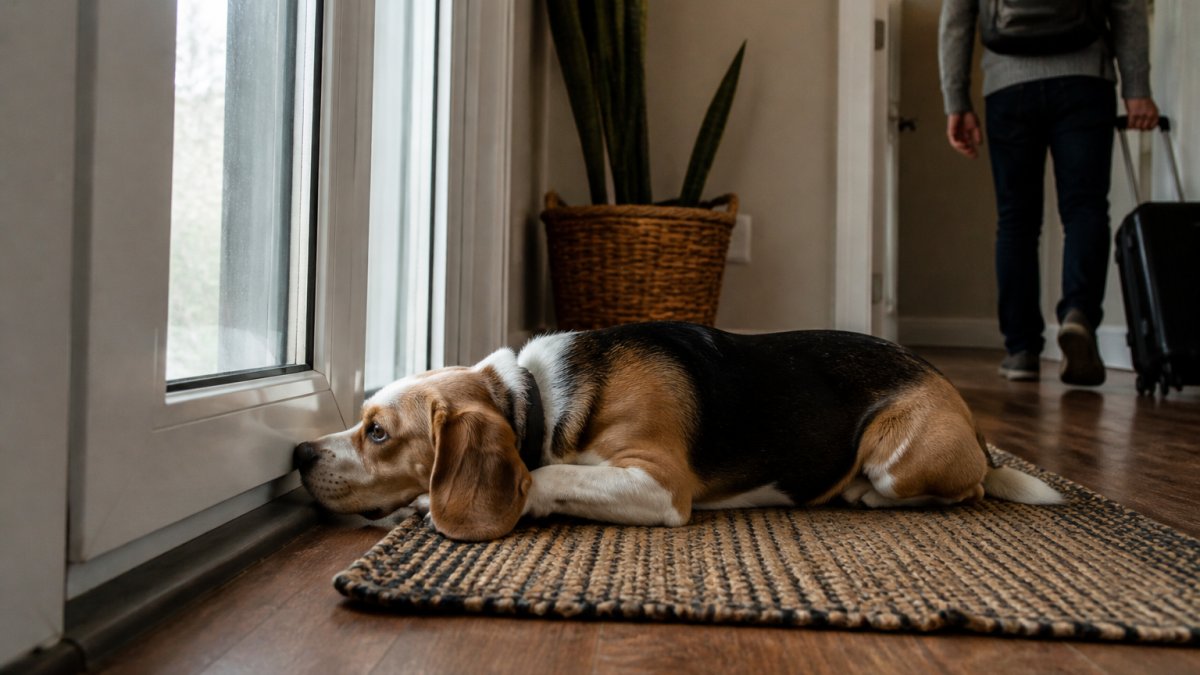
A rescue dog has already learned that homes can disappear.
Below: a realistic timeline, a first-week routine, and the body-language signals that tell you it is working.
Why Rescue Dogs Bond on Their Own Timeline
A rescue dog bonds on its own timeline because its history sets the pace, not your enthusiasm.
Many owners read that slow start as rejection. It is not.
Pressure backfires. Leaning over a shy dog, scooping it up, or following it around the house all read as threats to a dog that is still deciding.
- Give space, not constant contact. Let the dog come to you.
- Keep your voice low and your movements slow. No looming.
- Let the dog choose the distance. Ten feet away is fine at first.
The American Veterinary Medical Association's guidance on pet behavior notes that sudden environmental change is a major stressor for newly adopted animals.
How Long Does It Take a Rescue Dog to Settle In?
Most rescue dogs need about three days to decompress, three weeks to settle into a routine, and three months to feel fully at home, the "3-3-3" rule of thumb among shelter and rescue professionals. It is a guide, not a guarantee: a dog from a calm foster home may adjust faster, while a dog with a rough background may take much longer.
A Realistic Bonding Timeline: Week 1 to Month 6
| Timeframe | What Is Happening | What You Should Do |
|---|---|---|
| Days 1-3 | Dog is overwhelmed and shut down | Keep things quiet, limit handling |
| Weeks 1-3 | Dog starts testing the routine | Hold the schedule steady |
| Month 1-3 | Dog shows real personality | Add training and outings |
| Month 3-6 | Dog treats you as its person | Build skills and adventures |
Signs of Progress to Watch For
Progress is rarely a wagging tail. Early signs look smaller.
- Your dog makes eye contact for a second or two.
- It eats while you are in the room.
- It sleeps with its body relaxed instead of curled tight.
Any one of these is a win. Stack enough and you have a bond.
How to Build Trust With a Rescue Dog Through Body Language and Consent
Trust grows when you ask permission instead of taking it: read your dog's signals and back off the moment it says no. The skill is turning what you see into a decision, move closer, hold still, or add distance right now?
A dog that turns its head away, licks its lips, or freezes is asking for space. Respect that and you teach the dog you are predictable and safe; ignore it and you teach the dog its warnings do not work, which is how growls and snaps get created.
A Consent Framework You Can Use Every Day
Consent is not a one-time test but a loop you run dozens of times a day:
- Ask. Offer a low, still hand or pause at a comfortable distance.
- Watch. Look for a clear yes or no in the dog's body, not just its tail.
- Respond. Lean-in gets brief contact. Pull-back, freeze, or turn-away gets immediate space.
- Re-offer later. A no now is not a no forever. Try again later.
This one habit does more for a rescue dog bond than hours of forced cuddling. It also prevents the common mistake of petting a dog that is tolerating touch rather than enjoying it.
Reading Canine Body Language: Stress vs. Comfort Signals
Sort signals into two buckets. Comfort signals mean you can stay or gently increase interaction; stress signals mean you pause, add distance, or change something in the environment.
Comfort and willingness signals:
- Soft, loose body with a mid-height, sweeping tail
- Play bow with a bouncy, exaggerated stance
- Curious sniff toward you, then a relaxed look away
Stress and "give me space" signals:
- Stiff body, tucked tail, or tail held high and rigid
- Whale eye (whites showing as the dog looks away from you)
- Lip licking or yawning when no food is around
A wagging tail is not automatically a green light. A high, fast, stiff wag can be arousal or anxiety, not joy. Read the whole body, not one part.
Consent in Real Household Moments
Consent matters most where owners accidentally overwhelm a new dog:
- Greeting. Crouch sideways, let the dog approach, and pet the chest or shoulder rather than reaching over the head.
- Leash handling. Clip the leash slowly, pause if the dog freezes, and reward calm standing still.
- Crate and bed. Never reach into a resting space to pull the dog out. Call the dog out or wait.
If you miss a stress signal, it usually escalates: lip licking becomes turning away, turning away becomes hiding, hiding becomes a growl. Catching the first small signal is the whole game.
The American Kennel Club's guide to canine body language covers these signals in more depth if you want to go further. The American Veterinary Medical Association's guidance on pet behavior is also a solid reference for understanding stress in newly adopted animals.
Rescue Dog First Week Routine: A Step-by-Step Plan
A rescue dog first week routine should be boring on purpose. Same feeding times, same walk route, same quiet hours. Boring is what safety feels like to a dog that has had none.
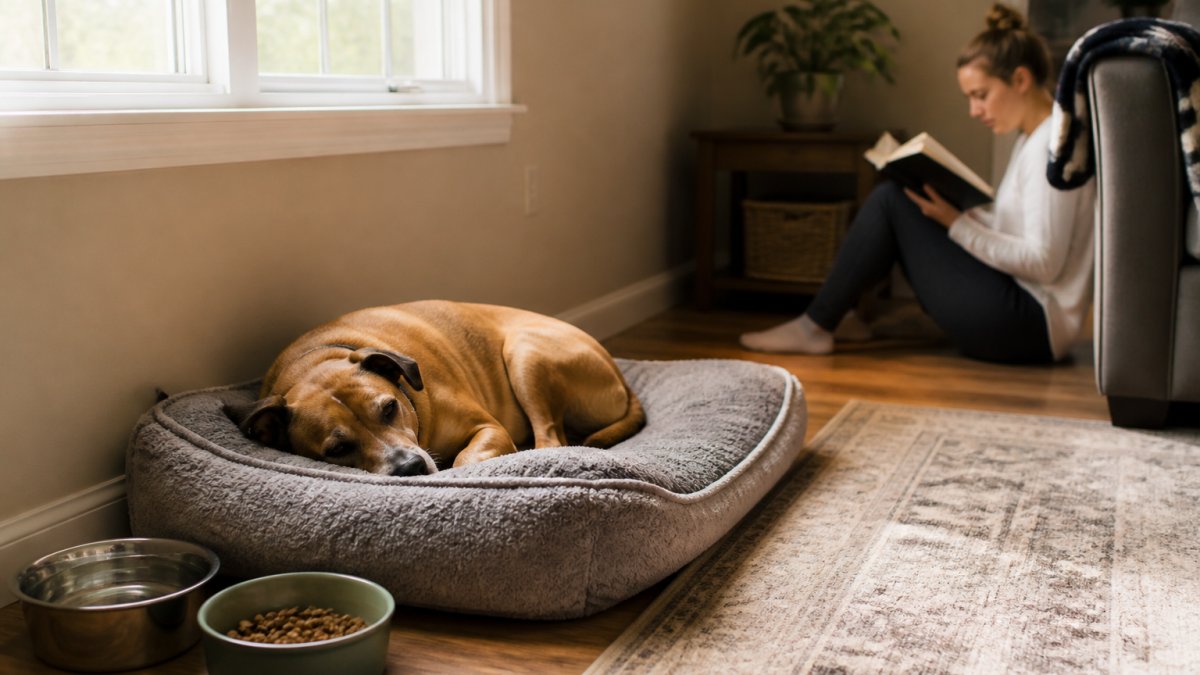
Setting Up a Safe Space and Low-Key Environment
Set up a crate or exercise pen with a dog bed in a low-traffic corner, door open so the dog can enter and exit freely. Add a worn shirt of yours for scent.
This is the dog's room within the room. No one reaches in, no kids crawl inside, no guests crowd it. A safe space is the foundation of every other step.
Feeding Schedule, Walks, and Quiet Time
Follow this daily shape for the first seven days:
- Feed at the same times each day. Twice daily works for most adult dogs.
- Walk the same short route. Ten to fifteen minutes, twice a day.
- Add quiet time. Sit nearby while your dog chews a toy or rests.
- End the day calmly. Dim lights, soft voices, no rough play.
- Repeat tomorrow. Predictability is the whole point.
Hand-feed a few kibbles each meal. Food from your hand builds positive associations fast.
Bonding Activities for Rescue Dogs That Build Connection
The best bonding activities for rescue dogs are shared, low-pressure, and repeatable. Walks, training games, and quiet companionship beat grand gestures every time.
Reward-Based Training and Positive Reinforcement
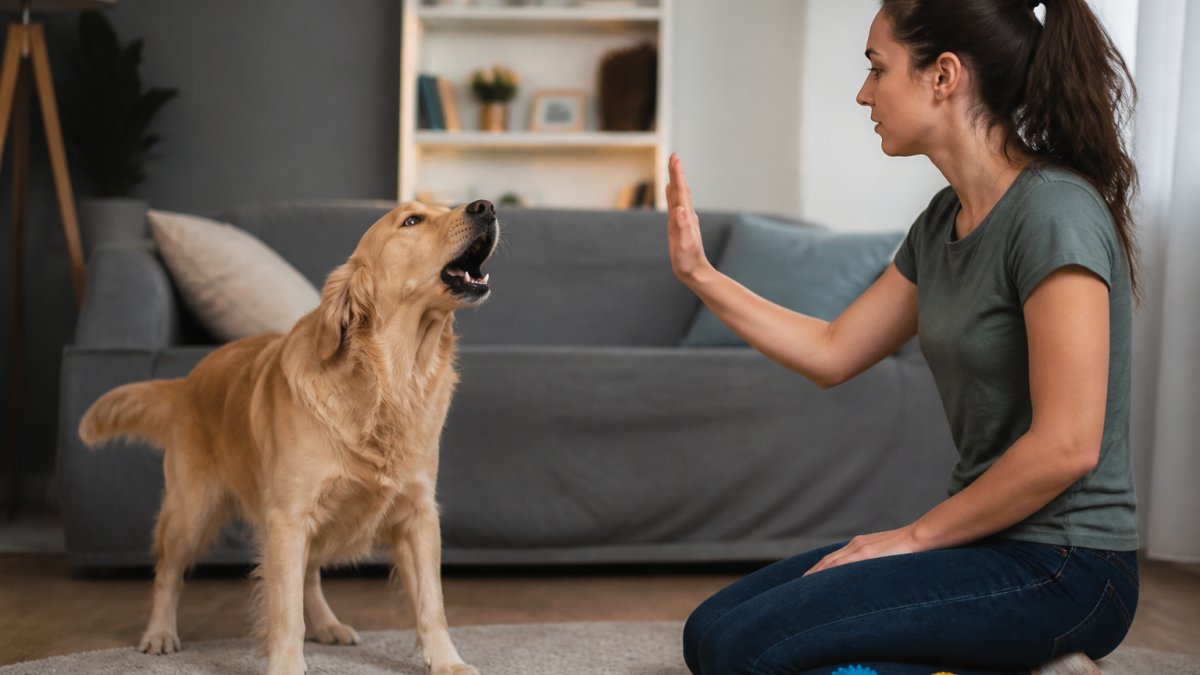
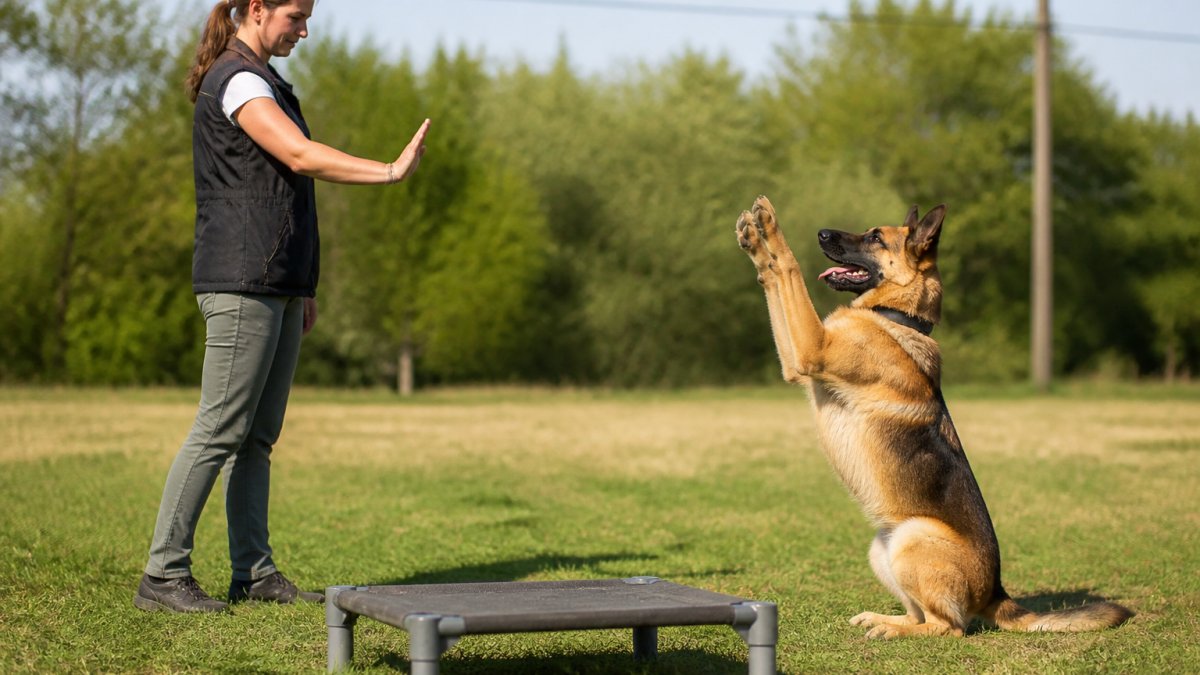
Reward-based training is the fastest trust-builder we know, pairing you with good things: treats, praise, a toy. Do three five-minute sessions a day.
Start with name recognition and a simple sit. Mark the moment your dog gets it right, then reward. Keep sessions short so your dog stays eager.
- Use high-value treats for new skills.
- Train before meals when food drive is high.
- End on a win every single session.
Other shared activities work well too:
- Grooming and brushing, done gently and briefly
- Slow sniff walks where the dog sets the pace
- Tug or fetch, if your dog enjoys it
If your dog is anxious, reactive, or shut down, these basics may not be enough. Voca Springs Dog Training builds programs around obedience and behavior modification, aiming for a stronger owner-dog relationship, not just a dog that sits on command.
When Bonding Feels Slow: Troubleshooting and Trauma-Informed Support
A slow bond is usually not a failed bond, it often means the dog is still in survival mode. Trauma changes how a dog reads the world and how fast trust forms. The mistake most owners make is adding pressure when progress stalls: more training, more handling, more affection. That usually makes the dog pull further away.
Is This Normal Settling-In or a Real Concern?
Most newly adopted dogs show some version of these behaviors in the first weeks. They are normal and typically fade with time and routine:
- Hiding under furniture or in a crate for part of the day
- Eating lightly for the first day or two
- Avoiding eye contact and staying at a distance
These are the patterns that suggest something deeper and warrant a call to your veterinarian or a qualified behavior professional:
- Growling, snapping, or freezing when approached
- Panic during ordinary events like the doorbell or a leash clip
- Refusing food for more than 24 hours
If you are unsure which bucket your dog falls into, err on the side of asking. A veterinarian can rule out pain or medical causes, which often look like behavior problems.
A Staged Recovery Plan When Bonding Stalls
When progress stops, drop back to basics for one to two weeks. The goal is not to teach anything new but to rebuild the dog's sense that you are safe and predictable.
- Stop formal training. Pause commands and structured sessions entirely.
- Hand-feed meals. Sit on the floor, toss a few kibbles, and let the dog close the distance. Do not reach toward the dog.
- Shrink the world. Same room, same route, same schedule. Fewer visitors, fewer outings, fewer new sounds.
- Add passive companionship. Read aloud, work on a laptop, or fold laundry near the dog's space without looking at it.
- Reintroduce touch on the dog's terms. Only pet when the dog leans in. Stop the moment it pulls back.
- Reassess after two weeks. If you see any softening, even small, you are on track. If nothing changes, bring in professional help.
This is the opposite of what most owners want to do, which is why it works. Pressure creates distance. Predictability creates approach.
When to Seek Professional Help
Bring in a professional if your dog shows aggression, severe anxiety, or no progress after several weeks of consistent low-pressure work.
Start with your veterinarian: a full exam can rule out pain, dental disease, thyroid issues, and other medical causes that mimic fear or aggression.
When you interview a trainer or behavior consultant, ask:
- What certifications do you hold?
- How do you handle fear and aggression cases?
- Do you use aversive tools like shock, prong, or choke collars?
Walk away from anyone who promises a fast fix or relies on punishment.
Trauma-informed support means working at the dog's pace, never forcing contact, and building skills in small steps. Voca Springs Dog Training offers professional and trustworthy obedience and behavior modification services, dedicated to helping pet owners build stronger, more meaningful bonds with their dogs.
The ASPCA's adoption and behavior resources also offers free guidance for the early weeks.
Frequently Asked Questions
How long does it take for a rescue dog to bond with you?
Most rescue dogs start showing real attachment within two to four weeks, but full settling in often takes three months or longer. The first 72 hours are usually shutdown or testing behavior, weeks two through four bring small signs like following you room to room, and months two through six build deeper trust. Progress depends on the dog's history, age, and how predictable your routine is. If your rescue came from a shelter with limited background information, expect the longer end of that range.
What should I do during the first few days with a rescue dog?
Keep things boring on purpose. Set up a crate or exercise pen with a dog bed in a quiet room, stick to a feeding schedule, and take short leashed walks in low-traffic areas. Skip dog parks, big family gatherings, and introductions to other pets for at least the first week. Sit nearby without reaching for the dog, speak softly, and let the dog approach you. Predictability is what tells a rescue dog the new home is safe.
How do I know if my rescue dog is bonding with me?
Watch for small shifts rather than dramatic moments. A rescue dog that is bonding will start making eye contact, following you between rooms, choosing to rest near you instead of hiding, taking treats from your hand, and greeting you with a loose, wiggly body when you come home. Some dogs show connection through play, others through quiet companionship. If your dog avoids you, flinches, or stays hidden after three weeks, that is a signal to slow down and get professional guidance.
Can training help me bond with my rescue dog?
Yes, and it often speeds up the process. Reward-based training gives you and the dog a shared language, and every successful repetition builds positive associations with you as the source of good things. Short sessions of five to ten minutes, two or three times a day, work better than long ones. Pair training with quiet time and daily walks, and you cover the main trust-building activities for rescue dogs in one routine. If your dog has reactivity, anxiety, or aggression, a certified trainer can tailor the plan.