 how-to
Stop Dog From Jumping on Guests: A Training Guide
Table of Contents
- Why Dogs Jump on Guests and Visitors
- How to Keep a Dog Calm When Guests Arrive
- How to Teach a Dog to Greet Guests Calmly
- Managing When Your Dog Jumps on Visitors at the Door
- Stop Dog From Jumping on Guests Despite Training
- Creating a Consistent Visitor Routine
- Frequently Asked Questions
Last Updated: October 22, 2026
Why Dogs Jump on Guests and Visitors
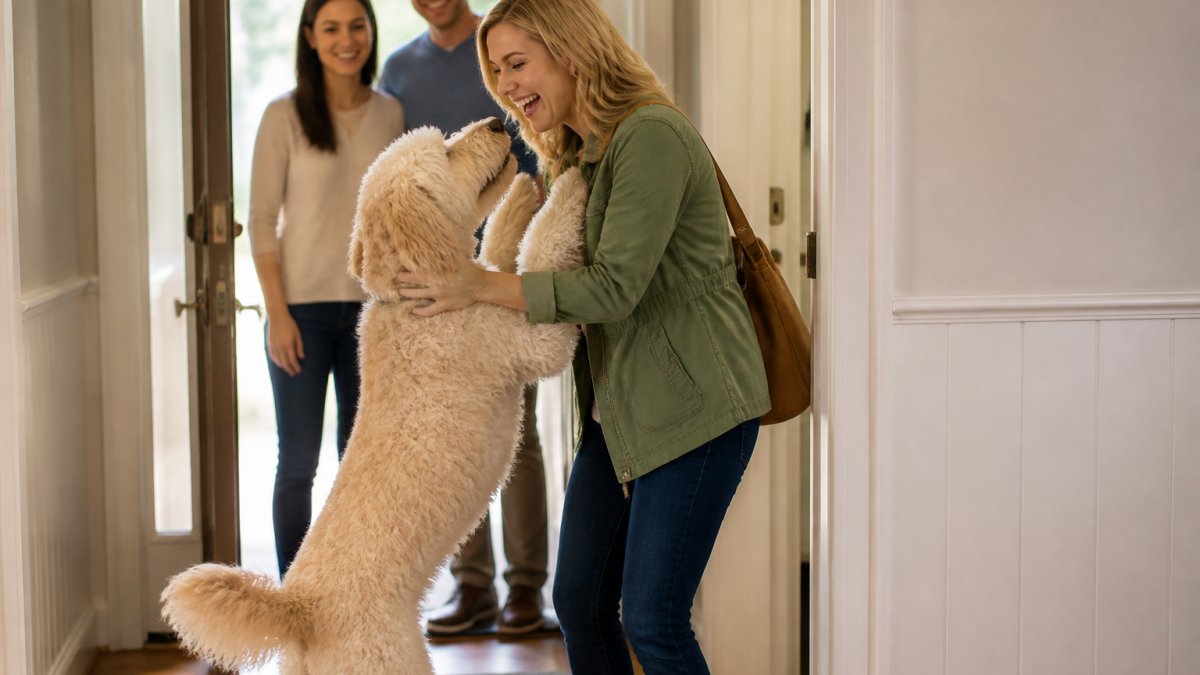
To stop dog from jumping on guests, you first need to understand why they do it: excitement, anxiety, or a learned habit that's been accidentally rewarded.
Jumping starts as normal puppy behavior.
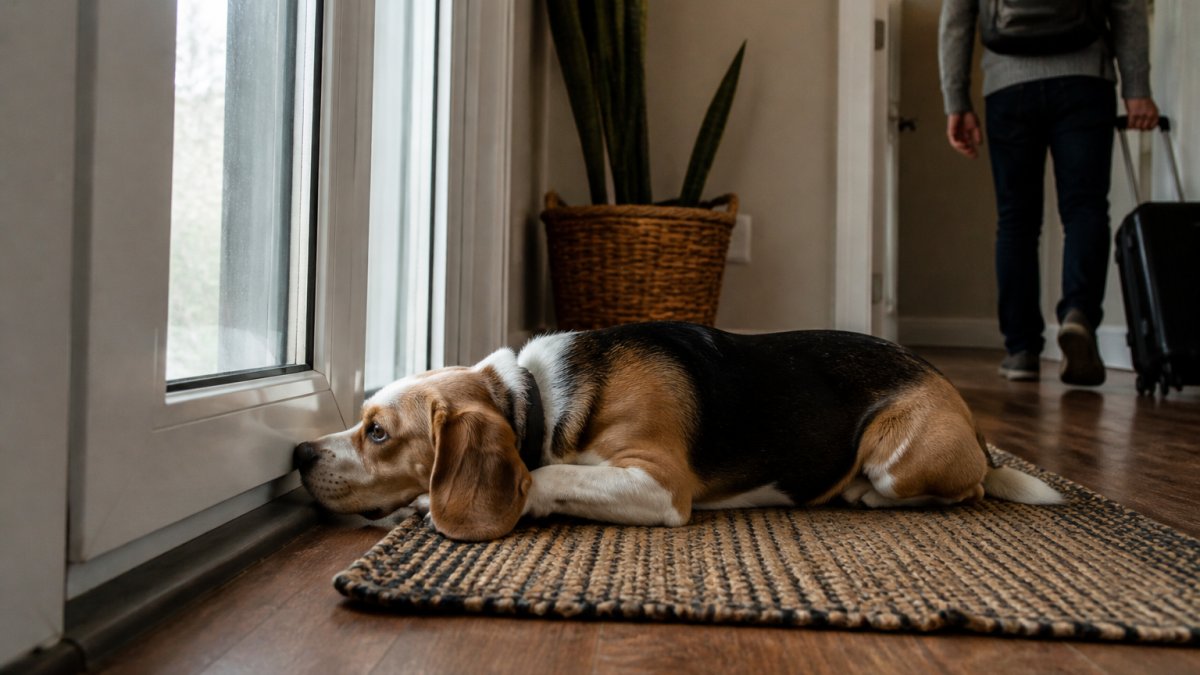
Some dogs jump because they're genuinely anxious about the arrival, trying to control an unpredictable situation; rescue dogs and dogs with limited socialization often fall into this category.
Most owners try to fix jumping by scolding or pushing the dog away. Neither works.
How to Keep a Dog Calm When Guests Arrive
Keeping a dog calm during arrivals is about three things: managing the space, controlling the leash, and redirecting the dog's energy before it builds into jumping.
Step 1: Manage the Doorway Before the Guest Arrives
Set up your space before anyone arrives. A dog who's already jumping by the time you open the door has already learned that arousal works.
Start here:
- Close interior doors so the dog can't run through the house
- Keep the dog on a leash before the doorbell rings
- Have treats ready in a pocket or nearby container
- Brief your guest on what to expect before they enter
The doorway is where the behavior starts, so control it first.
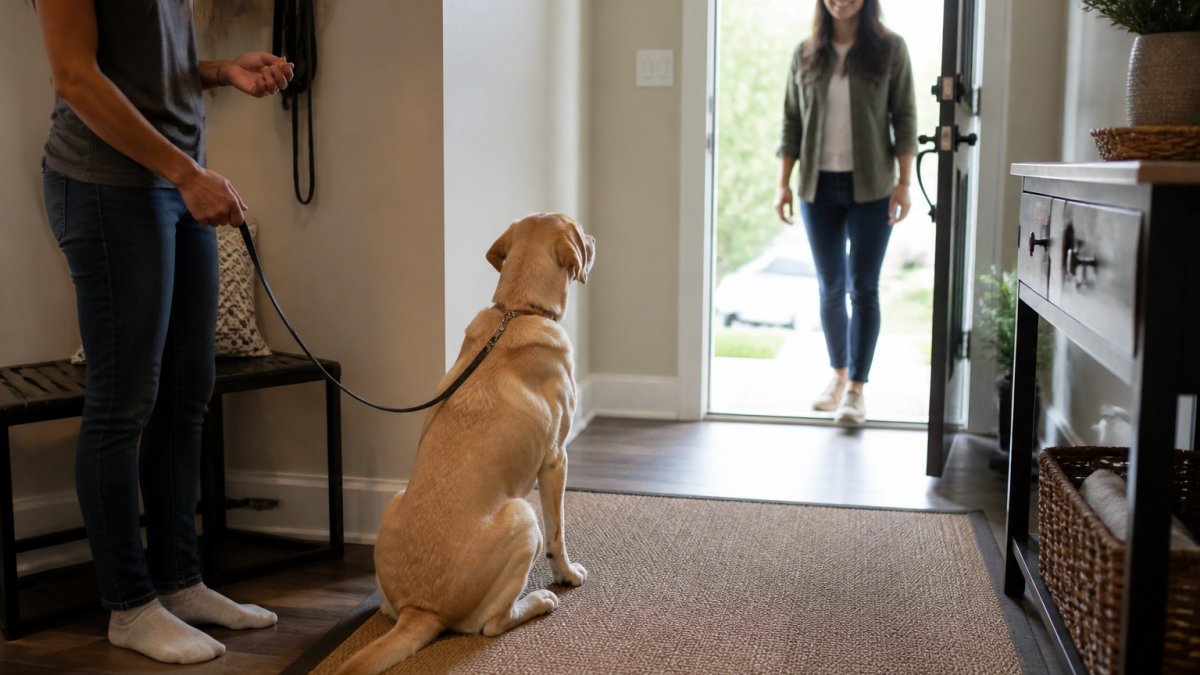
Step 2: Use a Leash to Control Greetings
A leash isn't punishment. It's a management tool that prevents jumping while you teach the alternative.
Here's the process:
- Have the dog on leash before the guest arrives
- When the guest approaches, keep the leash short but not tight
- If the dog lunges or jumps, step sideways and redirect attention back to you
- The moment the dog looks at you or sits, mark the behavior ("Yes!") and reward with a treat
- Let the guest greet the dog only after four paws are on the floor for at least 3 seconds
The leash gives you control without force: no yanking or yelling, just preventing the jump and rewarding calm behavior instead.
Step 3: Redirect to an Alternative Behavior
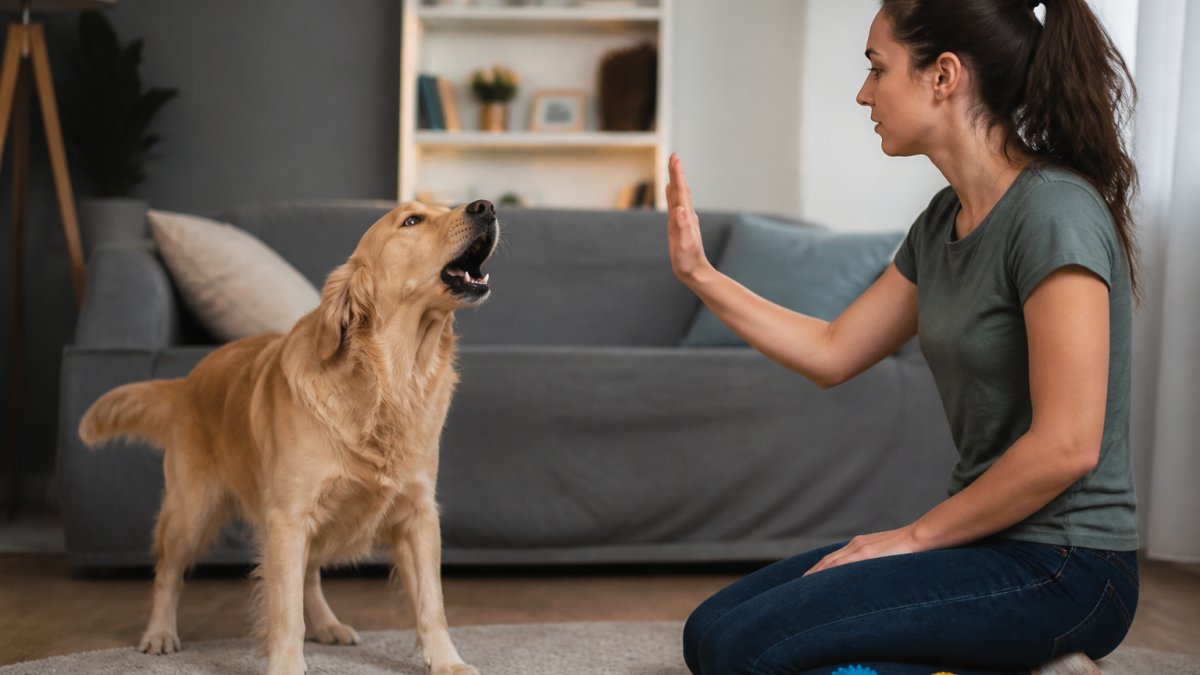
Sitting, lying down, or moving away from the guest are the behaviors you want. Pick one and practice it before guests arrive.
Most owners choose sit because it's the easiest to teach and the most incompatible with jumping. A dog cannot jump and sit at the same time.
Here's how to set it up:
- Practice sit with your dog 10-15 times per day in low-distraction settings
- Once sit is solid, practice it during mild distractions (you walking around, someone in another room)
- Then practice during higher distractions (doorbell sounds, knocking)
- Finally, practice with an actual guest
This progression matters: sit in a quiet room is easy, sit when a friend is at the door is hard. Your dog needs practice at each level before moving on.
How to Teach a Dog to Greet Guests Calmly
Teaching calm greetings is a skill, not a one-time fix. It requires consistent practice and the right reward system.
Teaching the Sit as a Polite Greeting
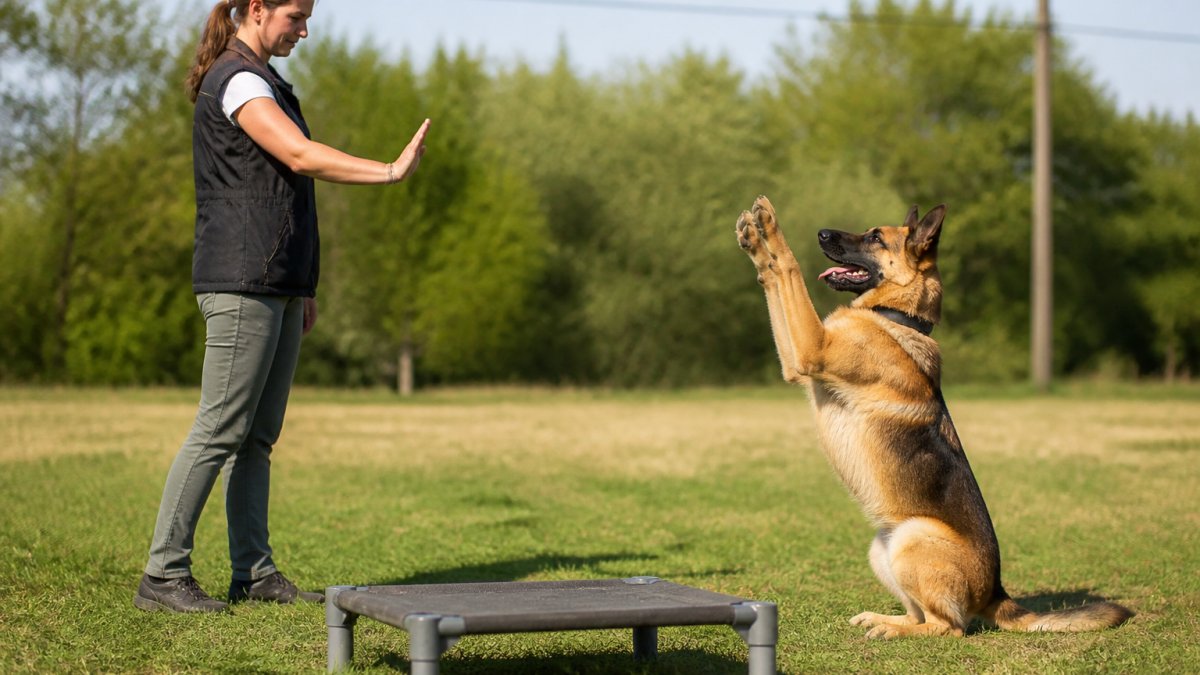
Sit is the foundation of polite greetings: it's incompatible with jumping and easy for most dogs to learn.
Start in a quiet room with high-value treats (small pieces of chicken, cheese, or whatever your dog loves most). Here's the sequence:
- Hold a treat close to your dog's nose
- Slowly move it up and back over their head
- As their head follows the treat, their rear naturally lowers to the ground
- The moment their bottom touches the floor, say "Yes!" and give the treat immediately
- Repeat 5-10 times per session
Do this 2-3 times daily for 3-5 days. Once your dog understands sitting = treats, add the word "sit" just before they sit.
After a week in a quiet room, practice sit during mild distractions, someone walking past, you moving around. Each small increase teaches your dog that sit works everywhere, not just in one quiet spot.
Rewarding Calm Behavior and Four Paws on the Floor
Calm behavior is anything that isn't jumping: sitting, lying down, standing still with four paws on the floor, or moving away from the guest.
The key is immediate reward.
Here's the reward system:
- Treats: The fastest, most reliable reward during greetings
- Praise: Use it alongside treats, not instead of them
- Access to the guest: Once your dog sits, let the guest pet them for 2-3 seconds, then reset
Reset means the guest stops petting, your dog sits again, and you reward again. This teaches your dog that calm behavior = more interaction, not less.
Many owners reward once, then let the guest pet for 30 seconds, by then arousal is climbing and the dog is jumping again. Short, frequent rewards beat long, infrequent ones.
Staged Greeting Practice With Friends and Family
Real practice with actual guests is essential, you can't teach calm greetings without them.
Here's how to structure it:
Week 1-2: Low-Distraction Practice
- Ask a friend to knock gently or ring the doorbell quietly
- Have your dog on leash, already sitting before the friend enters
- Reward sit, then let the friend pet your dog for 2-3 seconds
- Reset and repeat 3-4 times
Week 3-4: Medium-Distraction Practice
- Ask the friend to knock or ring the bell at normal volume
- Your dog should be on leash but not sitting yet
- Wait for your dog to sit on their own, then reward
- Gradually reduce the leash pressure so your dog is choosing to sit
Week 5+: Higher-Distraction Practice
- Have the friend enter more enthusiastically (but still controlled)
- Practice with multiple people arriving at different times
- Practice when your dog is tired and when they're fresh
- Practice in different rooms of the house
Each stage should last at least 1-2 weeks. Rushing means your dog hasn't learned yet, and you'll be frustrated when they jump again.
Managing When Your Dog Jumps on Visitors at the Door
Despite your best efforts, your dog will jump again. This is normal. The question is what to do when it happens.
Using a Gate, Crate, or Separate Room
Sometimes prevention beats correction. If your dog has severe jumping or your guests are uncomfortable, use a physical barrier.
A baby gate in a doorway works well. Your dog can see and hear guests but can't reach them.
A separate room works too. Close your dog in a bedroom or office for the first 5 minutes after guests arrive.
The goal isn't to isolate your dog forever. It's to prevent jumping while you build the alternative behavior.
Briefing Your Guests: What to Do When a Dog Jumps
Your guests need instructions. Most people either pet the dog (rewarding the jump) or scold them (adding excitement).
Before your guests arrive, tell them:
- "My dog jumps sometimes. Please ignore it completely, no talking, no eye contact, no petting."
- "Once my dog sits or has four paws on the floor, you can pet them for a few seconds."
- "If my dog jumps again, just turn away and ignore them until they calm down."
This takes 30 seconds to explain and saves weeks of training frustration, guests who pet a jumping dog undo your work every visit.
Stop Dog From Jumping on Guests Despite Training
You've trained for weeks and your dog sits on command in the living room, but the moment your neighbor arrives, they're jumping again. It's the most common frustration owners face.
Identifying the Root Cause: Overexcitement vs. Anxiety
Jumping that persists despite training usually has one of two causes: your dog is genuinely overexcited, or they're anxious about the arrival.
Overexcited dogs jump, pace, bark, and move constantly. They're not listening because their arousal is too high.
The training approach changes based on the cause.
For overexcited dogs, the fix is physical exercise and mental enrichment before guests arrive. A tired dog has less energy to jump.
For anxious dogs, the fix is slower, more gradual exposure to arrivals.
Adjusting Your Approach for Puppies, Adult Dogs, and Rescue Dogs
A 4-month-old puppy jumps for different reasons than a 3-year-old rescue dog who was never trained.
Puppies are learning that jumping works. They jump because it's fun and gets attention. The fix is simple: don't reward it.
Adult dogs who've been jumping for years have a deeper habit. They've learned that jumping works, and they've done it thousands of times.
Rescue dogs often jump because they're anxious or overstimulated. They might have had limited socialization or traumatic experiences. These dogs need slower, more gradual exposure.
Building Impulse Control Through Exercise and Enrichment
You build impulse control through two things: physical exercise and mental enrichment.
Physical exercise burns energy. A 30-minute walk or 20-minute play session reduces the arousal your dog brings to guest arrivals.
Mental enrichment is equally important. Puzzle toys, snuffle mats, scent games, and training sessions all tire a dog's brain. A mentally tired dog is less likely to jump.
Here's a practical routine:
- 30 minutes of physical exercise in the morning
- 10-15 minutes of mental enrichment (puzzle toy or training) mid-day
- 20 minutes of physical exercise in the afternoon
- Guests arrive in the evening when your dog is naturally calmer
This isn't about punishing your dog with exercise. It's about setting them up to succeed by reducing the arousal they bring to the situation.
Creating a Consistent Visitor Routine
Consistency is where most training falls apart.
A consistent routine means:
- The same setup every time (leash on, treats ready, guest briefed)
- The same reward system every time (immediate treat for calm behavior)
- The same alternative behavior every time (sit or lie down)
- Regular practice even when guests aren't scheduled
Many owners only practice when guests are actually coming. This is backward. You should practice the routine 2-3 times per week even without guests.
When the routine becomes automatic for both you and your dog, jumping stops being a problem.
Jumping on guests is one of the most fixable behavioral issues. It's not about your dog being "bad" or untrainable.
At Voca Springs Dog Training, we help dog owners like you build the skills to handle this at home.
Frequently Asked Questions
What should guests do when a dog jumps on them?
Guests should turn away and avoid eye contact or speaking to the dog. This removes the attention the dog seeks by jumping. Once the dog settles or sits, they can offer calm interaction. Briefing visitors beforehand, telling them to ignore jumping and reward calm behavior, makes the process faster. If your dog is large or energetic, ask guests to wait while you position the dog on a leash or behind a gate before they enter.
How do I stop my dog from jumping on guests if training hasn't worked yet?
First, identify whether jumping stems from overexcitement, anxiety, or seeking attention. Overexcited dogs benefit from more physical exercise and impulse control work before guests arrive. Anxious dogs may need a quiet space or crate during arrivals. Ensure consistency: every person who interacts with your dog must follow the same rules, no rewarding jumps with attention, and always rewarding calm behavior with treats and praise. Practice staged greetings with friends repeatedly until the behavior changes.
Can I teach my dog to greet visitors calmly without a leash?
Yes, but it requires foundation work first. Start by teaching a solid sit command and rewarding calm behavior indoors before introducing visitors. Use a leash during early training to manage the greeting safely, then gradually reduce reliance on it as your dog improves. Once your dog reliably sits and maintains calm behavior during multiple staged greetings, you can transition to off-leash greetings. Some dogs benefit from always using a leash at the door for safety and consistency.
How long does it take to stop a dog from jumping on guests?
Timeline depends on your dog's age, temperament, and how consistently you practice. Puppies often improve within 2-4 weeks of daily practice. Adult dogs may take 4-8 weeks. Rescue dogs with unknown backgrounds sometimes need longer. Consistency matters most: practice staged greetings at least 3-5 times per week, and ensure all family members and visitors follow the same training protocol. Professional guidance can accelerate progress and address underlying anxiety or overarousal.