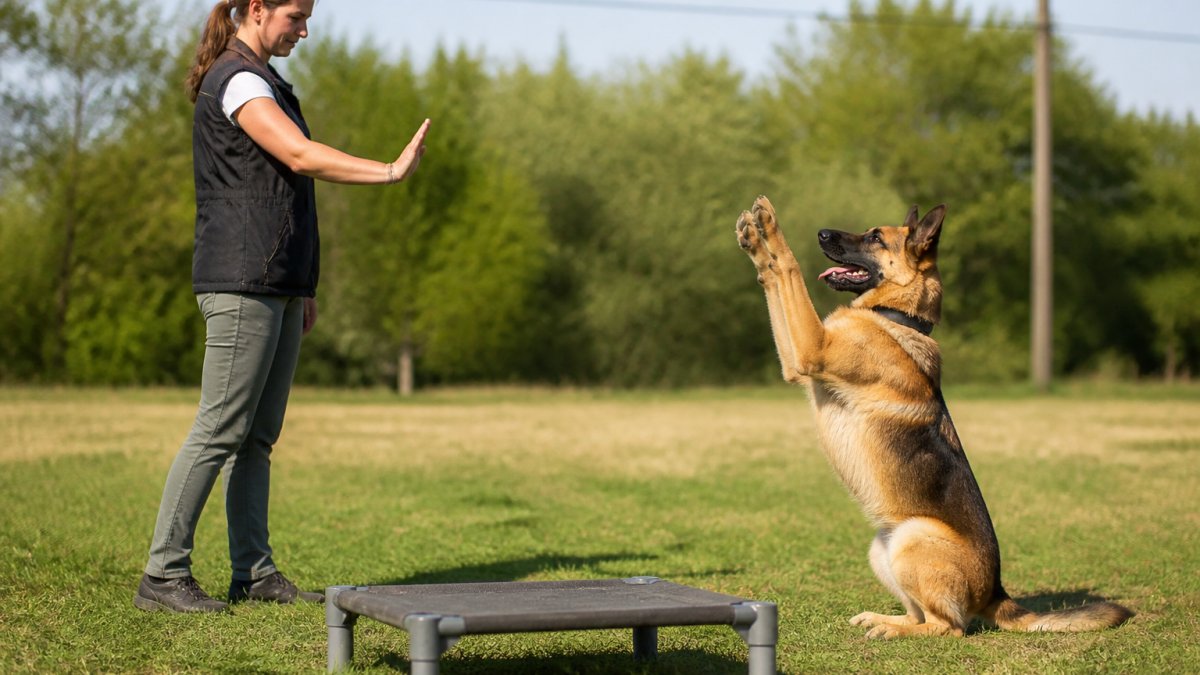
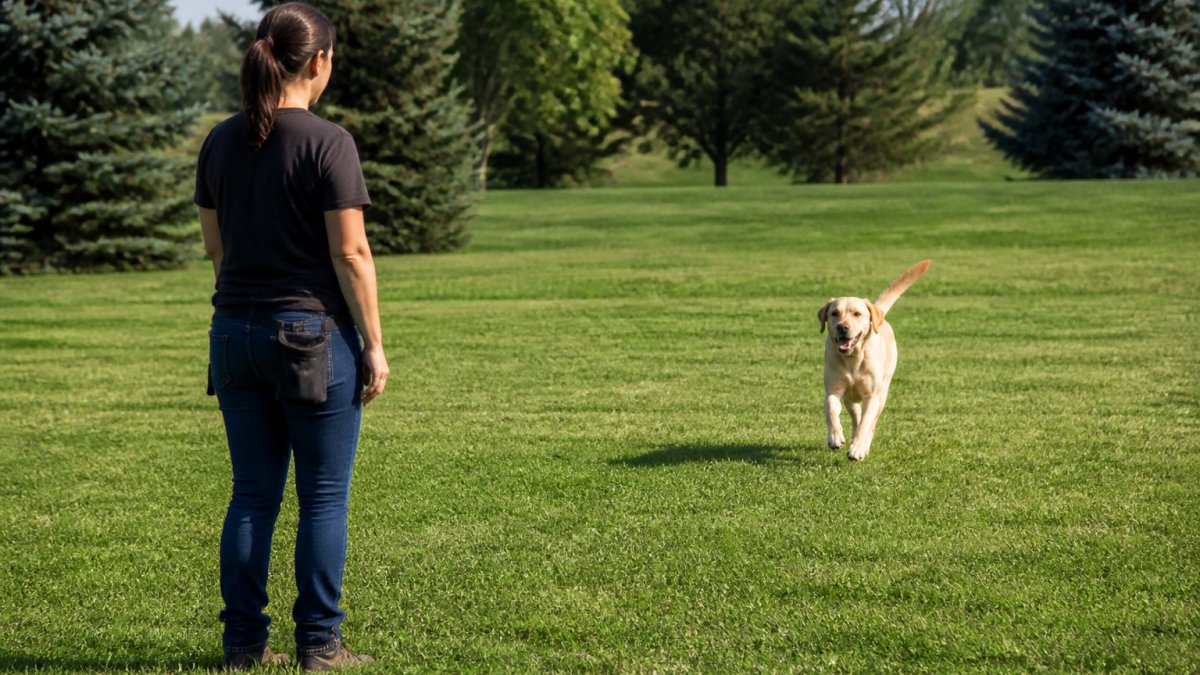
 how-to
Teaching Dogs Off-Leash Reliability: A Step-by-Step Guide
Table of Contents
- What Off-Leash Reliability Actually Means
- Assessing Your Dog's Readiness for Off-Leash Training
- Building Foundation: Starting Training in Low-Distraction Environments
- Dog Recall Training Around Distractions: Gradual Progression
- Long Line Dog Training: Building Safety Before Freedom
- When to Let a Dog Off Leash: Real-World Proofing
- Emergency Recall for Dogs: Teaching a Reliable Safety Cue
- Troubleshooting Failed Recalls and Common Training Setbacks
- Frequently Asked Questions
Last Updated: October 14, 2026
What Off-Leash Reliability Actually Means
Off-leash reliability means your dog responds to recall cues and stays close to you without a leash, even when distractions are present. It's not about hoping your dog comes back.
Off-leash reliability is a measurable skill with clear stages. Your dog must respond consistently across different locations, weather conditions, and distraction levels. This isn't achieved by accident. It requires a structured progression, consistent practice, and honest assessment of where your dog actually stands.
The core of off-leash reliability rests on three foundations: a strong recall cue, impulse control, and generalization across environments. Your dog needs to understand the command. They need to resist competing motivations. And they need to apply what they've learned in your backyard to the park, the trail, and the neighborhood.
Assessing Your Dog's Readiness for Off-Leash Training
Before you remove the leash, your dog needs to meet specific readiness criteria. This isn't subjective. You can measure it.
A dog that's ready for off-leash training demonstrates consistent recall in low-distraction settings, responds reliably to "stay close" cues, and shows impulse control around minor distractions. They should have months of foundation work behind them, not weeks. Age matters too. Most dogs under 18 months lack the impulse control and focus needed for reliable off-leash work, though individual variation is significant.
Your dog's temperament and breed tendencies factor in heavily. A Border Collie bred for herding has different natural inclinations than a Beagle bred to follow scents. Neither is "better" or "worse" for off-leash training, but they require different approaches and timelines.
The Readiness Checklist
Use this checklist to assess whether your dog is ready to begin structured off-leash training:
- Dog responds to "come" reliably in your home and yard (9 out of 10 times minimum)
- Dog demonstrates impulse control around minor distractions (ignores dropped treats, doesn't lunge at passing dogs)
- Dog has completed at least 8-12 weeks of foundation obedience training
- Dog is at least 18 months old (older for high-prey-drive breeds)
- Dog checks in with you regularly during walks without being cued
- Dog can hold a "stay" for at least 30 seconds with you out of sight
- Dog shows no signs of fear, anxiety, or aggression that would affect safety
- You have access to a secure, low-distraction training environment
- You're committed to consistent daily practice for at least 3-6 months
If your dog checks fewer than 7 of these boxes, spend more time on foundation work before attempting off-leash training. Rushing this phase creates dangerous gaps.
Building Foundation: Starting Training in Low-Distraction Environments
Your dog learns fastest when distractions are minimal. This means starting indoors or in a quiet, enclosed yard with no other dogs, people, or moving animals nearby.
In low-distraction environments, your dog can focus entirely on understanding what you're asking. They learn the recall cue. They practice the behavior. They build confidence.
Start with short distances. Call your dog from 5 feet away. Reward heavily when they come. Gradually increase distance to 20 feet, then 30 feet.
Use high-value rewards during this phase. Treats your dog gets nowhere else. Praise. Toys.
Practice multiple times per day in short bursts rather than one long session. A dog learns better from five 5-minute sessions than one 25-minute session.

Dog Recall Training Around Distractions: Gradual Progression
Once your dog responds reliably in quiet environments, you introduce distractions systematically. This is where most training breaks down. Owners jump from a quiet yard to a busy park and wonder why their dog ignores them.
Gradual progression means adding one new distraction variable at a time. You control the difficulty level. You move forward only when your dog succeeds at the current level.
The Three-Stage Distraction Model
Stage 1: Minor Environmental Distractions (Weeks 1-3)
Add low-level distractions to your training environment. Open a door so your dog hears sounds from outside. Have a family member walk past at a distance.
If success rate drops below 80%, you've added too much distraction too fast. Back up to the previous level.
Stage 2: Moderate Distractions and Distance (Weeks 4-8)
Increase both the distraction level and the distance between you and your dog. Practice in a larger enclosed area. Have a friend toss a ball nearby (but not toward your dog). Practice in different rooms of your house.
This stage is where you build generalization. Your dog learns that the recall cue means the same thing in different places. The skill starts transferring across environments.
Stage 3: High Distractions and Real-World Scenarios (Weeks 9+)
Practice in busier environments with competing motivations. Other dogs at a distance. People moving around. Interesting smells. Your dog should still respond reliably because you've built the behavior systematically.
Long Line Dog Training: Building Safety Before Freedom
A long line is a 15-50 foot rope attached to your dog's collar. It gives you physical control while your dog practices off-leash behavior.
Long line training serves multiple purposes. It allows your dog to experience distance and independence while you maintain safety.
Start with a 15-foot line in a low-distraction environment. Let your dog move away from you. Call them back. When they come, reward heavily.
The long line teaches your dog that distance from you is temporary. They always come back. Coming back always results in reward.
Never use the long line to punish or jerk your dog back. That teaches avoidance of you, not recall.
Most dogs need 4-8 weeks of consistent long line work before they're ready for completely off-leash practice. This timeline varies based on your dog's age, temperament, and prior training.
When to Let a Dog Off Leash: Real-World Proofing
Real-world proofing means testing your dog's off-leash reliability in progressively more challenging environments. You're not hoping your dog stays close. You're verifying they do.
Start in a secure, enclosed area like a large fenced dog park or a quiet field with a fence. Your dog should succeed here before moving to more challenging locations. Then progress to areas with minor distractions: a quiet trail, a neighborhood street with light traffic, a park with few other dogs.
Only move to high-distraction environments (busy parks, trails with wildlife, areas with lots of people) after your dog has proven reliable in moderate-distraction settings.
The timeline for real-world proofing is typically 8-12 weeks of consistent practice, though some dogs need longer. This isn't something you rush. Each successful session builds your confidence and your dog's reliability.
Location-Specific Proofing Protocol
Test your dog's off-leash reliability using this protocol in each new location:
- Start with your dog on a long line in the new location. Practice recall multiple times. Reward every success.
- Remove the long line only after your dog succeeds 9 out of 10 times on the long line in that specific location.
- Keep your first off-leash session short (5-10 minutes maximum). Stay near an exit or secure area.
- Call your dog back frequently. Don't wait until they're far away or distracted. Build the habit of checking in.
- Reward heavily for every recall. Use your highest-value treats in new locations.
- End the session on a success. Leave before your dog makes a mistake.
- Practice in that location multiple times before moving to a new environment.
This protocol prevents the common mistake of assuming your dog's backyard reliability transfers to new places. It doesn't. Each location requires proof.
Emergency Recall for Dogs: Teaching a Reliable Safety Cue
An emergency recall is a cue your dog responds to instantly, even under extreme distraction. It's separate from your regular recall command.
Teach an emergency recall using a unique cue (a whistle, a specific word, or a hand signal) that you never use for everyday recall. Build this cue with the highest-value rewards your dog knows.
The emergency recall should be practiced no more than once or twice per week. It's special. It's reserved. Overuse dilutes its power. When you use it, your dog gets the best reward of their life.
Many trainers recommend a whistle for emergency recall because it's distinctive and carries farther than a voice command.
Test your emergency recall only in safe, controlled settings. Never test it in a real emergency. Your dog should respond to this cue before you ever need it in a crisis.
Troubleshooting Failed Recalls and Common Training Setbacks
Even with solid training, recalls sometimes fail. Your dog ignores you. They chase something interesting. They get distracted.
Recall failure caused by insufficient reward: Your dog isn't motivated enough by what you're offering. Solution: use higher-value treats.
Recall failure caused by distance: Your dog is too far away to hear you or see your signal clearly.
Recall failure caused by competing motivation: Your dog is focused on something more interesting than you.
Recall failure caused by fear or anxiety: Your dog wants to come but is afraid of something in the environment.
Recall failure caused by lack of generalization: Your dog responds at home but not in new locations.
The most common cause of recall failure is moving too fast through the training progression.
When a recall fails, go backward. Return to the long line. Practice in lower-distraction environments. Rebuild the behavior. This isn't failure.
Off-leash reliability isn't about luck or wishful thinking. If you're working with a dog that has reactivity issues, severe anxiety, or a history of escaping, professional guidance makes a significant difference.
Frequently Asked Questions
How long does it take to build reliable off-leash behavior in a dog?
Timeline depends on your dog's age, prior training, and temperament. Most dogs need 8-12 weeks of consistent daily practice to achieve basic off-leash reliability in controlled settings. Proofing across different environments and distractions adds another 4-8 weeks. Puppies under 6 months should not train off-leash; their impulse control is insufficient. Adult dogs with prior obedience training progress faster. Consistency matters more than duration, five 15-minute sessions weekly outperforms one long session monthly.
What should I do if my dog ignores me off leash?
Ignoring recall signals indicates your dog is not ready for off-leash freedom. Return to long line training immediately and reduce distractions. Verify your recall cue is distinct and practiced daily in low-distraction environments. Increase reward value, use high-value treats or toys your dog cannot access otherwise. Never chase your dog or show frustration, as this teaches avoidance. If your dog ignores recall around specific distractions (other dogs, wildlife), your proofing progression advanced too quickly. Step back two stages and rebuild gradually.
Can a long line help teach a dog reliable recall?
Yes. A long line (15-30 feet) is essential for safe off-leash training. It allows your dog freedom to move and respond to distractions while you maintain control and prevent escape. Use it to practice recall in increasingly distracting environments before removing it entirely. The long line teaches your dog that distance doesn't eliminate consequences, they still respond to your cue even when far away. Never jerk the line aggressively; use gentle guidance to redirect. Most dogs need 4-6 weeks of consistent long line practice before transitioning to off-leash work.
When is a dog ready to practice off leash?
Your dog is ready for off-leash practice when they meet these criteria: reliable recall in low-distraction environments (90%+ response rate), consistent sit and stay for 30+ seconds, at least 6 months old, and completion of long line training. Assess impulse control, can they ignore dropped food or passing squirrels when cued? Test in a secure, enclosed space first (fenced yard or training field). Never transition directly from leash to complete freedom; use a long line in open areas before removing it. If your dog shows prey drive or has a history of running away, extend the timeline by 2-4 weeks.