 how-to
How to Teach a Dog Calm Car Rides Step by Step
Quick Summary
Teach calm car rides by first making the parked car a pleasant place with treats, then gradually adding engine noise and short trips. Move to the next step only when your dog stays relaxed, and keep sessions short and positive.
- Confirm the problem is anxiety rather than motion sickness by checking whether symptoms start at the door or after several minutes of movement.
- Start with the parked car, letting your dog go in and out on their own while feeding high-value treats.
- Keep early sessions under five minutes and never force a scared dog into the car.
- Increase trip length weekly, from two to five minutes up to fifteen to twenty minutes with a midway stop.
- Go back a step if your dog pants, whines, or trembles, because progress is measured by calm behavior.
Table of Contents
- Panting, Drooling and Whining
- What You Need Before the First Training Session
- Step 1: Make the Car a Calm Place Without Driving
- Step 2: Build Car Tolerance Through Desensitization Training for Car Travel
- Step 3: Practice Short Trips and Increase Duration Gradually
- Choosing the Best Car Safety Gear for Dogs
- Common Mistakes That Undo Calm Car Training
- Booking a Behavior Assessment for a Car Anxiety Plan
- Frequently Asked Questions
Recognizing Dog Anxiety in Car Symptoms Before You Train
Many dog owners in Caddo and Caney assume every bumpy ride is a training problem. Sometimes it is. Other times the dog is sick, scared, or both.
Knowing the difference matters because the wrong fix wastes time and can make things worse, while a clear diagnosis is the first step toward calm car rides.
Panting, Drooling and Whining
Panting, drooling, pacing, and whining are the most common stress signals dogs show in cars. A dog that pants hard, drools heavily, and whines the moment the engine starts is usually telling you the ride feels unsafe.
Watch for these signs:
- Panting that continues after the car stops
- Drooling on the seat or door panel
- Whining or barking that starts before the car moves
- Pacing, trembling, or trying to climb into the front seat
- Hiding under a seat or refusing to get in
Look closely at timing. If symptoms begin the moment the door closes, the dog is reacting to the car itself. If they only appear on curvy roads, nausea may be part of the picture.
Motion Sickness Versus Anxiety
Motion sickness and travel anxiety can look almost identical. The main clue is what happens before and after the ride.
| Sign | Likely Motion Sickness | Likely Anxiety |
|---|---|---|
| Timing | Starts after several minutes of movement | Starts at the door or before departure |
| Body language | Lip licking, yawning, lethargy | Pacing, whining, trembling |
| Vomiting | Common | Uncommon |
| Relief | Improves once the car stops | Often improves only after leaving the car |
If you suspect motion sickness, talk with your veterinarian. Medical causes need medical treatment, and training alone will not solve nausea. Anxiety is the behavior problem this guide focuses on.
What You Need Before the First Training Session
Gather a few basics before you start. Good preparation keeps early sessions short, calm, and successful.
- A parked car you can access at any time
- High-value treats your dog rarely gets otherwise
- A secure harness or crate, depending on your dog's comfort
- A quiet space and a timer for short practice sessions
- A notebook to track progress and setbacks
Pick treats your dog loves but seldom receives. Soft, small, and quick to eat works best because you will use many of them.
Step 1: Make the Car a Calm Place Without Driving
Start with the car parked and turned off. The goal is to show your dog that the car is a safe, boring, pleasant spot.
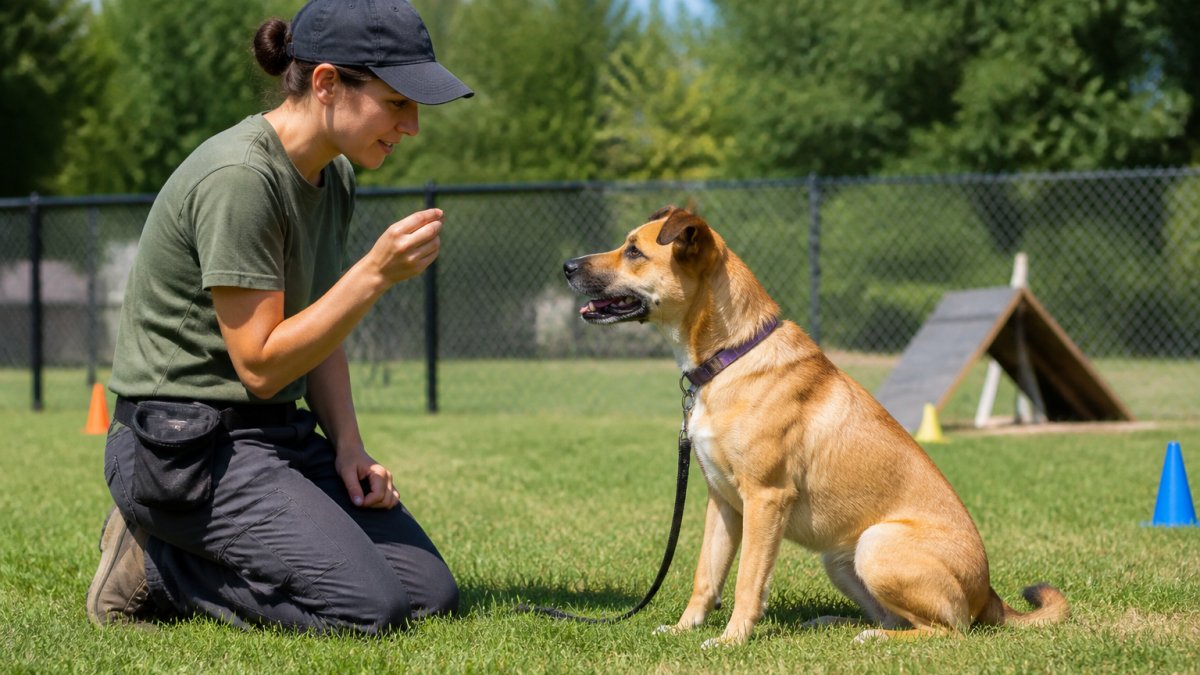
Open the door, toss a treat inside, and let your dog go in and out on their own. Do not force the dog in. Pushing a scared dog into a car builds fear fast.
Repeat this for several short sessions across a few days. Keep each session under five minutes and stop before your dog gets stressed.
Watch out: Do not lock your dog in a car, even for a minute, during early training. Heat and panic can turn a mild fear into a serious one.
Step 2: Build Car Tolerance Through Desensitization Training for Car Travel
Desensitization means exposing your dog to the car in small steps, at a level they can handle. Pair each step with something good, which is called counter-conditioning.
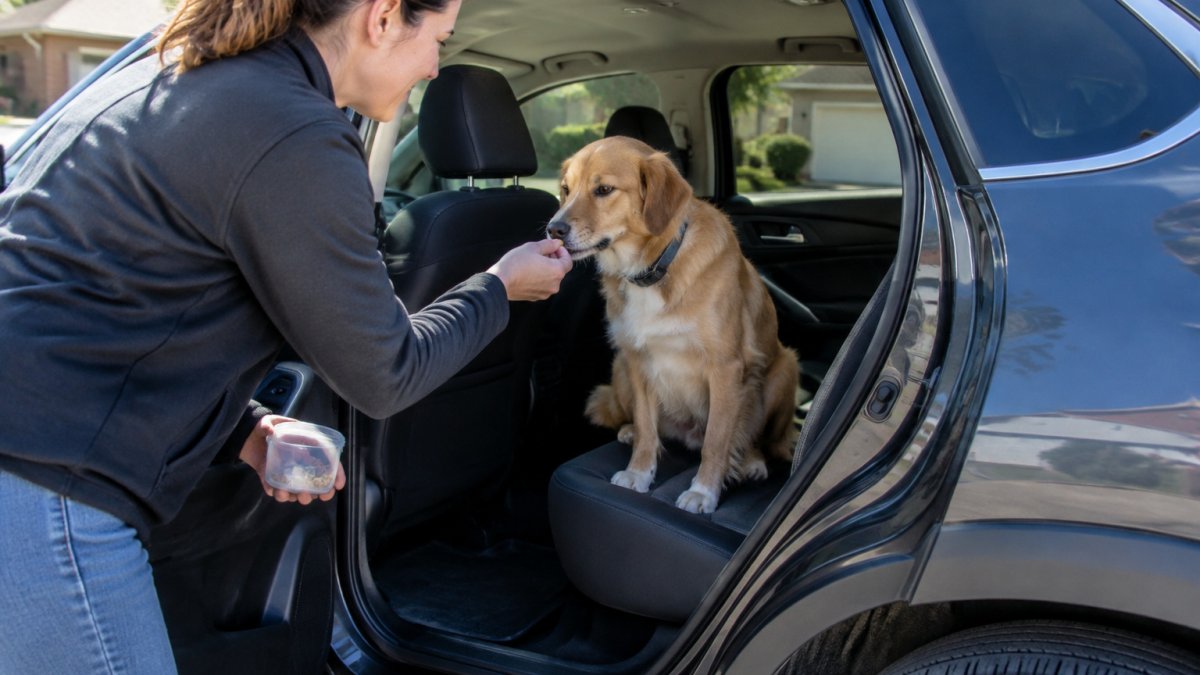
Use this progression:
- Sit in the parked car with the door open for 30 seconds while feeding treats
- Close the door and reward calm behavior
- Start the engine without moving and reward calm breathing
- Sit in the car with the engine running for one minute
- Move forward a few feet, then stop and reward
Move to the next step only when your dog stays relaxed at the current one. For broader guidance on anxiety-driven reactions, see Canine Behavior Modification for Beginners. If your dog starts panting or whining, go back a step. Progress is measured by calm behavior, not speed.
Positive reinforcement is central here. Reward the calm moments, not just the finish. Your dog learns that the car means good things happen.
Step 3: Practice Short Trips and Increase Duration Gradually
Once your dog handles the parked car, begin real trips. Keep the first ones very short, such as a drive around the block or to the end of the driveway.
Increase trip length slowly:
- Week one: trips of two to five minutes
- Week two: trips of ten minutes
- Week three: trips of fifteen to twenty minutes, with a stop midway
- Later: longer trips with a treat or chew toy in the car
End every trip on a good note. Stop somewhere the dog enjoys, like a quiet park, or drive home before they get worried. A bad ending undoes good practice.
If your dog breathes very fast, pants without stopping, or seems unable to settle, shorten the next trip. Owners sometimes push too far because the dog seems fine in the driveway. Real roads bring new sounds and motion.
Choosing the Best Car Safety Gear for Dogs
Safety gear does two jobs at once: it protects the dog in a sudden stop and it changes how calm the dog feels in motion. Those goals sometimes pull in opposite directions, so pick gear for your dog's temperament first and crash protection second.
Crash-Tested Harnesses Versus Crates
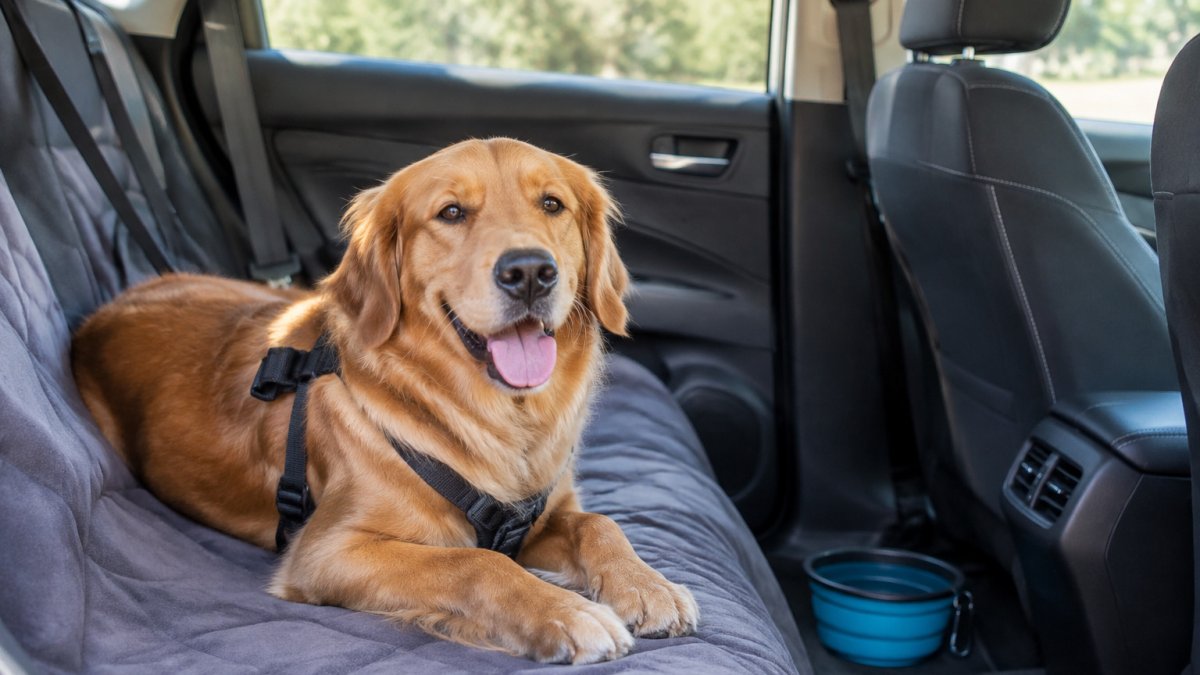
A crash-tested harness attaches to the seatbelt and keeps the dog on the seat. It suits dogs who want to sit up, look out, and stay near a passenger. The trade-off is that a harness gives a nervous dog more room to pace, and pacing feeds arousal. A harness also has to fit snugly across the chest without pressing on the throat; a loose harness slides and offers little protection.
A crate gives a den-like enclosure that many anxious dogs find settling because it limits movement and blocks peripheral motion. The trade-off is that a crate is only protective if it is secured so it cannot slide or tip, and a dog who was never crate-trained will panic inside one. A crate that shifts on a turn turns a calming tool into a frightening one.
A practical rule most trainers use: if your dog already rests calmly in a crate at home, a secured crate is often the calmer choice in the car. If your dog has never accepted a crate, a well-fitted crash-tested harness is the lower-risk starting point.
Barriers, Nets, and Booster Seats
Barriers and cargo nets keep dogs in the back of SUVs and wagons, which reduces driver distraction. They do not restrain the dog in a crash, so treat them as management, not protection. Booster seats raise small dogs so they can see out, which can reduce nausea for some dogs and increase excitement for others.
How to Introduce Any Gear Without Starting a Fight
Introduce new gear at home, away from the car, before you use it on the road:
- Let the dog sniff the harness or crate and feed treats nearby for two or three short sessions.
- Put the harness on for one minute, reward, and take it off. Build to five minutes over several days.
- For a crate, feed meals inside it with the door open, then close the door for seconds at a time.
- Only after the dog accepts the gear at home, fit it in the parked car with the engine off.
Watch out: A harness the dog struggles against or a crate the dog drools in is not protecting anyone. If the dog fights the gear, go back to home practice rather than forcing it on for a trip.
Choose gear that fits your dog's size and that you can use every single time. Inconsistent use teaches the dog that the car is unpredictable. Ask your veterinarian or trainer which option suits your dog's temperament and size, especially if your dog has a history of panic in enclosed spaces.
Common Mistakes That Undo Calm Car Training
A few mistakes come up again and again:
- Moving too fast. Owners often skip steps after one good day. Most setbacks follow a jump in difficulty.
- Forcing the dog in. Pushing or lifting a scared dog teaches them the car is a threat.
- Only training on long trips. Long, stressful drives make progress hard to maintain.
- Ignoring warning signs. Continuing through panting or trembling makes fear stronger.
- Scolding anxious behavior. Yelling at a whining dog adds to their stress.
- Skipping practice after it works. Calm rides need regular practice, not one-time success.
A common mistake is treating anxiety as stubbornness. An anxious dog is not being difficult. They need a clear, gradual plan and patience.
Booking a Behavior Assessment for a Car Anxiety Plan
If your dog still panics in the car after a few weeks of home practice, a professional assessment can help. At Voca Springs Dog Training, we work with owners on car anxiety through our behavior modification services.
Learn more about our approach on our About Us page. Before you commit, you can check whether we serve your area on our Service Area page. When you're ready to compare options, see our training packages and what each one includes.
Frequently Asked Questions
How long does it take to teach a dog calm car rides?
Most dogs show clear progress within two to four weeks of short, consistent practice. Some anxious dogs need longer, especially if they have had bad experiences in cars before.
Should I use a crate or a harness for car travel?
Either can work. A crate suits dogs who feel secure in enclosed spaces. A crash-tested harness suits dogs who prefer more room. Test whichever you choose at home before using it on the road.
Can I train my dog to ride calmly without a professional?
Many owners succeed on their own with patience and a clear plan. A professional assessment helps when progress stalls, or when the dog shows severe fear, aggression, or repeated panic.
Is it normal for a dog to drool in the car?
Drooling can come from anxiety or motion sickness. If it happens with nausea, vomiting, or lethargy, check with your veterinarian before assuming it is behavioral.
Frequently Asked Questions
How do I get my dog to relax during car rides?
Start with the car parked and engine off, letting your dog explore with the doors open and rewarding calm behavior with treats. Once relaxed in a stationary car, move to short drives around the block and end each trip at a positive destination like a park. Keep sessions brief, reward quiet posture, and avoid forcing your dog to stay in the car when it shows distress. Most dogs improve over several weeks of consistent, short practice rather than a single long ride.
Should I use a crate or a seatbelt harness for a nervous dog?
Both can work, and the right choice depends on your dog's size, temperament and your vehicle. A sturdy crate secured with a strap gives many anxious dogs a den-like space that limits movement and visual stress. A crash-tested harness clipped to a seatbelt anchor is a lighter option for dogs that feel trapped in a crate. Introduce either one at home before using it in a moving vehicle, and pair it with positive reinforcement so your dog associates it with comfort.
What are the signs of car anxiety in dogs?
Common signs include excessive panting, drooling, whining, pacing, trembling, trying to escape, and hiding under seats. Some dogs show a stiff body posture or refuse to enter the vehicle at all. Panting and drooling can also come from motion sickness, so watch whether signs appear immediately or only after several minutes of movement and whether your dog settles when the car is stopped. If symptoms are severe or persistent, consult your veterinarian before continuing training.