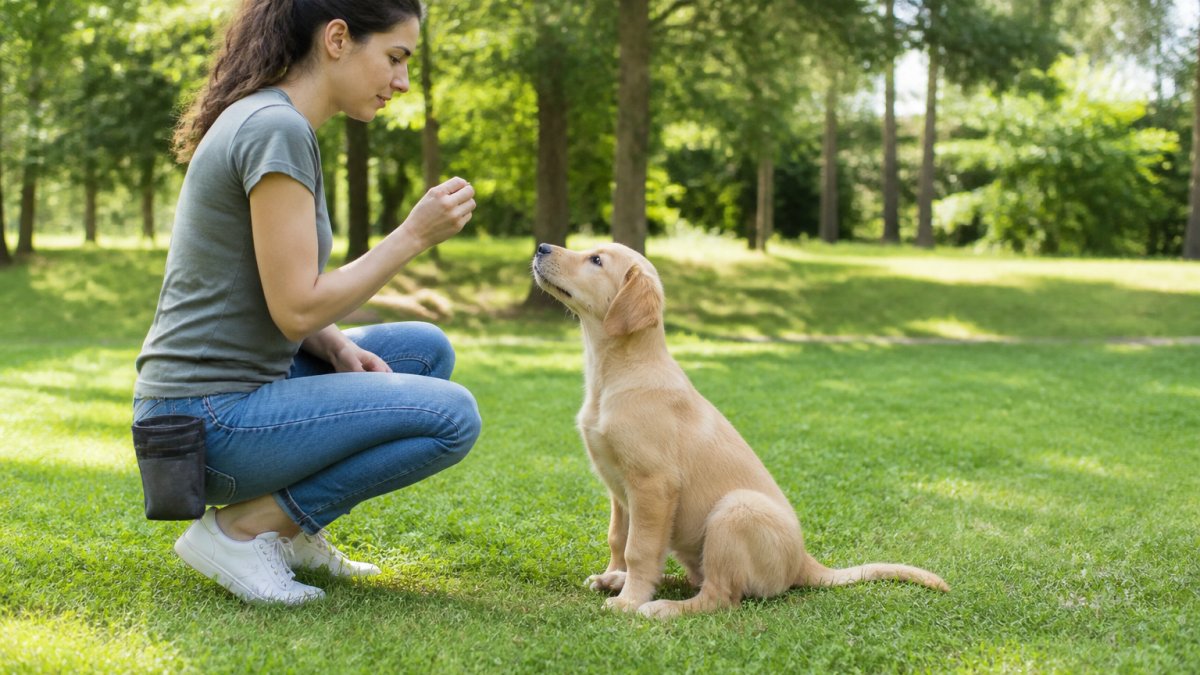
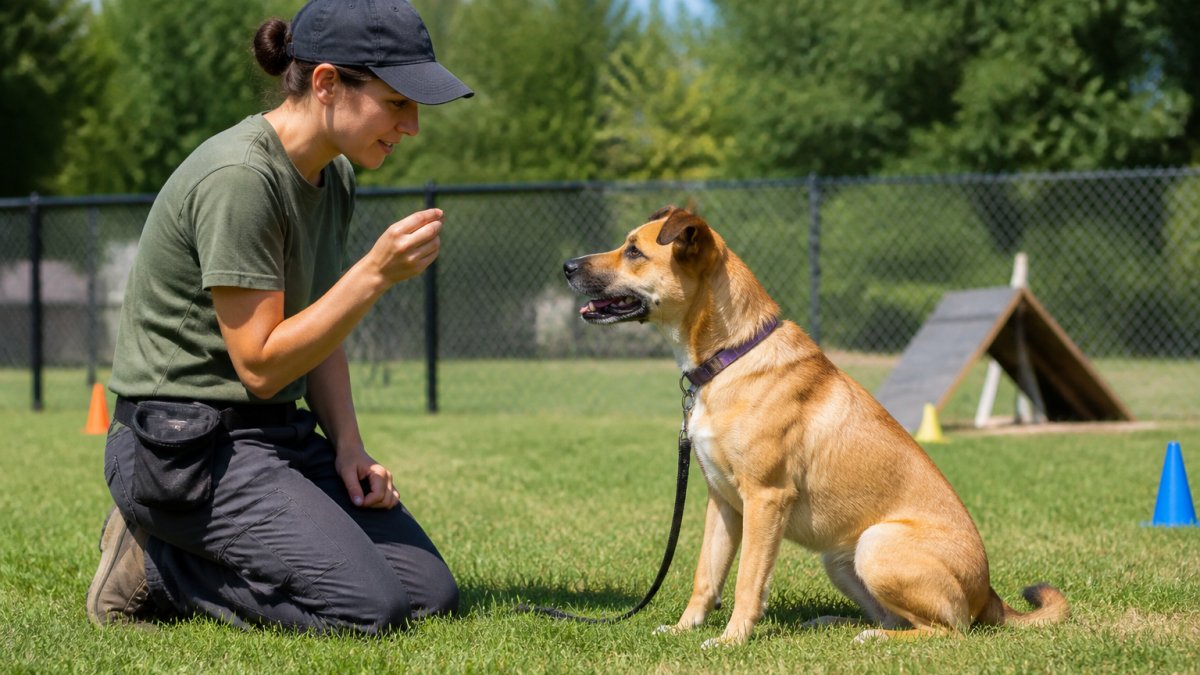
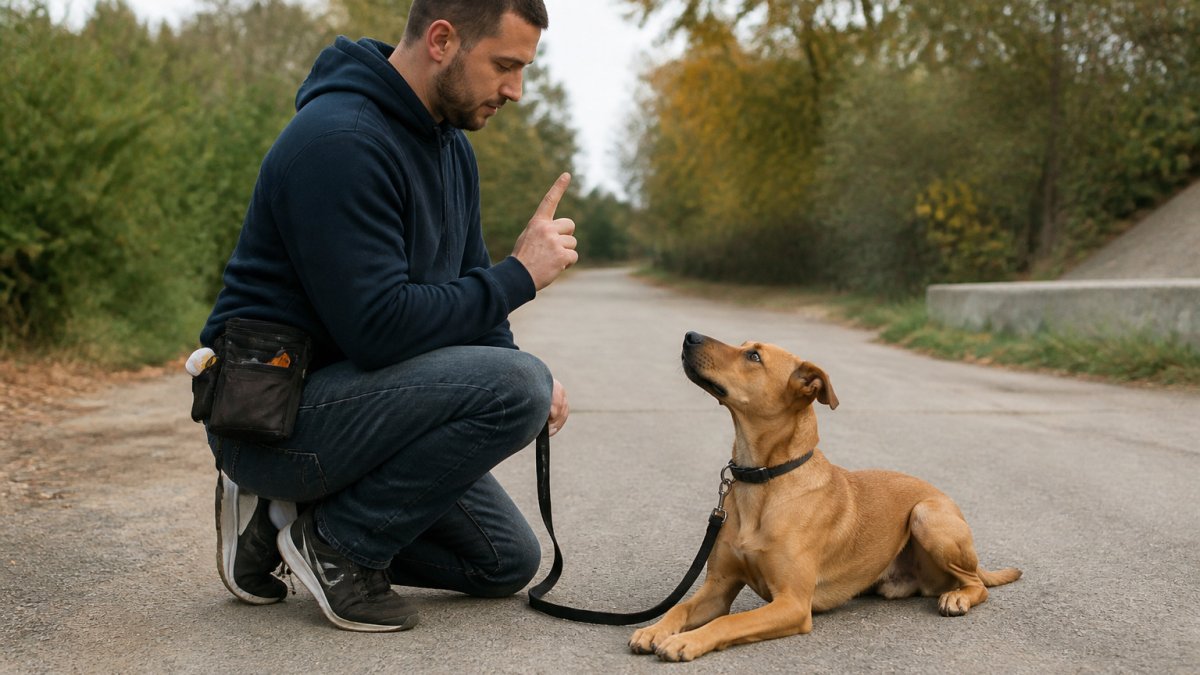
 ultimate-guide
Canine Behavior Modification for Beginners: A Complete Guide
Quick Summary
Canine behavior modification is the process of changing how a dog responds to a specific trigger by reshaping the emotion underneath the reaction, not just teaching a command. It works through management, positive reinforcement, and gradual exposure, paired with careful tracking of progress.
- Start by writing a trigger log to identify exactly what sets off the dog and at what distance.
- Reduce rehearsal of reactive behavior through management while emotional change is underway.
- Use a high-value reward the dog still takes when mildly aroused, delivered within about one second.
- Build an exposure ladder with written stop rules, and advance only after two calm sessions at each step.
- Track trigger distance, intensity, and recovery time weekly, and see a professional if reactions escalate.
Table of Contents
- What Canine Behavior Modification Means and Why It Works
- How Canine Behavior Modification Differs From Obedience Training
- Reading Your Dog's Body Language and Early Warning Signals
- Identifying Your Dog's Behavior Triggers
- Managing the Environment to Prevent Rehearsal
- Positive Reinforcement: The Core of Dog Behavior Modification Techniques
- Desensitization and Counterconditioning Explained
- Building Your Dog Behavior Modification Plan Step by Step
- Stage 1: Assess and Define (Week 1)
- Stage 2: Set Management Rules (Week 1-2)
- Stage 3: Choose Reinforcers and Confirm They Work Under Mild Arousal (Week 2)
- Stage 4: Build the Exposure Ladder and Set Safety Thresholds (Week 2)
- Stage 5: Run Short, Structured Sessions (Week 3 onward)
- Stage 6: Review Weekly and Adjust
- Addressing Reactivity, Fear, and Aggression Safely
- Tracking Progress and Setting Realistic Timelines
- Common Mistakes and How to Troubleshoot Them
- When to Stop Practicing Alone and Bring in a Professional
- Start Your Dog's Training Plan With Voca Springs Dog Training
- Frequently Asked Questions
Canine Behavior Modification for Beginners: A Complete Guide
Last Updated: November 1, 2026
What Canine Behavior Modification Means and Why It Works
Canine behavior modification is the process of changing how a dog responds to a specific situation, stimulus, or trigger by altering the emotional and behavioral response underneath it.
The reason this works comes down to learning. Dogs constantly link situations with outcomes.
Behavior modification differs from simply teaching a cue. Teaching "sit" changes what the dog does on command. Modifying behavior changes what the dog feels and chooses when a trigger appears without any command at all.
How Canine Behavior Modification Differs From Obedience Training
Obedience training teaches a dog to perform a defined task on cue, such as sit, down, heel, or recall.
Behavior modification targets the reason a dog reacts in the first place.
A practical rule: if the problem happens only in specific situations and the dog is otherwise responsive to commands, you are usually dealing with a behavior concern. If the dog ignores cues everywhere, a foundation in obedience often comes first.
Reading Your Dog's Body Language and Early Warning Signals
Most aggressive or reactive incidents do not start with a bite or a bark. They start with subtle signals that build over several seconds. Learning to read these is one of the most valuable skills a beginner can develop.
Watch for these early warning signs:
- Stiffening of the body or a sudden freeze
- Hard stare fixed on the trigger, with the eyes and ears forward
- Lip licking or yawning out of context
- Tail tucked or high and rigid, depending on the emotional state
- Hackles raised along the back of the neck
- Weight shifted forward or backward, indicating readiness to advance or retreat
- Growl, snarl, or snap as escalating communication, not a sign of "bad" behavior
The earlier you notice a warning signal, the easier the intervention. Once a dog is fully over threshold, learning is essentially paused. This is why behavior professionals emphasize creating distance at the first sign of change rather than waiting for a reaction.
Identifying Your Dog's Behavior Triggers
A trigger is any stimulus that reliably produces a behavioral response. Common triggers include other dogs, strangers, children, bicycles, vehicles, loud noises, and handling such as nail trims or grooming.
Ask specific questions: Does the reaction happen with dogs only when they are moving, or also when they are still? Does it happen only at a distance under 30 feet, or at any distance? Does the reaction change depending on whether the dog is on or off leash?
Keeping a Trigger Log
A written log turns guesswork into data. Record the date, time, location, the trigger, the distance at which the dog first noticed it, the dog's body language, the behavior that followed, and how long recovery took. Within a week or two, patterns usually emerge, such as reactions clustering in the early morning or always at a particular corner of your route.
A trigger log also gives you a baseline for measuring progress later, which we cover in the timelines section below.
Managing the Environment to Prevent Rehearsal
Every time a dog performs a reactive behavior, it practices that behavior. Rehearsal strengthens the pattern, so reducing rehearsal is often the first practical step while you work on emotional change.
Practical management steps include:
- Change your walking route to avoid known trigger hotspots at peak times.
- Use visual barriers such as a parked car, fencing, or a hedge to block sightlines.
- Walk at quieter hours when trigger density is lower.
- Create distance early, crossing the street or turning around before the dog reaches threshold.
- Use a front-clip harness or a leash that gives you control without punishing the dog.
Management is not a permanent solution. It buys time and prevents setbacks so training can progress. Think of it as protecting the learning window.
Positive Reinforcement: The Core of Dog Behavior Modification Techniques
Positive reinforcement means adding something the dog values immediately after a desired behavior so that behavior becomes more likely.
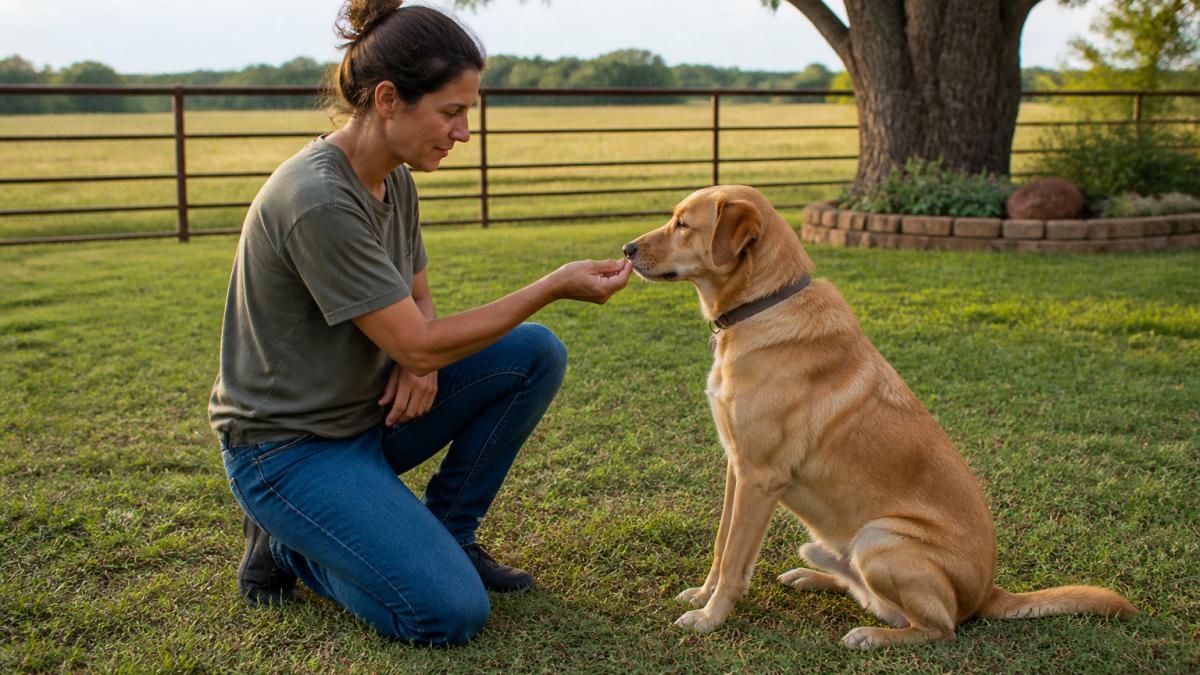
A common mistake is rewarding too late or too rarely. If you wait until the trigger has passed to offer a treat, the dog connects the reward to the wrong moment.
Owners often ask whether positive reinforcement is "soft" or effective. Behavior professionals regard it as a foundation, and it pairs well with management and exposure work.
Desensitization and Counterconditioning Explained
Desensitization reduces a dog's reaction to a trigger by exposing the dog to the trigger at a low enough intensity that it does not react. For a detailed step-by-step plan for stopping leash reactivity, see How to Stop Dog Leash Reactivity.
Desensitization asks, "How close or intense can the trigger be before the dog stops responding?" Counterconditioning asks, "How do I make this trigger predict good things?" For example, a dog who fears strangers might first be exposed to a stranger across a parking lot while eating treats.
Building a Safe Exposure Ladder
An exposure ladder is a sequence of steps from the least intense version of the trigger to the most intense. You move up only when the dog stays relaxed at the current step.
A simple ladder for dog reactivity might look like this:
- Dog visible at 100 feet, calm and taking treats
- Dog visible at 75 feet, calm and taking treats
- Dog visible at 50 feet, calm and taking treats
- Dog passing at 30 feet with no visible stiffening
- Dog passing at 15 feet, relaxed and responsive to your cue
Stay at each step for several sessions until the response is consistently relaxed. If the dog shows warning signs, step back to the previous level. Progress is rarely linear, and dropping back is a normal part of the process, not a failure.
Building Your Dog Behavior Modification Plan Step by Step
A behavior modification plan turns the concepts above into a written, repeatable sequence. Beginners often skip this and jump straight to exposure, which leads to inconsistent results and, worse, rehearsed reactions. The framework below is sequenced so that each stage protects the next: you assess before you act, you manage before you expose, and you set safety thresholds before you ever practice near a trigger.
Stage 1: Assess and Define (Week 1)
Before changing anything, write down what you are changing. Define the behavior in observable, measurable terms. "Reactive" is not measurable; "lunges and barks at dogs within 40 feet on leash" is.
At this stage, do not attempt exposure. Your only job is to gather a baseline and confirm the behavior is not medically driven. A sudden onset of reactivity in an adult dog, or reactivity paired with stiffness, reluctance to move, or changes in appetite, warrants a veterinary check before any training plan begins.
Stage 2: Set Management Rules (Week 1-2)
Management is not training, but it is the foundation training sits on. For a complete step-by-step approach to preventing rehearsal and managing walks, see How to Stop Dog Reactivity on Walks. Every reactive episode is a rehearsal that strengthens the pattern, so the first practical step is to reduce rehearsal while you work on emotional change. Set rules now: which routes you will avoid, which hours you will walk, what distance you will maintain from known triggers, and what equipment everyone in the household will use.
Stage 3: Choose Reinforcers and Confirm They Work Under Mild Arousal (Week 2)
A reward the dog ignores when mildly aroused is not a reinforcer in that context. Test your reward hierarchy before you need it. Offer a low-value treat, then a medium-value treat, then a high-value treat (small pieces of soft cooked chicken, cheese, or a favorite toy) while the dog is calm, then again when the dog is mildly interested in a distant trigger. The reward that the dog will still take at that mild level is your working reinforcer for early exposure steps.
Stage 4: Build the Exposure Ladder and Set Safety Thresholds (Week 2)
An exposure ladder is a sequence from the least intense version of the trigger to the most intense. Build it before you practice, not during a session. A simple ladder for dog reactivity might look like this:
- Dog visible at 100 feet, calm and taking treats
- Dog visible at 75 feet, calm and taking treats
- Dog visible at 50 feet, calm and taking treats
- Dog passing at 30 feet with no visible stiffening
- Dog passing at 15 feet, relaxed and responsive to your cue
Set your safety thresholds in writing at the same time. A practical stop rule: end the session if the dog stops taking treats, stiffens, fixates, or fails to respond to a known cue within two seconds. These are signs the dog has crossed threshold, and learning is essentially paused once that happens. Distance is your primary tool; when in doubt, add 10 feet and try again another day.
Stage 5: Run Short, Structured Sessions (Week 3 onward)
Schedule sessions of 5 to 10 minutes, several times per week, rather than one long weekly session. Short sessions keep the dog below threshold and make it easier to end on a success. A simple first-session script for a dog-reactive dog at Step 1 of the ladder:
- Position yourself at 100 feet from where dogs typically appear, with a clear exit route.
- Wait for the dog to notice the trigger at a distance.
- Mark (word or click) and reward the moment the dog looks at the trigger and then back at you.
- Repeat for 5 minutes or 10 to 15 successful repetitions, whichever comes first.
- End the session while the dog is still calm and taking treats.
Stay at each step for several sessions until the response is consistently relaxed. Move up only when the dog stays relaxed at the current step across at least two separate sessions. If the dog shows warning signs, step back to the previous level. Progress is rarely linear, and dropping back is a normal part of the process, not a failure.
Stage 6: Review Weekly and Adjust
At the end of each week, compare the same routes, times, and triggers against your baseline. Adjust one variable at a time: distance, duration, or distraction. Changing all three at once makes it impossible to know what worked. If progress stalls, first check the step size, then shorten sessions, then increase distance. If the problem persists or intensifies, reassess the trigger log and consider whether a professional should review the case.
The plan follows six stages, each with a timing and a clear purpose.
| Stage | What to do | Timing |
|---|---|---|
| Assess and Define | Write observable behavior, gather baseline, rule out medical causes | Week 1 |
| Set Management Rules | Avoid trigger routes, set distances, write rules down | Week 1-2 |
| Choose Reinforcers | Test reward value under mild arousal, agree on marker | Week 2 |
| Build Exposure Ladder | Set steps and stop rules before practicing | Week 2 |
| Run Short Sessions | 5-10 minutes, several times per week, end on success | Week 3 onward |
| Review Weekly | Compare same routes and times, change one variable | Weekly |
Addressing Reactivity, Fear, and Aggression Safely
Reactivity, fear, and aggression are related but distinct. For local, structured professional help, see Reactive Dog Training Near Sherman. To learn about specialized training options for aggressive behavior issues, see Dog Training for Aggressive Behavior Issues.
Safety comes first. Do not practice with a dog that has a history of biting without guidance, and keep children and vulnerable adults away during training sessions.
Dogs with aggression concerns, sudden behavior changes, or pain-related reactivity should see a veterinarian first, because medical issues such as orthopedic pain or thyroid disease can drive behavior changes.
Tracking Progress and Setting Realistic Timelines
Progress in behavior modification is measured, not assumed. The difference between a plan that works and one that stalls is usually not the technique; it is whether the handler is tracking the right variables and interpreting them honestly. Return to your trigger log and compare the same routes, times, and triggers over time.
The Five Metrics That Matter
A useful behavior log tracks five variables for every session:
- Trigger distance, the distance at which the dog first notices the trigger. This is your primary progress indicator. A dog that once noticed dogs at 100 feet and now notices them at 40 feet before reacting has made real progress even if the reaction itself looks similar.
- Intensity, rate the reaction on a simple 1-to-5 scale (1 = notices and disengages; 3 = barks or lunges but recovers; 5 = cannot recover without removal). Keep the scale consistent across sessions.
- Recovery time, how many seconds or minutes it takes the dog to return to a relaxed, treat-taking state after a reaction. Shrinking recovery time is one of the earliest signs of emotional change.
- Successful repetitions, the number of times the dog noticed the trigger and remained calm or disengaged within a session. Track this alongside total repetitions so you can see a success rate, not just a count.
- Session duration and environment, time of day, location, weather, and trigger density. Patterns often emerge here first; reactions frequently cluster at particular times or corners of a route.
A simple paper notebook or a spreadsheet works. Record the date, the five metrics above, and one sentence on what you would change next session. Within two weeks, patterns usually emerge that guesswork would miss.
How to Know You Are Ready to Advance
Use a concrete rule rather than a feeling. A reasonable approach is to advance a step only when the dog has shown calm, treat-taking behavior at the current step across at least two separate sessions with no reactions that required removal. If the dog reacts at the current step, repeat it; do not advance. If the dog reacts twice in a row at the same step, drop back one step and rebuild.
Realistic Timelines
Timelines vary widely by dog, history, and trigger. A mild reaction to strangers may improve noticeably within several weeks of consistent practice. More entrenched reactivity commonly takes several months of regular sessions, and some dogs need long-term management rather than a cure.
A useful way to set expectations is to think in terms of plateaus rather than finish lines. Most dogs show a rapid early improvement as management reduces rehearsal, then a longer plateau as the emotional response is reshaped, then another period of gains.
When the Data Says Stop
If the log shows reactions increasing in intensity or frequency over two to three weeks despite consistent practice, or if recovery time is lengthening rather than shrinking, stop and reassess. Check the step size first, then the reward value, then whether the dog has been seen by a veterinarian. If the pattern persists, bring in a professional. The log is also the most useful thing you can hand a trainer or veterinary behavior professional; it shortens the assessment phase and makes their recommendations more specific.
Common Mistakes and How to Troubleshoot Them
Several errors appear repeatedly in beginner plans:
- Moving too fast up the exposure ladder before the dog is consistently relaxed
- Training too close to the trigger from the start
- Inconsistent rewards from different family members
- Punishing warning signals, which removes the early warning system
- Skipping management, so the dog keeps rehearsing the reaction
- Ignoring medical causes of behavior changes
When progress stalls, first check the step size. Drop back a level, shorten sessions, and increase the distance. If the problem persists or intensifies, reassess the trigger log and consider whether a professional should review the case.
When to Stop Practicing Alone and Bring in a Professional
Some situations call for experienced, hands-on help. Consider professional support if the dog has bitten a person or another animal, if reactions are escalating in intensity or frequency, if you cannot safely manage the environment, if the behavior appears suddenly in an older dog, or if you feel unable to stay calm and consistent during sessions.
A professional trainer can observe the dog in real-world settings, adjust the plan to your schedule, and teach you to handle the dog yourself, which matters for long-term results. To find local dog behavior modification services, see How to Find Local Dog Behavior Modification Services.
Start Your Dog's Training Plan With Voca Springs Dog Training
Behavior modification works best when it is planned, measured, and practiced consistently, and that is where Voca Springs Dog Training can help. Voca Springs Dog Training offers obedience and behavior modification services for owners in Caddo and Caney, Oklahoma, with a focus on building a stronger bond between you and your dog.
If you are dealing with reactivity, anxiety, or a dog that does not respond consistently to commands, contact Voca Springs Dog Training for current program details and a consultation.
Frequently Asked Questions
What is canine behavior modification?
Canine behavior modification is the process of changing how a dog responds to a specific situation, such as another dog on a walk, a doorbell, or a stranger approaching the house. Instead of only teaching a cue like sit or stay, it targets the emotional response driving the behavior, including fear, anxiety, excitement, or guarding. Trainers usually combine management, positive reinforcement, and gradual exposure to build calmer, more predictable reactions over time. Because the goal is changing the underlying response, progress is measured by how the dog behaves around the trigger, not by how well it performs a single command.
How do you start behavior modification with a dog?
Start by identifying the exact behavior and the triggers that set it off, then observe the early signs your dog shows before the reaction, such as stiffening, lip licking, or a hard stare. Next, manage the environment so the behavior is rehearsed less often, for example by changing walk routes or using visual barriers. Only after that should you begin gentle, distance-based exposure paired with rewards. Keep sessions short, stop before your dog reaches its threshold, and record what happened so you can adjust the plan.
How long does dog behavior modification take?
Timelines vary widely. A mild, well-defined issue may show clear improvement within several weeks of consistent daily practice, while longstanding fear or reactivity often takes several months. Progress is rarely a straight line, and setbacks after stressful events are normal. Track measurable markers such as the distance at which your dog notices a trigger, how quickly it recovers, and how often it takes a treat. If progress stalls for several weeks, revisit your plan or consult a professional.
When should I get professional help for my dog's behavior?
Seek professional help if your dog has bitten or seriously injured a person or animal, if aggression is escalating, or if you cannot safely control the dog during a trigger. Contact a veterinarian first to rule out pain, illness, or medical causes, since sudden behavior changes can have physical contributors. A qualified trainer or a veterinary behavior professional can assess the situation in person and build an individualized plan. Do not practice high-intensity exposure alone when the risk of a bite is real.