 ultimate-guide
Obedience Training for Dogs: The Complete Step-by-Step Guide
Last Updated: November 6, 2026
Quick Summary
Obedience training for dogs is the structured process of teaching a dog to respond reliably to cues like sit, stay, come and leave it. It works best when started early, using short positive sessions with rewards that keep a dog's focus, and it is practiced until the skills hold up around real-world distractions.
- Puppies can begin basic obedience as early as eight weeks old, in sessions lasting only a few minutes.
- Keep sessions to five or ten minutes, three times a day, six days a week.
- Sit, stay, come, down, leave it and heel form the core command set.
- Mark correct behavior the moment it happens, then deliver the reward.
- Skills fade without practice, so keep maintenance sessions going after week eight.
Table of Contents
- When to Start Obedience Training for Dogs by Age
- Obedience Training for Dogs at Home: What You Need Before You Begin
- The Positive Reinforcement Method Behind Reliable Obedience
- Dog Obedience Commands Every Dog Should Learn
- How to Train Dog Recall Step by Step
- Building a Dog Training Schedule That Fits Your Life
- Adapting Obedience Training for Adult Dogs and Rescues
- Troubleshooting Common Obedience Training Setbacks
- Realistic Timelines and How to Measure Progress
- Choosing a Humane, Qualified Trainer for Obedience Training
- Group Classes, Private Lessons, or Training at Home
- Book Your Dog's First Obedience Assessment with Voca Springs
- Frequently Asked Questions
Obedience training for dogs is the structured process of teaching a dog to respond reliably to a set of cues, from sitting on command to coming back when called. A dog that responds to commands at home often falls apart the moment a squirrel, another dog or a loud truck enters the picture. Obedience training closes that gap, and it does so by building habits that hold up under real-world pressure.
A common mistake is treating obedience as a set of party tricks. Teaching a dog to roll over is useful for entertainment, but the commands that protect a dog's life are the ones that work when the stakes are high. Sit, stay, come and leave it are the foundation for everything else, from safe walks to a dog that can be trusted around children and guests.
The benefits go beyond safety. A dog that understands what is expected of it tends to be calmer, because uncertainty is a common source of anxiety in pets. Owners often report that the relationship changes too: the dog looks to them for direction, and the owner becomes more confident in handling the dog in daily life.
What most guides miss is that obedience is not a single event. It is a skill that fades without practice, which is why the rest of this guide covers starting age, home preparation, reward methods, commands, recall, scheduling and troubleshooting as connected parts of one system.
When to Start Obedience Training for Dogs by Age
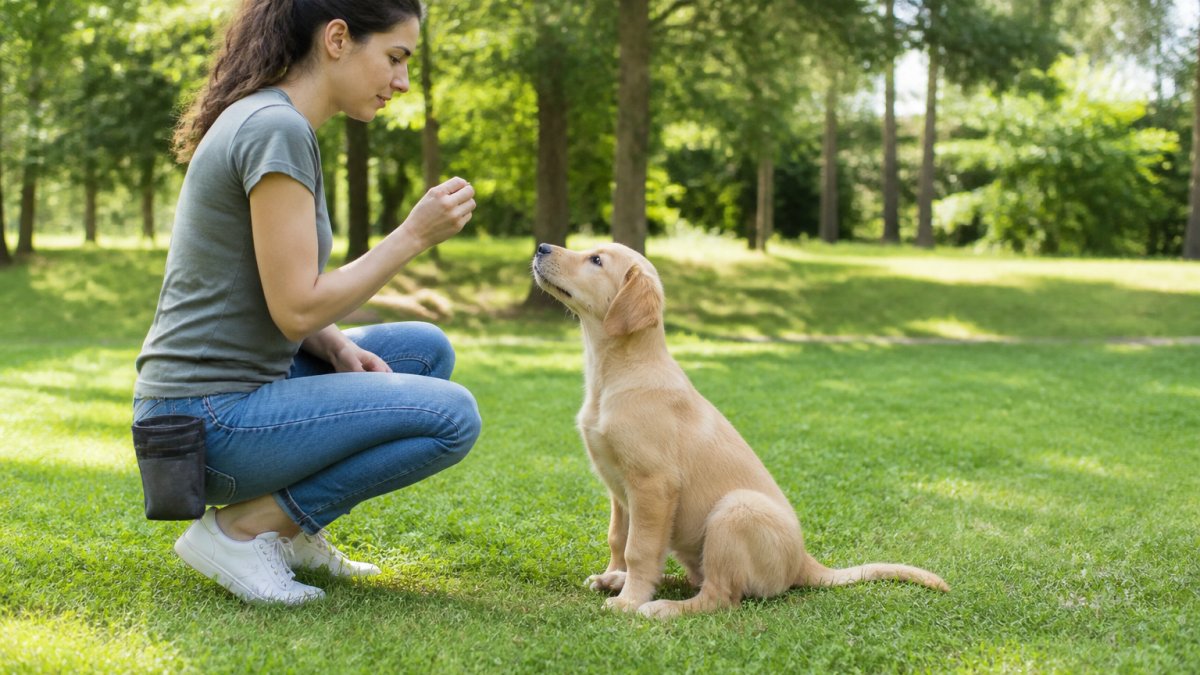
Puppies can begin basic obedience as early as eight weeks old, using short, positive sessions that last only a few minutes. The goal at this stage is not perfection. It is teaching the puppy that following cues leads to rewards, and that training is a pleasant part of the day.
Adult dogs can learn just as well, though the approach often differs. Adult dogs may arrive with habits already formed, so training focuses on replacing unwanted behaviors with clear alternatives.
The honest answer to "when should I start?" is now. Waiting until a dog is older usually means more habits to unlearn.
Obedience Training for Dogs at Home: What You Need Before You Begin
You do not need expensive equipment to start obedience training at home. A standard leash, a collar or harness that fits well, a supply of small, soft treats and a quiet room with few distractions are enough for the first few weeks.
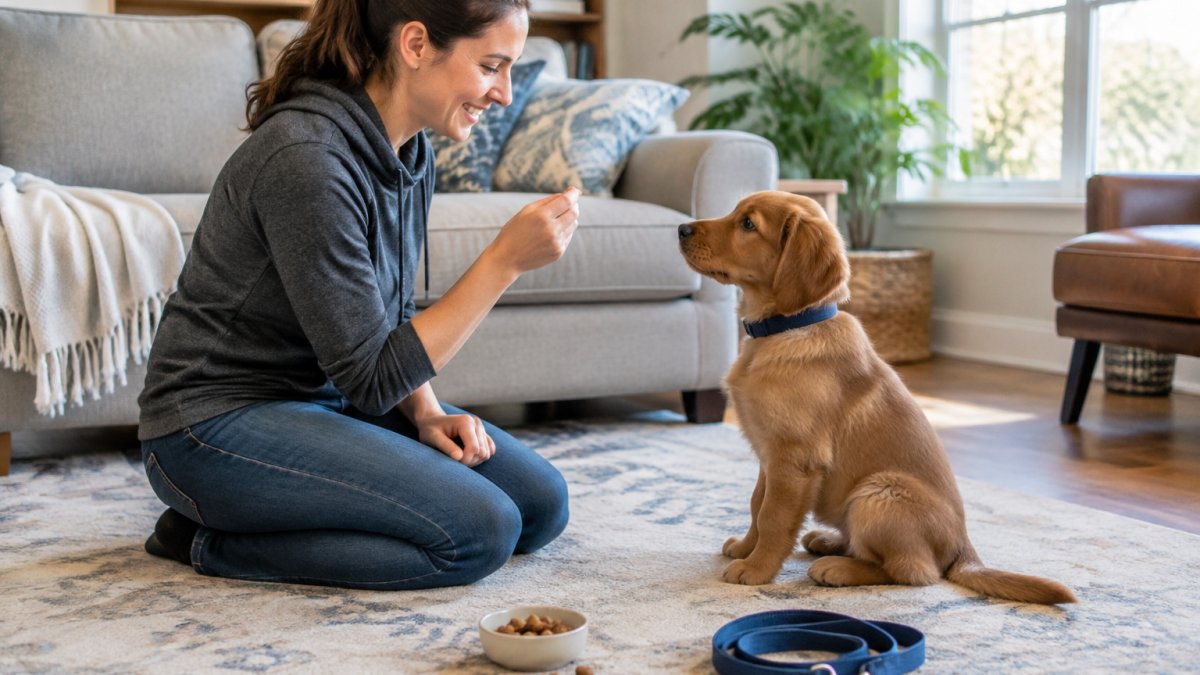
Choose treats your dog finds genuinely motivating and small enough to deliver quickly. Keep sessions to five or ten minutes, and end on a success. A watch-out here: many owners use treats that are too large or too rich, which fills the dog up and slows learning.
Set a training space and a consistent cue vocabulary before you begin. Everyone in the household should use the same words, since mixed cues confuse dogs and undo progress.
The Positive Reinforcement Method Behind Reliable Obedience
Positive reinforcement means rewarding the behavior you want so that the dog repeats it. The reward can be a treat, praise, a toy or a moment of play. Reward-based training builds willing cooperation rather than fear of correction.
The key is timing. Mark the correct behavior the moment it happens, then deliver the reward. A verbal marker such as "yes" helps the dog connect the action to the reward.
Dog Obedience Commands Every Dog Should Learn
The core obedience commands include sit, stay, come, down, leave it and heel. Each builds on the others, and together they give owners control in situations that matter most.
Teaching Sit and Stay
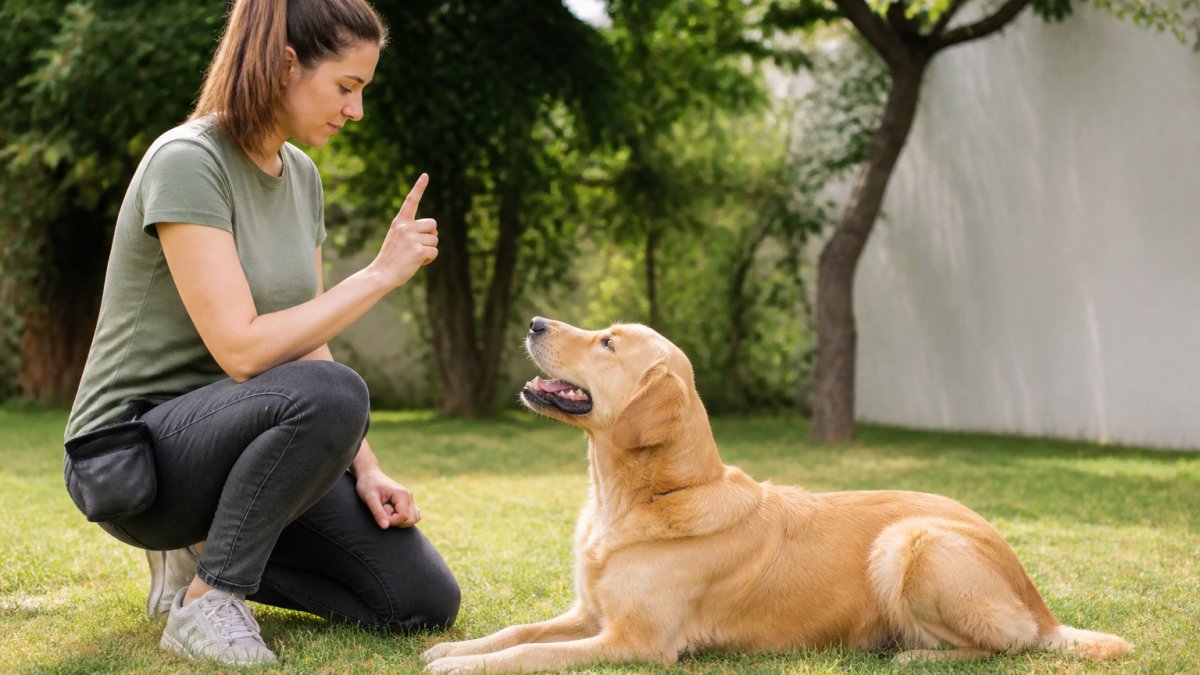
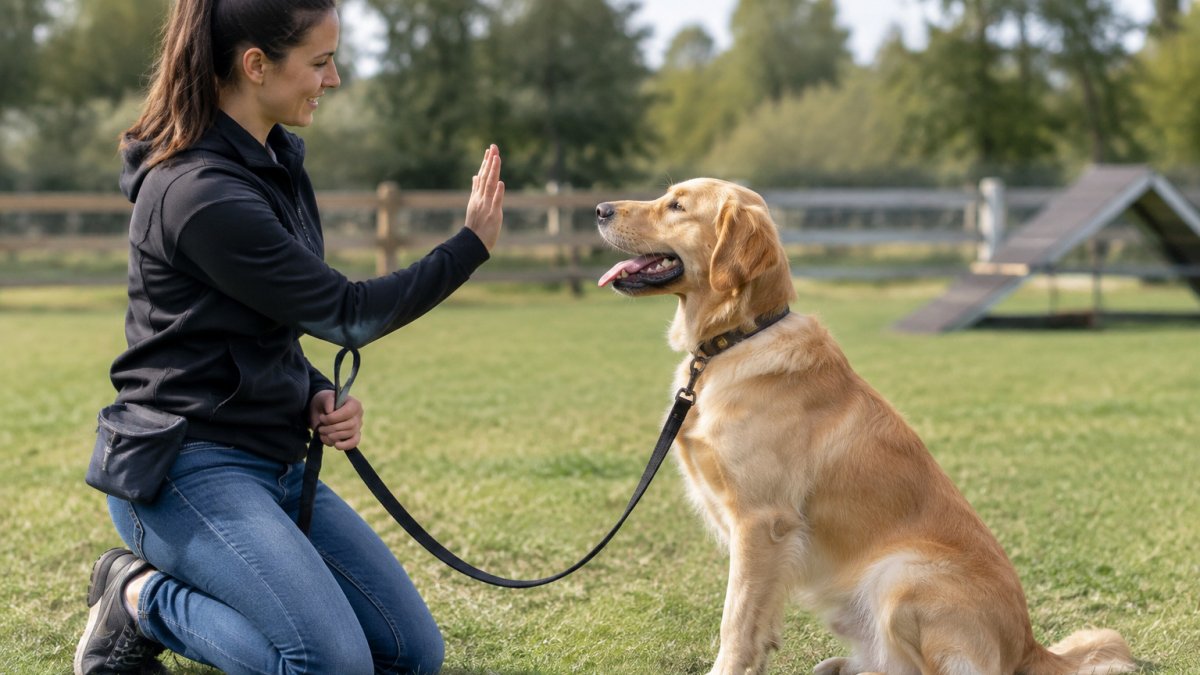
To teach sit, hold a treat above the dog's nose and slowly move it back over the head. As the dog lowers its rear, say "sit," mark the moment and reward. Stay builds on sit: once the dog is seated, open your palm, say "stay," take one step back and return to reward. Increase distance and duration gradually.
Teaching Down, Leave It, and Heel
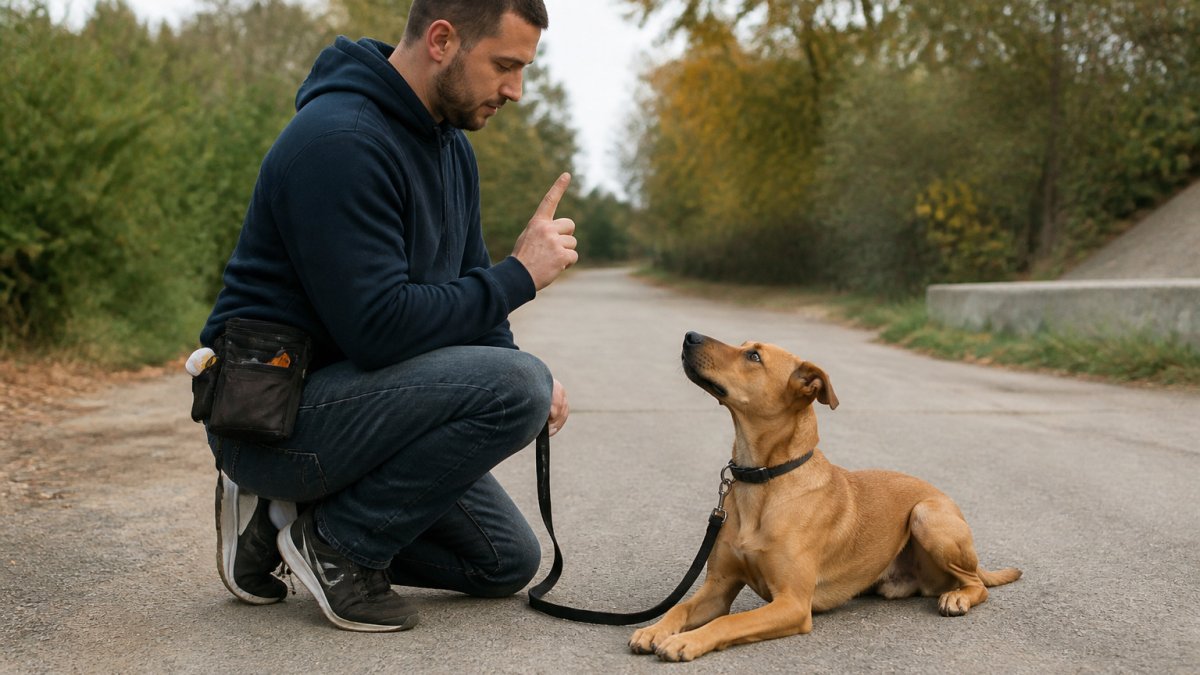
For down, lure the dog from a sit by moving a treat toward the floor. Leave it teaches the dog to ignore items on the ground: show a treat in a closed fist, say "leave it," and reward only when the dog looks away. Heel means walking beside you on a loose leash. Reward the dog for staying in position, and pause whenever the leash tightens.
How to Train Dog Recall Step by Step
Recall, the command to come when called, is often the hardest to make reliable and the most important for safety. Here is a practical sequence:
- Start indoors with a short distance, say three feet, and call your dog's name followed by "come."
- Reward generously when the dog arrives, then release it back to play.
- Gradually increase distance and add mild distractions in the house and yard.
- Practice on a long line outdoors before trusting the dog off leash.
- Never call your dog to end something unpleasant such as a bath or leaving the park, since this teaches avoidance.
Plan to spend several weeks at each stage. Recall is a skill that needs repetition in increasingly distracting settings before it holds up around other dogs or wildlife.
For more detail on this skill, see our guide on how to train dog recall and our broader resource on teaching dogs off-leash reliability.
Building a Dog Training Schedule That Fits Your Life
Consistency matters, but a plan you can follow makes it easier. This section offers a progressive schedule you can adapt, plus markers that tell you when to move on and when to repeat a week.
A workable structure is three short sessions a day, five to ten minutes each, six days a week, with one rest day. Short and frequent beats long and rare because dogs consolidate skills between sessions, and a tired or full dog learns poorly. Attach sessions to routines you already have: sit and wait before meals, a short stay while the coffee brews, a recall rep when the dog is called in from the yard. The training disappears into the day instead of becoming a separate chore.
Here is a progressive eight-week outline you can scale to your dog's age and skill level. Treat each week as a checkpoint, not a deadline.
- Weeks 1-2, foundation: name recognition, sit, and a marker word. Practice in one quiet room. Milestone: the dog sits on a single verbal cue eight out of ten tries with no treat visible in your hand.
- Weeks 3-4, adding duration and distance: stay for five seconds at two feet, down from a sit, and a first leave-it rep with a low-value item. Milestone: a five-second stay with you taking one step back, in two different rooms.
- Weeks 5-6, first distractions: practice sit and stay in the yard, on a quiet sidewalk, and with a family member walking past. Introduce recall on a long line indoors and in a fenced yard. Milestone: recall from ten feet with one mild distraction, three reps in a row.
- Weeks 7-8, real-world reliability: short sessions in a park or pet-friendly store at a distance from other dogs, plus loose-leash walking for fifty feet. Milestone: sit and stay hold for ten seconds with a person walking past at fifteen feet, and recall works from twenty feet on a long line outdoors.
After week eight, do not abandon the plan. A common pattern is that skills fade within two to three weeks without practice, so keep two maintenance sessions a day and rotate one command per week back into focused work. Add a new location every week or two rather than a new command, because generalization across environments is where most dogs lose reliability.
Track progress in a simple notebook or phone note with three columns: distance, duration, and distraction level. A dog that holds a stay for thirty seconds at three feet with a helper walking past has achieved something concrete, and writing it down makes slow progress visible. Review the log every two weeks and decide whether to repeat a week or move forward. If a milestone fails three sessions in a row, drop back one level rather than pushing through.
Watch out: owners often add distance and duration at the same time. Increase one variable per session, or the dog will fail and the failure will be blamed on the dog rather than the plan.
Finally, build in a weekly reality check. Once a week, take one session out of the quiet room and into a mildly distracting place. If the dog cannot perform there, that is not a setback; it is information telling you the current level is not yet generalized. Adjust the plan, keep the sessions short, and let the milestones, not the calendar, set the pace.
The eight-week outline below summarises the milestones the article sets for each stage of the plan.
| Week | Focus | Milestone |
|---|---|---|
| 1-2 | Foundation: name, sit, marker word | Sit on verbal cue eight out of ten tries |
| 3-4 | Duration and distance: stay, down, leave it | Five-second stay with one step back |
| 5-6 | First distractions: yard, sidewalk, long line recall | Recall from ten feet, three reps in a row |
| 7-8 | Real-world reliability: park, loose leash | Stay ten seconds with person at fifteen feet |
Adapting Obedience Training for Adult Dogs and Rescues
Rescue dogs and adult dogs often arrive with unknown histories, which makes patience essential. Start with a calm environment, build trust before adding demands, and watch for signs of stress such as lip licking, yawning or turning away. Those signals mean the session is too much and should be shortened.
Some rescue dogs show anxiety or disconnection rather than a simple training gap. When progress stalls or the behavior seems driven by fear, a conversation with a qualified professional can clarify whether training alone is enough.
Troubleshooting Common Obedience Training Setbacks
Most setbacks have predictable causes. A dog that stops responding in new places usually needs more practice in varied settings, not less. A dog that ignores cues when excited may be over-aroused, so reduce the intensity of the environment and train at a lower distraction level first.
If training stops working entirely, check whether rewards have lost value, sessions have grown too long or cues have changed without anyone noticing. The fix is often simpler than owners expect.
Realistic Timelines and How to Measure Progress
Basic commands such as sit and down often become reliable within a few weeks of consistent practice. Recall and off-leash reliability usually take months, and reliability around high-distraction triggers can take longer still.
Measure progress by distance, duration and distraction level. A dog that holds a stay for thirty seconds at three feet with a helper walking past has achieved something concrete. Track these markers in a notebook so improvements are visible even when they come slowly.
Choosing a Humane, Qualified Trainer for Obedience Training
Most ranking pages mention that you can hire a trainer but stop short of telling you how to tell a good one from a bad one. That is the gap this section fills. Choosing a trainer is a hiring decision, and it deserves the same scrutiny you would apply to any other professional who will spend hours alone with a member of your family.
Start with credentials. Dog training is not uniformly regulated, so credentials matter. Look for certification from a recognized third-party organization, and ask a trainer what their certification required, such as an exam, training hours and continuing education. Vague claims like "certified trainer" without an issuing organization are a yellow flag.
Ask about methods before you ask about price. A humane trainer should be able to describe, in plain language, how they mark and reward behavior, how they handle a dog that fails a rep, and what equipment they use. Reward-based trainers typically rely on food, toys, praise, and marker words. Be cautious of anyone who leads with shock collars, prong collars, or "corrections" as a first-line tool, and be especially wary of trainers who promise to "fix" a dog in a single session or who refuse to let you observe a class before booking.
Watch out: a trainer who will not let you sit in on a session, or who discourages you from asking questions during the evaluation, is showing you how they will treat you and your dog later.
Ask these questions before you book:
- What certification do you hold, and who issued it?
- What does a typical first session look like, and will I be handling the dog or watching?
- How do you measure progress, and what does "reliable" mean in your program?
- What happens if my dog is fearful, reactive, or shut down during a session?
- Do you train in real-world environments, or only in a facility?
- What is your policy on aversive equipment, and what do you do if a client insists on it?
- Can you provide two or three recent client references?
Compare at least two trainers before committing. A short phone screen of ten to fifteen minutes is usually enough to hear how a trainer talks about dogs, failure, and owner involvement. The best trainers will tell you that most of the work happens between sessions, with you, and that their job is to coach you as much as the dog.
Finally, match the trainer to the problem. A group-class instructor who is excellent with puppies may not be the right fit for a reactive adult rescue. For fear, aggression, or severe anxiety, look for a trainer who works alongside or under the supervision of a veterinary behaviorist, since those cases often need a medical and behavioral plan together. Voca Springs Dog Training offers obedience and behavior modification services for owners in Caddo and Caney, Oklahoma.
Group Classes, Private Lessons, or Training at Home
Group classes provide practice around other dogs. Private lessons allow targeted attention for specific problems. Training at home is often the foundation for either option, and most owners benefit from combining approaches. A common pattern is to start at home, add group classes for distraction practice and reserve private lessons for behaviors that need individual support.
Book Your Dog's First Obedience Assessment with Voca Springs
Every dog is different, and a clear starting point makes progress faster. Contact Voca Springs Dog Training through its website to ask about an initial assessment.
Frequently Asked Questions
What is the 3-3-3 rule for dog training?
The 3-3-3 rule is a common way to set expectations for a newly adopted dog: roughly three days to decompress, three weeks to begin settling into routine, and three months to feel fully at home. It is a rough guide, not a fixed timeline. Dogs from shelters or rescues often need longer. Use the rule to plan patience and consistent routines, and expect obedience skills to become reliable over several months of short, regular practice rather than in a few sessions.
When should a dog start obedience training?
Most dogs can start basic obedience training as soon as they come home, including puppies around eight weeks old. Short, positive sessions of five minutes or less work well for young puppies. Adult dogs and rescues can begin at any age. The earlier you start, the easier it is to build good habits, but it is never too late to teach sit, stay, and recall to an adult dog with consistent practice.
What are the 7 basic obedience commands for dogs?
The core commands most owners teach are sit, stay, come (recall), down, leave it, heel, and drop it or wait. Sit and stay give you control in everyday situations, come keeps your dog safe off leash, and leave it prevents them from grabbing hazards. Start with one or two commands, practice them in quiet rooms, and add distractions gradually once your dog responds reliably at home.
Can you obedience-train a dog at home?
Yes. Many foundational skills, including sit, down, stay, leave it, and loose-leash walking, can be taught effectively at home with treats, a clear marker word, and short daily sessions. Home training works best when you practice in several rooms and then in the yard and on walks. Professional guidance can help if progress stalls or if your dog shows reactivity, anxiety, or aggression that needs a structured plan.
How long does it take to obedience-train a dog?
Basic commands such as sit and down often take one to three weeks of daily practice before a dog responds most of the time. Reliable recall, leash manners, and performing under distraction usually take three to six months or longer. Timelines vary with age, breed, past experience, and how consistently the household practices. Track progress by noting how often your dog responds on the first cue in different locations.
What is the best way to teach a dog to come when called?
Use a bright, happy recall cue paired with a high-value reward, and reward your dog every time they come, even if they were slow. Start in a low-distraction room, then gradually add distance, a long line, and then the yard. Never call your dog to end something unpleasant. Practicing recall in short, positive bursts is the most reliable way to build a dog that comes back on command.
Is group obedience class or private training better?
Group classes help dogs learn to focus around other dogs and people. Private lessons offer individual attention, faster troubleshooting, and training tailored to specific behaviors such as reactivity or anxiety. Many owners combine both: private sessions to address a specific problem, and group classes for socialization and practice with distractions. Price varies by provider, so check Voca Springs Dog Training's website for current options and quotes.
Obedience training works when it is consistent, positive and tailored to the dog in front of you. Start with a few commands, practice daily and build from there. Book your dog's first obedience assessment with Voca Springs Dog Training to get a plan built around your dog's needs and your household's routine.